
Last updated November 15, 2026
 AC repair
 Furnace & heating
 Heat pumps
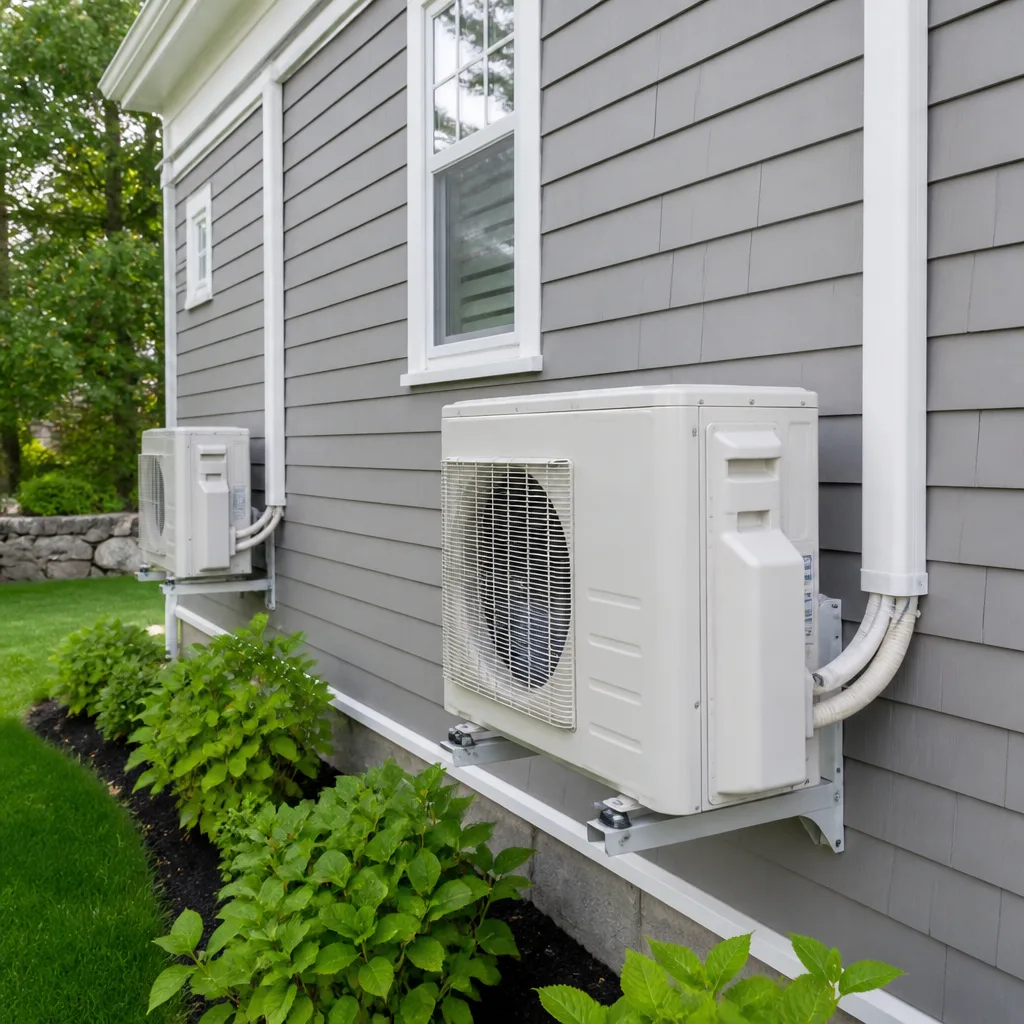 Ductless mini splits
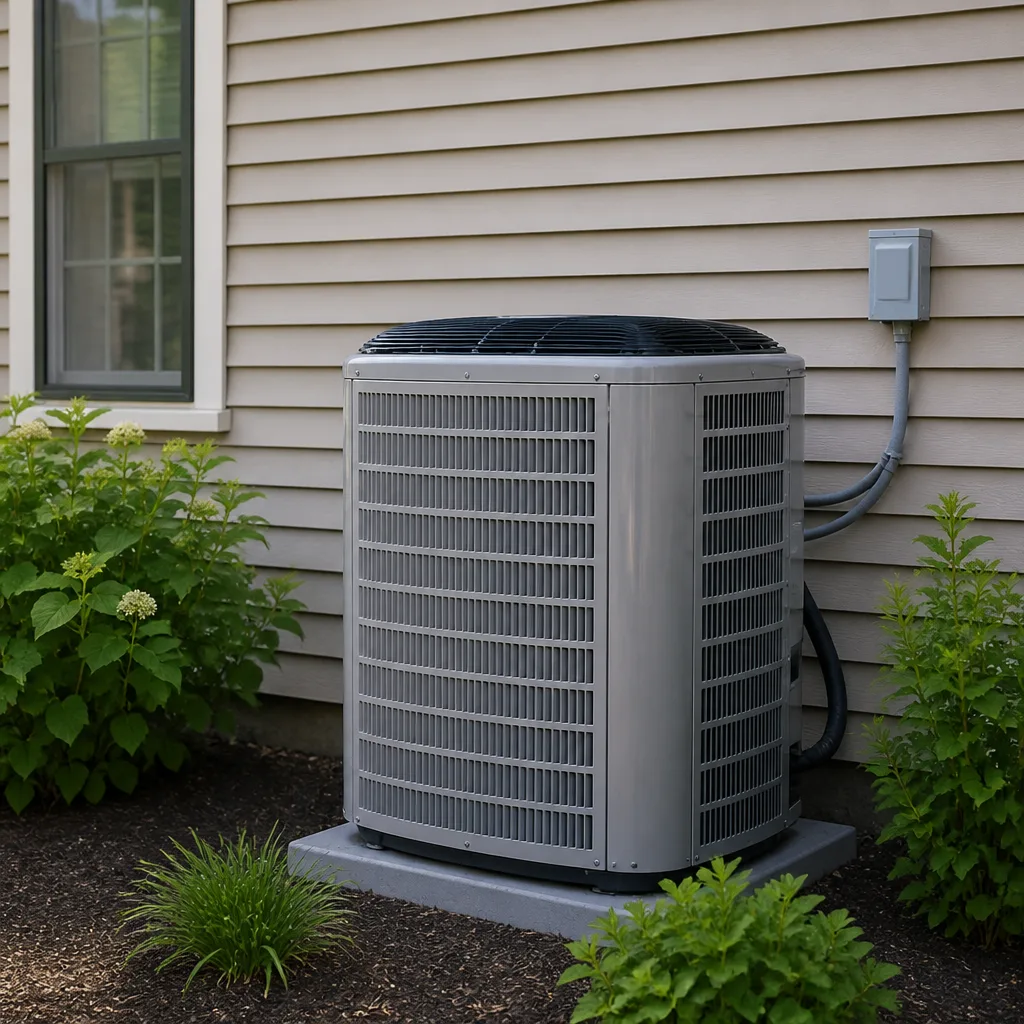 Carrier
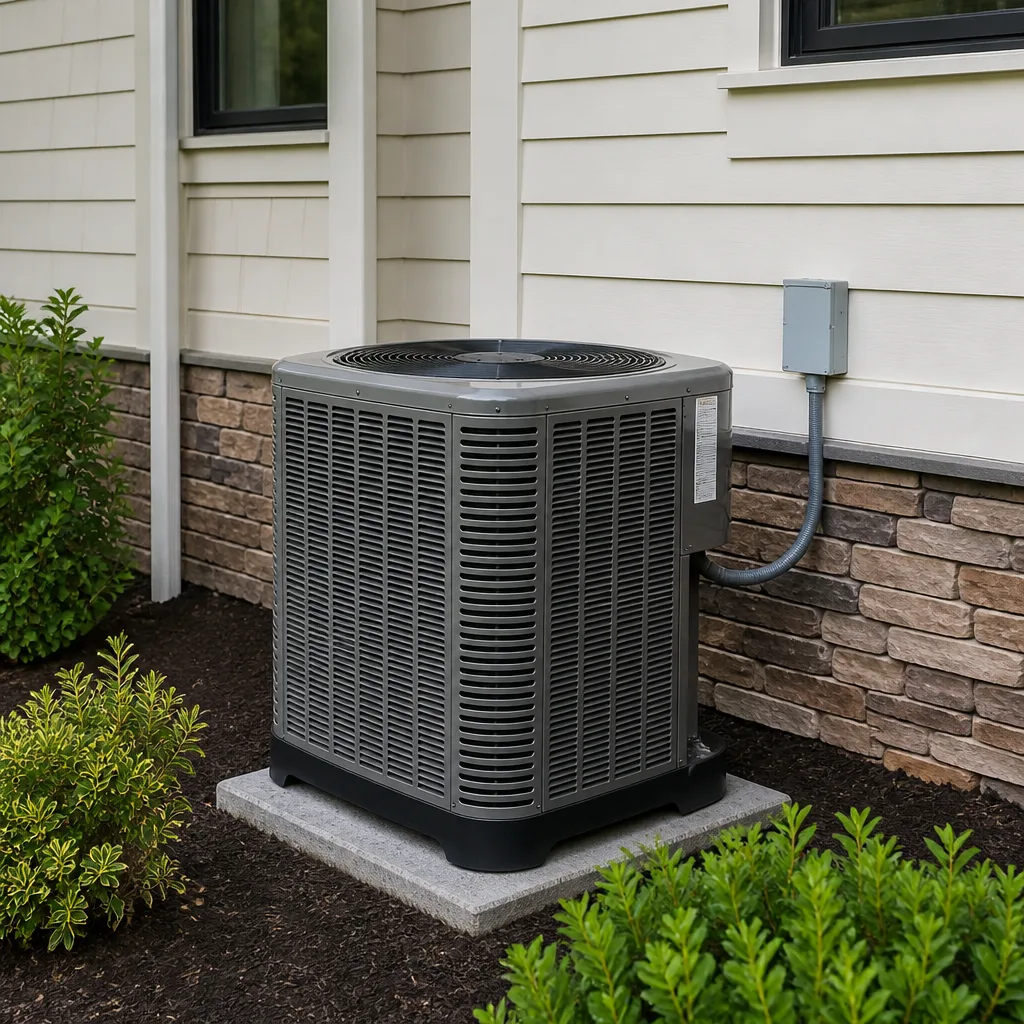 Trane
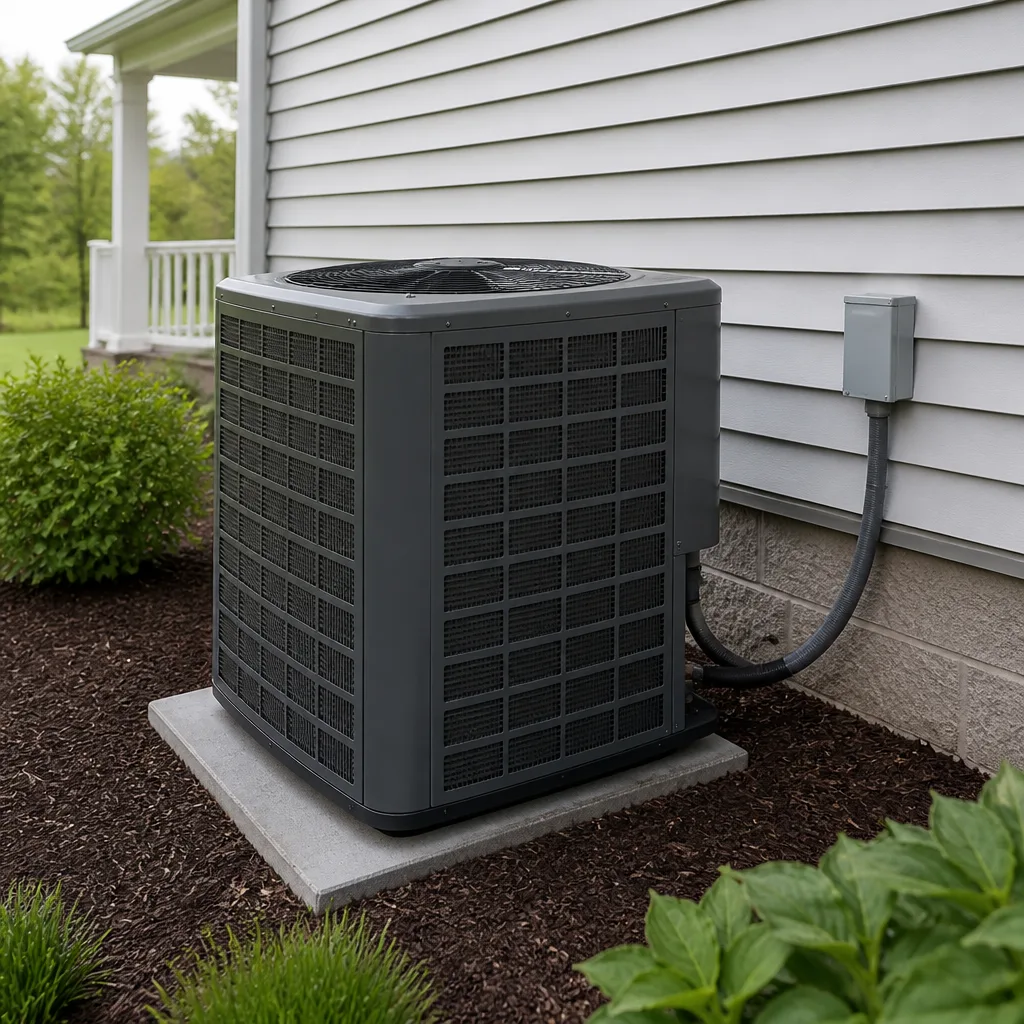 Goodman
Seasonal tune-up and full diagnostic on your Carrier, Trane, or Goodman system - readings shown to you before any repair is proposed
Diagnosis first, numbers second - you approve the repair price before a single part goes in.
Get your free estimateAC Installation Maintenance Checklist for Boca Raton Homeowners
Here’s the part of AC installation that nobody puts on the invoice. A brand-new system can be sized perfectly, set perfectly, and still lose its full manufacturer warranty coverage because nobody registered the equipment online. That step gets skipped on an estimated 1 in 5 residential installs in Florida. Nothing fails. Nothing drips. The homeowner just never gets the paperwork, and a year or two later a compressor claim gets denied. In Boca Raton, where the cooling season runs long and humidity climbs, the first 90 days after install do the most to decide how the next decade goes. This guide walks through the post-install checklist most homeowners never receive: what to file, what to watch, and what to clean before it costs you.
Quick Answer
A complete post-install AC checklist in Boca Raton covers three time windows. Within 30 days: register the equipment warranty, schedule the permit final inspection, and photograph the filter setup. During the first cooling season: clean the indoor coil around month 6, flush the condensate drain monthly, and compare your first full electric bill against expectations. Every year after: keep a service log with model and serial numbers to protect resale value and insurance claims.
Styles & brands we work with
- AC repair
- Furnace & heating
- Heat pumps
- Ductless mini splits
- Carrier
- Trane
- Goodman
Table of Contents
- The First 30 Days: Paperwork That Protects Your Warranty
- Permits and Final Inspection in Boca Raton
- Documenting Your Filter Baseline
- First-Season Maintenance: Coil Cleaning and Boca Raton Humidity
- Condensate Drain Care: The Task Most Homeowners Skip
- Verifying Proper Sizing After Your First Full Billing Cycle
- Annual Documentation That Protects Resale and Insurance
- What to Revisit Before the Second Cooling Season
The First 30 Days: Paperwork That Protects Your Warranty
Start with the warranty registration. Manufacturers offer a standard limited warranty as a baseline, and many extend it to a longer parts and compressor term when the equipment is registered with the manufacturer within 30 days of installation. Skip the registration and you keep the shorter default term. That’s the whole mechanism. It’s not a trick and it’s not fine print buried in a pamphlet. It’s a deadline.
Here’s a numbered checklist for the first month:
- Register the equipment online with the manufacturer. You’ll need the model number, serial number, install date, property address, and the installing contractor’s name. Your installer should give you all of this in writing. If they didn’t, photograph the data plates on both the indoor air handler and the outdoor condenser. A Carrier or Trane system has its own registration portal, and so does American Standard. The steps are similar on all of them.
- Save the original invoice and the installation contract. Every warranty claim asks for proof of professional installation. A phone photo of the invoice is fine; a missing invoice is not.
- Schedule the permit final inspection. More on this below, but put a date on it this week.
- Photograph the filter setup. Take pictures of the filter size printed on the factory label, the filter cabinet (or return grille), and the date you installed the first filter. This becomes your baseline for the rest of the system’s life.
- Note the thermostat model and app login. If your installer set up a smart thermostat, confirm you can log in yourself. Homeowners on a phone-based app often discover months later that the installer still holds the account.
This isn’t paperwork for paperwork’s sake. A registered system under an extended parts warranty is a substantially different asset than an unregistered one, and if you sell your Boca Raton home, that warranty transfers with the equipment in many cases. Buyers and their inspectors notice.
Permits and Final Inspection in Boca Raton
In most Florida jurisdictions, an AC replacement requires a mechanical permit, and a licensed technician performs the install under that permit. The final inspection is the point where the building department signs off on the work. That inspection is not automatic. Many jurisdictions require the homeowner or contractor to request it after the work is done, and if it’s never requested, the permit stays open indefinitely. An open permit can surface at resale, and it will slow a closing down hard.
The homeowner’s job here is not to perform any work – the inspection itself is the technician’s territory, and if you’re ever asked to open the electrical disconnect or the refrigerant circuit to accommodate an inspector, put the screwdriver down and let a licensed pro handle it. That panel is a live high-voltage component and the circuit is pressurized. What you can do:
- Confirm with your installer, in writing, that a permit was pulled before the work started. Ask for the permit number.
- Confirm who is responsible for requesting the final inspection. Often it’s the contractor; sometimes the homeowner. Get it in an email or text.
- Call your city’s building department and ask to verify a permit under your address. This takes two minutes and gives you certainty.
- Once the inspection passes, save the signed inspection card or the online approval confirmation with your warranty paperwork.
If you inherited an open permit from a prior owner, that’s fixable. Your building department can tell you what’s needed to close it – usually a verification inspection by a licensed contractor. Here at Boca Raton, we see this more often than you’d think on homes that have been flipped or sold across the last several years.
Documenting Your Filter Baseline
The filter is the cheapest part of your system and the one that decides how hard your blower works. But you can’t manage it without a baseline. Filter choices exist across a wide spectrum – from basic fiberglass panels up to high-MERV pleated media – and thinner 1-inch filters loaded with dust will strain a new system almost immediately in a busy home.
What to document in the first 30 days:
- Filter size and type. Write it in marker on the filter cabinet or the return grille.
- Location and quantity. Some homes have one return; larger homes or two-story layouts may have two or three. Know where they all live, including the one in the hallway ceiling you’ve never looked at.
- First install date. Write today’s date on the new filter’s edge with a sharpie. It’s the easiest calendar in the world.
- Replacement interval. In Boca Raton homes running the AC most months of the year, a basic 1-inch pleated filter typically wants attention every 30 to 60 days. Homes with pets, long-haired occupants, or dust-heavy renovations go shorter. Thicker 4- to 5-inch media filters installed in a dedicated cabinet often stretch to 6 months, though we recommend checking monthly at first until you know your own home’s loading.
Don’t fall for the idea that a higher MERV rating is always better. Above a certain point, a very dense filter restricts airflow and forces the blower to work against static pressure it wasn’t designed for. Your installer chose a filter class for a reason. Stick with it unless an experienced technician tells you otherwise. Our team can service your Carrier or American Standard system regardless of filter class – we’re brand-agnostic and we’ll tell you what your equipment actually wants.
First-Season Maintenance: Coil Cleaning and Boca Raton Humidity
The indoor evaporator coil is where your home’s humidity gets dealt with. Air moves across cold copper tubing, moisture condenses, and the condensate pan catches the drips. It’s the single hardest-working component in a Boca Raton install, and it gets coated in biological growth faster here than in most of the country. The reason is straightforward: warm, humid air moving over a wet cold coil creates a microbial growth environment. When summer air sits at high humidity for weeks, that environment doesn’t dry out. It stays perfect.
Without periodic cleaning, the coil’s ability to shed water onto the drain degrades. Airflow across the fins slows. The system runs longer to reach setpoint, pulling more moisture out of the air and generating more condensate, which in turn feeds more growth. You don’t see the problem until the system is running 20 minutes longer than it should, and by then, the coil is bonded to a film of biofilm that surface spray alone won’t remove.
The post-install schedule we use:
- Month 6: first proper indoor coil cleaning. Not a filter swap. Actual cleaning of the coil and internal cabinet surfaces, using an appropriate coil cleaner and a rinse-out that drives water through the drain. This is the moment a Boca Raton system is most vulnerable to growth, because the install dust and construction debris from a new installation are still settling.
- Month 9: a visual inspection of the coil surface, blower wheel, and drain pan. A blower wheel that’s just starting to throw biofilm can be cleaned on a normal visit; one that’s been left for two years will often need pulling to clean thoroughly.
- Month 12: full maintenance with a documented report of what was found – coil condition, refrigerant charge, blower amp draw, drain flow, filter condition at time of service.
This is where brand familiarity matters. A Lennox indoor unit has different coil face geometry and cabinet access than a Goodman. Our technicians are factory-certified to work on nine major manufacturers – Carrier, Trane, Lennox, Goodman, Rheem, York, Daikin, Bryant, and American Standard – so they open your cabinet knowing what they’re going to find, not guessing. When your technician cleans the coil, they should leave you with a written note describing what came off and what it took to get it clean. If they don’t, ask.
Condensate Drain Care: The Task Most Homeowners Skip
If we had to name the single maintenance task most often skipped by Boca Raton homeowners in the year after install, it’s the condensate drain. It’s not glamorous. It doesn’t produce an error code until it stops draining entirely. And that’s what makes it dangerous – a clogged drain line can back water up into the air handler, the ceiling, or the pan under it, and the resulting damage can easily cost more than a year of maintenance.
What the drain actually looks like after install: the indoor coil drips into a primary pan, which drains through a PVC line toward an outdoor discharge or into a shared household drain. Many installations also include a secondary pan with a float switch under the air handler, and sometimes a secondary drain line as a backup. When that main line clogs with biofilm, algae, and dust, the float switch is supposed to shut down the system before water overflows. Float switches do fail. That’s the reason this task matters.
A homeowner’s monthly routine:
- Look at the drain outlet. Find where the drain discharges – usually a small pipe stubbed out of the wall or at the side of the house. If you don’t see water dripping during a hot afternoon with the system running, that’s your signal to call. Not a DIY invitation, just a call.
- Inspect the pan under the air handler. Dry means good. Standing water means the drain is failing somewhere, and a technician needs to look before it overflows.
- Note any bubbling or gurgling at the outside drain. That’s a sign of a partial blockage.
- Check the float switch. On most systems there’s a small float in a PVC tee or in the secondary pan. If it’s stuck in the down position, the system may run without any safety cutout. That’s a repair, not a chore.
Professional drain maintenance – a proper blow-out of the trap and line, plus a tablet or biological treatment to slow new growth – belongs on the annual maintenance visit. It’s cheap insurance compared to water remediation. Our AC installation work always includes a drain walk-through at handoff, and our technicians will flag any shortcut in the original drain setup that could bite you later.
Verifying Proper Sizing After Your First Full Billing Cycle
Sizing an AC for a Boca Raton home is a calculation (a load calculation, typically referred to as a Manual J in the trade), not a rule of thumb. Square footage alone doesn’t do it. Ceiling height, insulation values, window area, window orientation, shade from trees, the number of occupants, and internal heat gain all factor in. Installers who size by “roughly 500 square feet per ton” are skipping the work. When they do, you find out the following month.
How to run the post-install check on your first full billing cycle:
- Compare against last year at the same time. You want last year’s bill from the same utility in the same billing period. A new, correctly sized system should reduce your bill modestly. A system that’s oversized will short-cycle: it reaches setpoint fast, shuts off, then starts again minutes later. Every restart is a spike of demand current, and the effect is a bill that’s higher, not lower.
- Look for humidity that doesn’t come down. An oversized system cools the air temperature before it removes enough moisture. You feel cool and clammy at the same time. If your home’s relative humidity stays high with the AC running through the hottest part of the day, the system may be short-cycling.
- Listen for the run cycle. Time how long the system runs continuously during a hot afternoon. A properly sized system in summer often runs for extended stretches – that’s normal and efficient. Constant short runs are the alarm signal.
- Compare to the installer’s spec sheet. You should have the tonnage of the installed unit in writing. If that number doesn’t line up with the load calculation you were quoted, that’s a conversation to have now, not in year three.
- If the numbers look wrong, ask for the load calculation in writing. Call the installer and request the Manual J documentation. A reputable shop will have it. A shop that threw out the number from the top of their head won’t.
Oversized equipment doesn’t just cost you on the bill. It wears out faster, because short cycling means more compressor starts. If you’re sorting this out on a system owned by someone else or a house you’re buying, our team can inspect and tell you what you’re looking at. We service both the systems we see most and the brands behind them – Tidewater AC Repair handles cooling and heating so you’re not tracking down a second contractor for the heating side.
Annual Documentation That Protects Resale and Insurance
Service records are the quietest asset in a home. Nobody asks for them until the moment they matter. Then they matter a lot.
Here’s the file to build, starting in the first year:
- Model and serial numbers for both the indoor and outdoor units. Photographed off the data plate. This is your identity for warranty claims – if the unit is a Trane and the claim needs the serial, you have it thirty seconds later.
- The original installation invoice and contract. Proof of professional installation is asked for in almost every warranty claim.
- Filter change log. Simple list of dates, filter type used, and any notes about the filter’s condition at swap-out. It’s evidence of maintenance.
- Annual service reports. Every maintenance visit should produce a written report – what was checked, what came off the coil, refrigerant pressures, amp draws, and any recommended follow-ups. These become your service history.
- Permit final inspection documentation. A closed permit is the difference between a clean resale and a delay.
- Any warranty-related repairs. Even small in-warranty compressor or blower motor fixes. Every documented repair helps when a large claim eventually shows up.
Why does this matter for resale? Buyers and their inspectors ask two questions in a hot-climate market: how old is the AC, and is it maintained? A file with annual reports, filter logs, and a closed permit answers both in two minutes. Without it, a 6-year-old system can look like an unknown quantity and the negotiating gets aggressive.
Why does it matter for insurance? If a system fails prematurely – say the compressor dies at year four – the warranty adjuster’s first question is whether the system was maintained. Documented monthly filters and annual service with realistic findings are the answer they’re looking for. A missing file is a much harder argument. We recommend actually calling your homeowner’s insurance agent and asking if they offer any adjustments for documented maintenance records. Some might, some won’t, but you don’t know until you ask.
What to Revisit Before the Second Cooling Season
By month 12, you have a season of history. Now the maintenance rhythm gets deliberate. What to do before your second summer in Boca Raton:
- Book a full pre-season maintenance visit in the spring window, before the first sustained heat. This is when a technician can catch the coil growth, the drain restriction, or the refrigerant issue and fix it before it becomes an emergency.
- Recheck the drain trap and float switch. The float switch is the safety backup. If it sticks, it’s useless.
- Clean the outdoor condenser coil. The outdoor unit at ground level picks up dust, lawn clippings, and pollen. Rinse the fins from the inside out on a low-pressure setting, or let a technician do it during maintenance. Never use a pressure washer.
- Prune plants back from the outdoor unit. At least two feet of clearance. A condenser trying to reject heat inside a curtain of foliage runs hotter and works harder.
- Update the filter schedule to match what you’ve learned about your home’s loading. If your pet-heavy home needed a filter every 30 days last year, don’t plan for 60 this year.
If your records show that the original system was undersized or oversized despite the load calculation, that’s also the moment to weigh replacement honestly. We won’t push a replacement on you. If your system is a value-tier Goodman or Rheem running sweetly on the right size, you may get another decade out of it. If a premium Carrier or Lennox is short-cycling because of an installation sizing miss, we’ll show you the math and give you real options.
Common Mistakes to Avoid
- Leaving the warranty unregistered. Manufacturers shorten the coverage if the equipment isn’t registered with them after install. Most homeowners would rather assume it’s handled than check. It’s not.
- Forgetting the permit final inspection. An open permit from a Florida installation can stall a closing years later. Two minutes with the building department now beats a scramble at the title company.
- Assuming the filter is a set-and-forget item. In Boca Raton, a basic 1-inch filter can be nearly loaded within a month during peak season. A clogged filter strains the blower and stresses the new compressor.
- Skipping month 6 coil cleaning. Humidity here means the coil collects biology fast. Waiting for the 12-month visit isn’t the same as cleaning at 6.
- Ignoring the condensate drain until water appears. By the time you see standing water, the damage is done. Months of monthly visual checks are cheaper than one remediation.
- Not asking for the load calculation after install. “Feels fine” isn’t sizing. Comparing the first full billing cycle against last year’s bill is a real check, and a load calc on paper is the proof.
- Never documenting anything. A home with an empty service file sells for less and argues worse with insurance than a home with monthly filter logs and annual maintenance reports.
See the difference
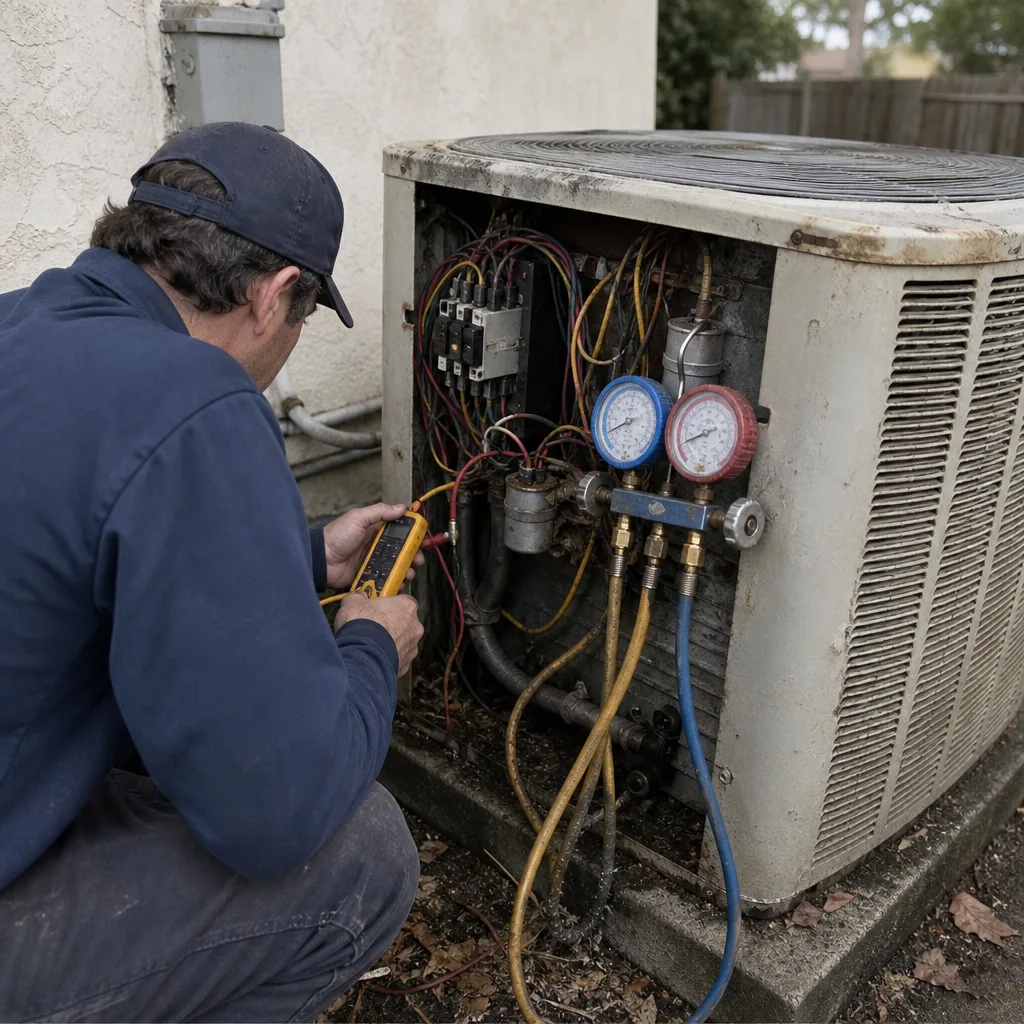 Before
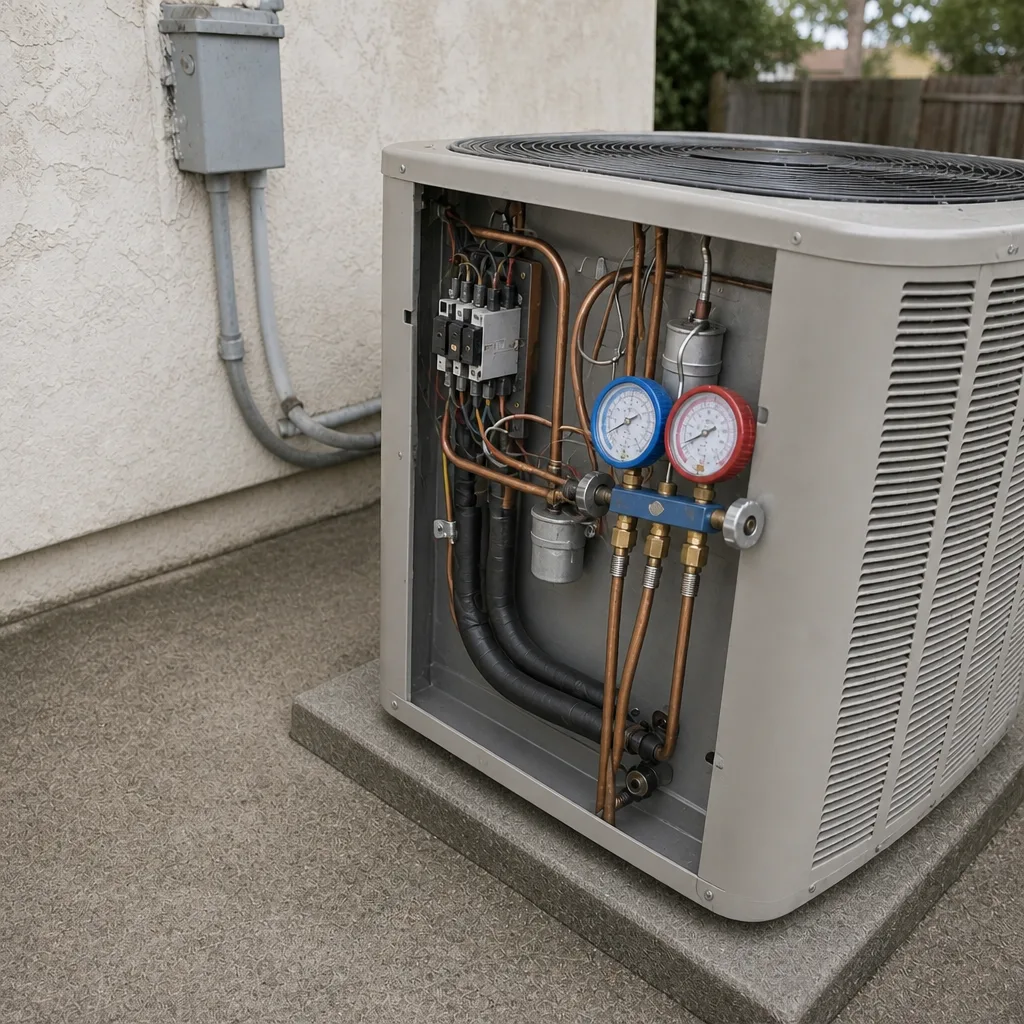 After
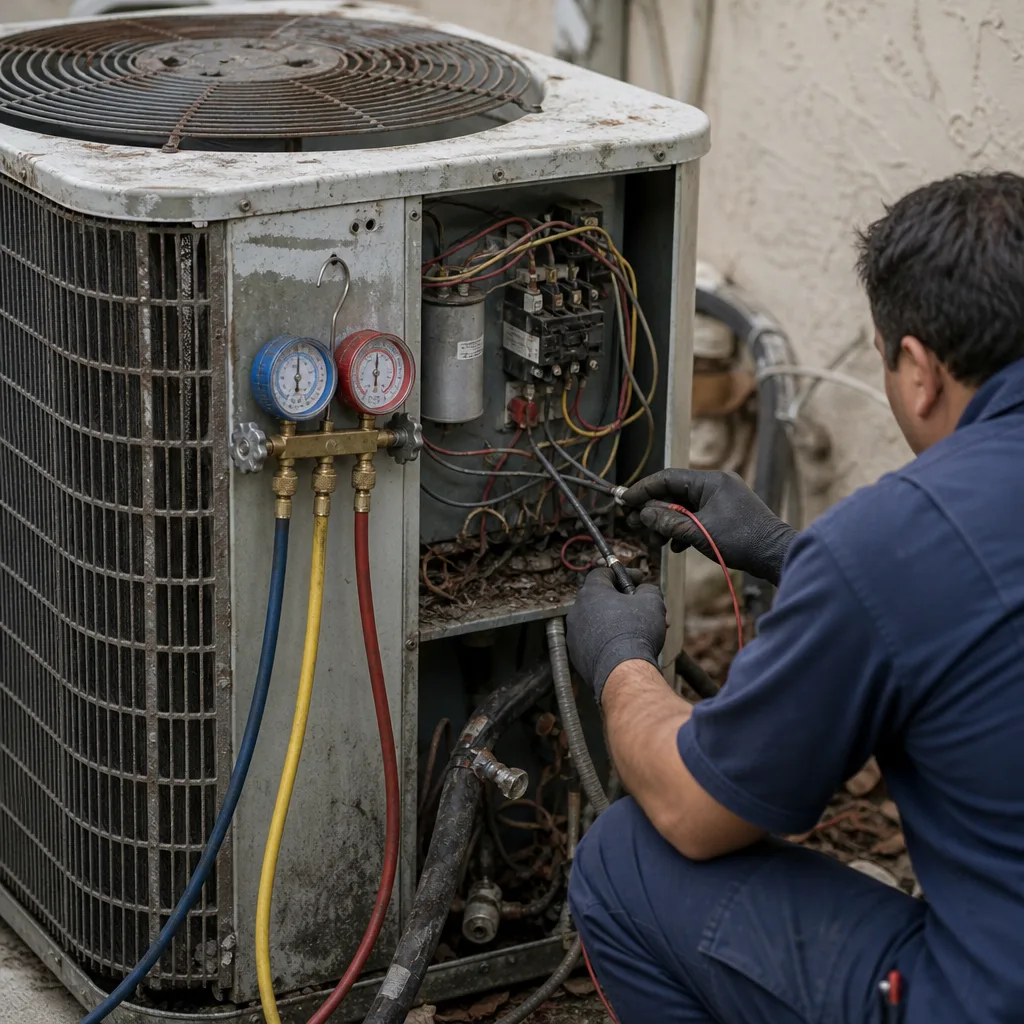 Before
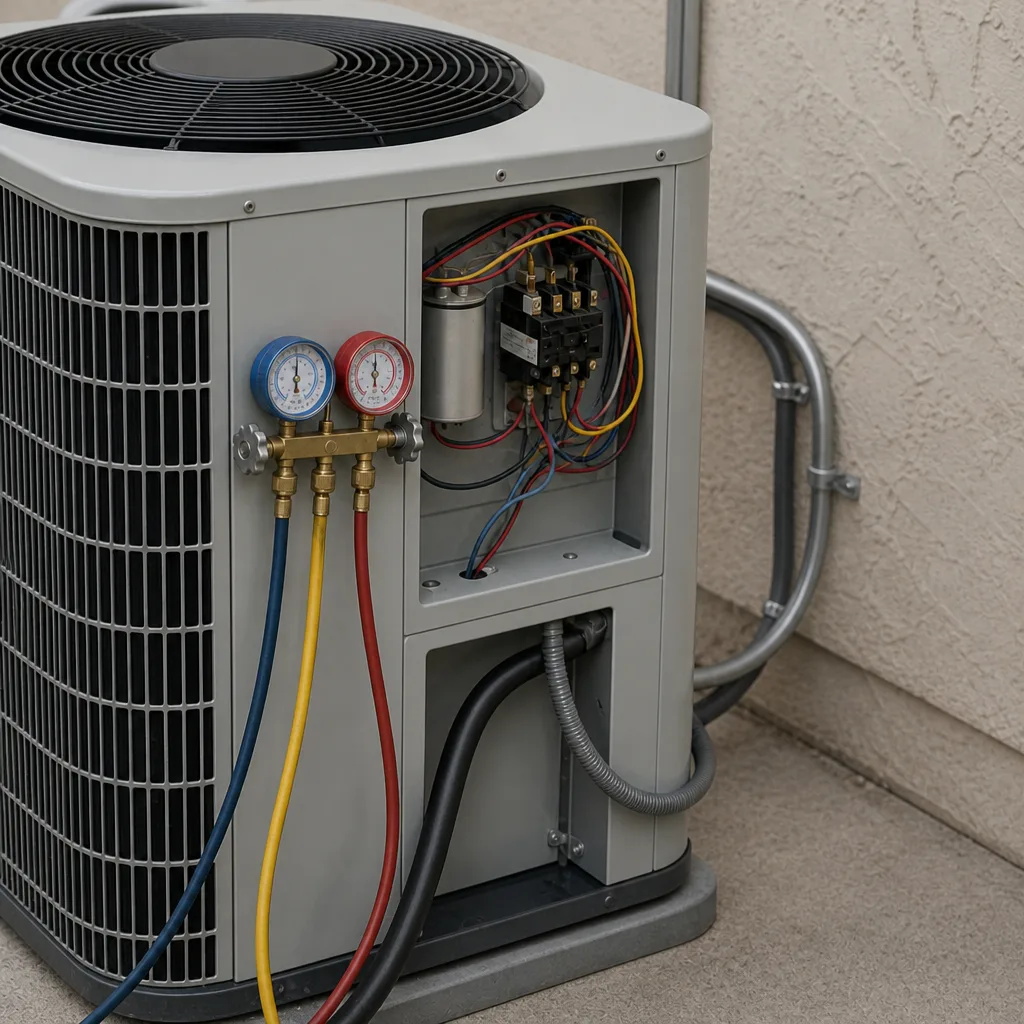 After
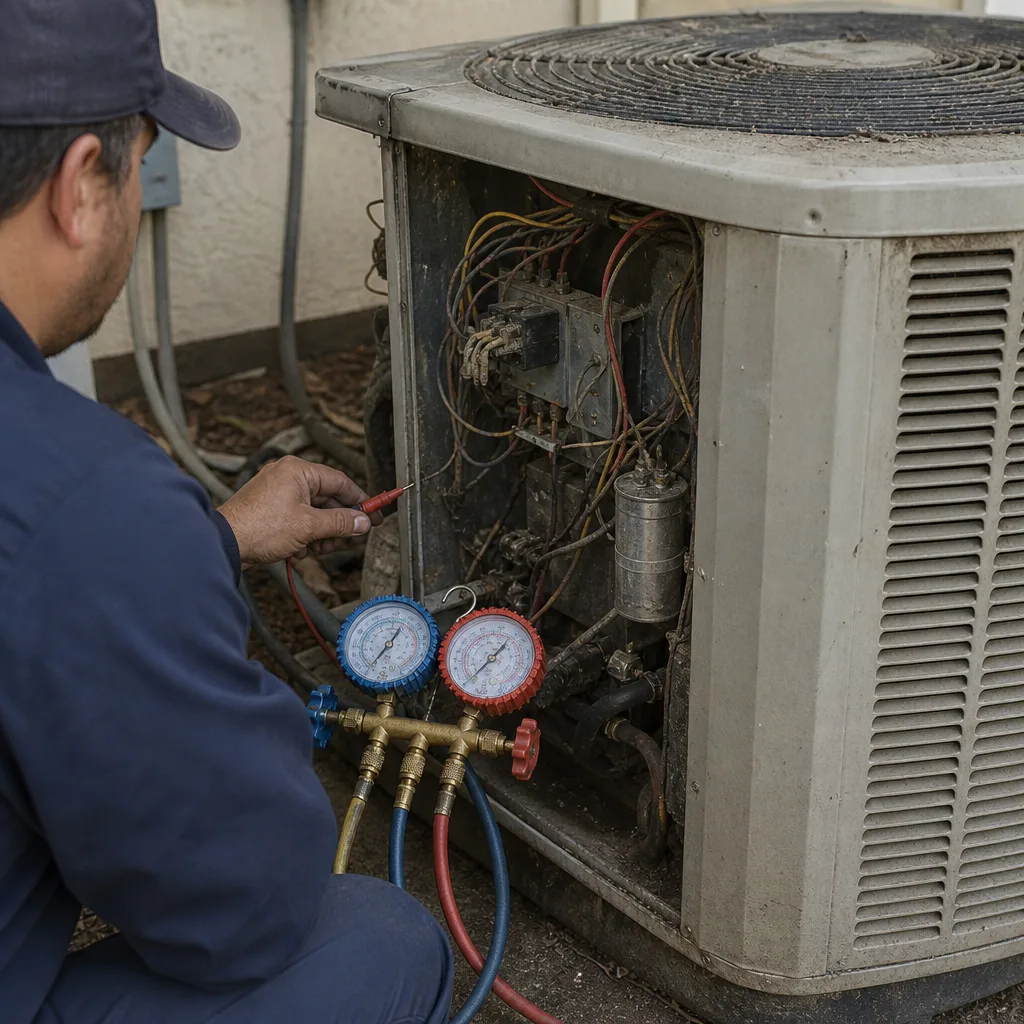 Before
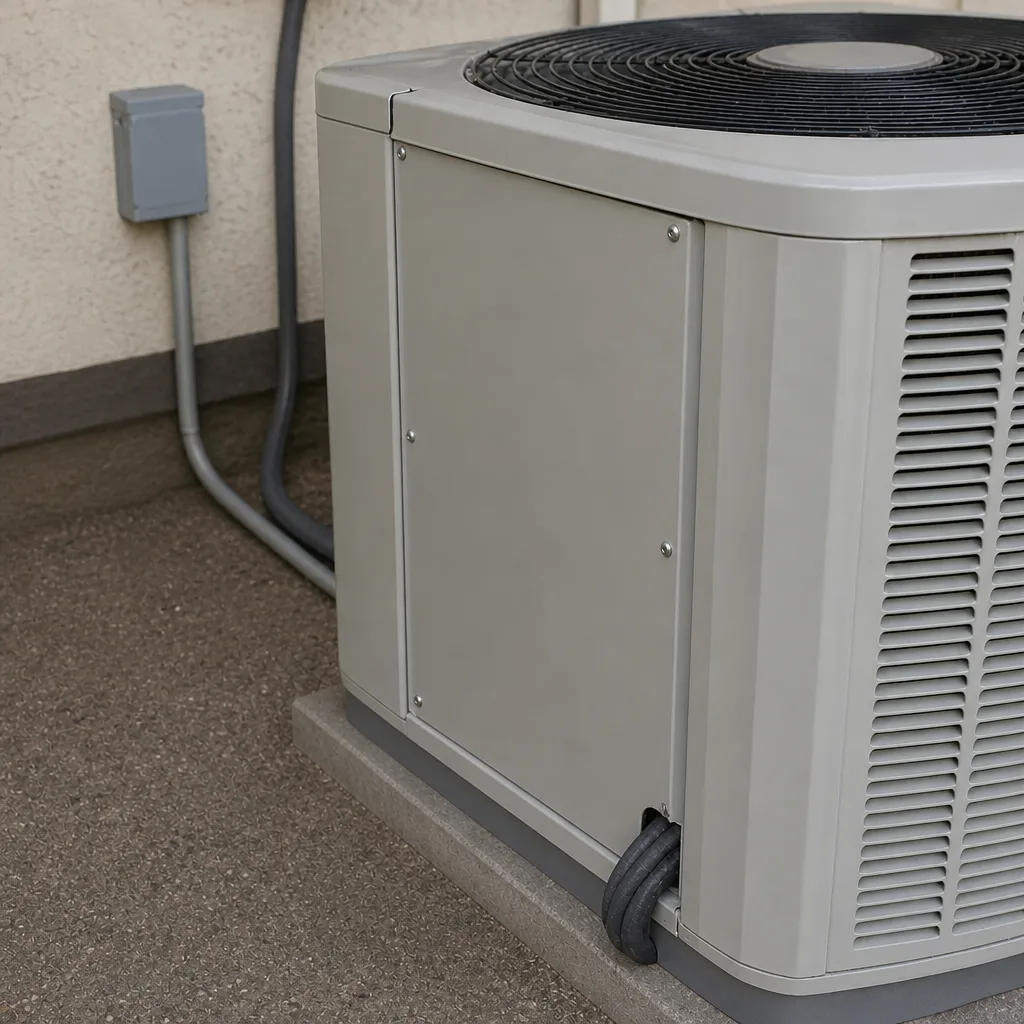 After
When to Call a Professional
Some checklist items belong to the homeowner. Some belong to a trained technician. Here’s how to tell the difference.
Call a professional when the system’s indoor coil needs cleaning, when the refrigerant circuit is in question, when the drain is clogged or the float switch is behaving oddly, when the outdoor unit is running hot or noisy, when the electrical disconnect shows any sign of trouble, or when the first full billing cycle looks off in a way that suggests a sizing problem. Those are all high-voltage or pressurized systems and none of them are DIY tasks.
Our technicians have up to experience, we’re certified to work on nine major brands, and we treat every system – premium or budget-tier – as worth diagnosing properly. If your installation is out of warranty or the original installer is unreachable, we can pick up the maintenance rhythm from here. Tidewater AC Repair offers free estimates in Boca Raton. Call (855) 552-3403. We answer 24/7. Fast dispatch from 7am to 7pm, Sunday through Friday.
Frequently Asked Questions
Around month 6 for the first indoor coil cleaning, then again at month 12 for a full system maintenance call. In Boca Raton’s humidity, the coil accumulates growth faster than in drier climates, so the month 6 cleaning matters more here. If you want a general pre-season tune-up before your first full summer, book it before the first sustained heat in spring.
The manufacturer’s default coverage applies, which is usually a shorter parts and compressor term than the registered warranty. You can still register late in some cases, but the extended term may not apply retroactively. Check the manufacturer’s website and register what you can now. Then call (855) 552-3403 for a free estimate on any service that’s needed while you sort the paperwork.
Two signals: your first full electric bill at the same time last year (it should be modestly lower, not higher), and whether the system short-cycles – running for brief intervals and restarting – rather than running continuously through the hotter part of the day. Ask your installer for the load calculation in writing. If they can’t produce it, that’s a real flag.
Start with every 30 days and check it in the first two months, then adjust. A basic 1-inch pleated filter in a Boca Raton home running the AC most months of the year typically wants attention every 30 to 60 days. Thicker media filters in a dedicated cabinet often go 6 months. Homes with pets or dust-heavy rooms go shorter. Call (855) 552-3403 if you’re not sure what your system was designed to take.
Because the coil produces more condensation here for more of the year, so there’s more to drain. That extra moisture also feeds faster biological growth in the drain line, which is the most common cause of a clog. Monthly visual checks – is the outside drain dripping on a hot afternoon? is the secondary pan dry? – catch the problem before it becomes a water-damage repair.
Yes, and getting them organized now saves a scramble later. A closed permit final inspection, annual service reports, filter logs, and warranty documentation all stand up to a buyer’s inspection. Homes with an empty service file sell as an unknown quantity, which means a lower price. Call (855) 552-3403 if you want help starting the file – an estimate is free.
The Bottom Line
Installation is the beginning of the story, not the end. The first 90 days after a new system goes in decide the warranty term, the permit status, and whether the cooling performance holds through the first really humid month. Boca Raton homeowners who keep the file, clean the coil at 6 months, watch the condensate drain monthly, and check the sizing against the first real electric bill protect both the equipment and the value of the home. That’s the whole checklist. Most of it is free. The rest is a call away. Written by the team at Tidewater AC Repair.
Written by the team at Tidewater AC Repair.