
Last updated November 15, 2026
 AC repair
 Furnace & heating
 Heat pumps
 Ductless mini splits
 Carrier
 Trane
 Goodman
Seasonal tune-up and full diagnostic on your Carrier, Trane, or Goodman system - readings shown to you before any repair is proposed
Diagnosis first, numbers second - you approve the repair price before a single part goes in.
Get your free estimateAC Installation Troubleshooting in Boca Raton: Common Problems and How to Fix Them
If your brand-new AC is already short-cycling, blowing warm air, or leaking within the first 30 days, the system itself is probably fine – the installation isn’t. That’s the part most homeowners miss. When a system fails right after install, the instinct is to blame the equipment, but in our experience the majority of first-month problems trace back to three root causes: rushed commissioning, ignored ductwork, or skipped permits. Knowing which one you’re dealing with changes everything about how you escalate it, who pays, and how fast it gets resolved. This guide walks through each failure mode, the symptoms that identify it, and the exact steps to take before your workmanship warranty closes. If you’re in Boca Raton and your new system isn’t behaving, you’re in the right place.
Quick Answer
Most post-installation AC problems in Boca Raton come down to one of three installer-side causes: an incorrect refrigerant charge set during commissioning, duct connections that were never properly sealed or sized, or a thermostat wiring mismatch left over from the old system. The equipment is rarely at fault. Identifying which category your symptoms fall into lets you escalate to the right fix – and the right party – instead of paying for repeated service calls on a system that should be working correctly from day one.
Styles & brands we work with
- AC repair
- Furnace & heating
- Heat pumps
- Ductless mini splits
- Carrier
- Trane
- Goodman
Table of Contents
- Refrigerant Charge Error vs. Refrigerant Leak: How to Tell Them Apart
- Why Airflow Problems After a New Install Usually Point to Ductwork
- Short Cycling in the First 30 Days: What It Signals
- Thermostat Wiring Mismatches Between Old and New Systems
- What an Unpulled Permit Means for Your Insurance Claim
- Warm Air and Water Leaks: Two Symptoms, Different Causes
- How to Document and Escalate Installation Defects
- Humidity Control Problems in Boca Raton Homes
Refrigerant Charge Error vs. Refrigerant Leak: How to Tell Them Apart
A refrigerant charge error and a refrigerant leak can produce nearly identical symptoms – warm supply air, a system that runs constantly without cooling the house, ice forming on the outdoor unit – but the fix and the warranty responsibility are completely different. A charge error means the installer didn’t weigh in the correct amount of refrigerant during commissioning. That’s a workmanship issue, and the installing contractor is responsible for correcting it. A leak means refrigerant is escaping from a joint, a coil, or the lineset itself. That’s an equipment or installation defect, and depending on where the leak is, it may fall under the manufacturer’s warranty, the installer’s workmanship warranty, or both.
Here’s how to tell them apart in practical terms:
- Timing of symptoms: A charge error shows up immediately – within the first day or two of operation. A leak may take weeks or months before the system loses enough refrigerant to affect cooling.
- Ice on the lineset: Both can cause icing, but a chronic charge error often produces steady, even frost on the suction line. A leak tends to produce intermittent icing that comes and goes as the charge drops.
- Hissing or bubbling: A leak at a brazed joint or Schrader valve can sometimes be heard as a faint hiss near the outdoor unit. A charge error produces no sound.
- Repeat service visits: If a technician adds refrigerant and the system cools fine for a few weeks then loses performance again, you’re almost certainly dealing with a leak, not a charge error.
The distinction matters because a charge error should be corrected at no cost to you as part of the installation warranty. A leak may require a different conversation – parts under the manufacturer’s warranty, labor under the installer’s. When a Boca Raton homeowner calls us with a system that’s a month old and not cooling, this is the first thing we check. A proper commissioning report will list the measured subcooling and superheat readings taken at startup, and comparing those to the manufacturer’s spec for your Lennox or Goodman system tells you whether the charge was ever right.
Why Airflow Problems After a New Install Usually Point to Ductwork
When a new system cools some rooms well and leaves others stuffy, or when airflow feels weaker than the old system it replaced, the air handler is almost never the problem. The ductwork is. New AC installs in Boca Raton homes frequently involve matching a modern, higher-efficiency unit to ductwork that was sized for a system 15 or 20 years older. If the new unit moves more air than the existing ducts can handle, static pressure climbs, airflow drops, and the system underperforms no matter how well the equipment itself was built.
The symptoms that confirm a duct-side airflow problem rather than an air handler problem:
- One or two rooms never get cool while the rest of the house is fine. That’s a distribution issue, not a capacity issue.
- Weak airflow at far registers – the rooms furthest from the air handler feel noticeably less air than close ones.
- Whistling or rushing noise at supply registers, which usually means the ducts are undersized or a fitting was crushed during install.
- High static pressure measured by a technician at the air handler. This is the definitive test. If static pressure is above the equipment manufacturer’s spec, the ducts are the bottleneck.
- Duct connections pulled loose in the attic – after a new install, a poorly secured flex duct run can slip off a collar and dump cold air into the attic instead of the bedroom.
What to check before calling anyone: walk the house and note which rooms are cold and which aren’t, then check that all supply registers are open and unobstructed by furniture or rugs. Look at the return grilles and make sure nothing is blocking them. If the pattern holds – some rooms cool, others don’t, and the outdoor unit is running normally – you’re looking at ductwork. The fix usually involves sealing connections, correcting a crushed or disconnected run, or in more serious cases resizing a trunk line. That’s a conversation to have with the installing contractor while their workmanship warranty is still active.
Short Cycling in the First 30 Days: What It Signals
Short cycling means the system turns on, runs for a short period, and shuts off before the house reaches the thermostat setpoint – then repeats. On a brand-new system this almost always points to one of three installer-side issues, not an equipment failure. The most common is an oversized system installed without a proper load calculation. If the unit is too large for the home, it cools the air quickly and satisfies the thermostat before it has time to remove humidity, then cycles off and on constantly. The second common cause is a thermostat wiring or configuration problem. The third is a refrigerant charge that’s off enough to trip a safety switch.
- Check the runtime pattern. A properly sized system runs in longer cycles – often 15 to 20 minutes or more – to reach setpoint. If yours runs for 5 minutes and shuts off repeatedly, that’s short cycling.
- Check the thermostat settings. Make sure the system isn’t set to a swing or differential that’s too narrow, and confirm the fan setting isn’t on “auto” when it should be “on” for your setup, or vice versa.
- Check for icing on the indoor coil or outdoor unit. Ice pointing to a charge or airflow problem is a different failure mode but can masquerade as short cycling.
- Ask for the load calculation. A proper install starts with a Manual J load calculation. If the contractor can’t produce one, oversized equipment is a real possibility.
- Request a commissioning report. The report should show measured airflow (CFM), static pressure, and refrigerant charge readings. Missing readings are a red flag.
In Boca Raton’s climate, an oversized system causes a specific problem beyond comfort: it never runs long enough to pull humidity out of the air. Homeowners end up with a house that feels cool but clammy, and that’s a sign the install needs review. A properly sized and commissioned system in this climate should run long enough cycles to control both temperature and moisture.
Thermostat Wiring Mismatches Between Old and New Systems
Thermostat wiring mismatches are one of the most overlooked causes of post-installation problems, and one specific error stands out: the reversing valve wire on a heat pump system. On most heat pump thermostats the reversing valve is energized in cooling mode, but some equipment – and notably some Rheem and York heat pump models – energize it in heating mode instead. If the installer wires it to the standard convention without checking the equipment’s requirement, the system runs in the wrong mode, the compressor can run non-stop trying to satisfy a setpoint it can never reach, and performance suffers across the board.
Other wiring issues that show up after a new install:
- Misidentified wire colors. Old systems and new equipment don’t always use the same color code. An installer who assumes instead of verifying can cross a fan wire with a compressor wire.
- Missing common wire. Smart thermostats and modern equipment often need a C-wire to power the thermostat. If one wasn’t run, the thermostat may draw power through the equipment in a way that causes erratic behavior.
- Loose or backstabbed connections. A wire pushed into a terminal instead of screwed down can work initially and then lose contact as the thermostat warms and cools.
- Misconfigured thermostat settings. Even correctly wired, a thermostat set up for a single-stage system on a two-stage unit, or vice versa, will cause cycling and comfort problems.
The single wire color-code error that causes compressors to run non-stop is the reversing valve wire on heat pump equipment. If your new system is a heat pump and the compressor never stops running, that’s the first thing a technician should check. It’s a quick fix – rewire and reconfigure the thermostat – but it’s easy to miss if the installer assumes all brands follow the same convention. If you’re not sure what kind of system you have, that’s worth confirming first; our AC installation team walks Boca Raton homeowners through exactly this check when we’re called to a new system that won’t settle down.
What an Unpulled Permit Means for Your Insurance Claim
If your new AC was installed without a permit, your homeowner’s insurance claim can be denied if something goes wrong within the first year – and that’s the part most homeowners never think about until it matters. Most Florida municipalities, including Boca Raton, require a permit for AC replacement. The permit triggers an inspection that confirms the work was done to code: electrical connections made properly, the system installed per manufacturer spec, and the equipment registered correctly. Without that inspection, there’s no independent record that the install was done correctly. If a fire, a water leak, or a refrigerant issue traces back to the installation, the insurer can point to the lack of a permit as evidence the work wasn’t to code and deny the claim.
How to check whether your install was permitted:
- Ask the contractor for the permit number. Any legitimate installation generates a permit. A contractor who says permits aren’t required for a replacement is either mistaken or avoiding the inspection.
- Call the city building department and confirm a permit was pulled for your address and that the inspection was passed. Don’t rely on the contractor’s word alone.
- Request the inspection record. The signed inspection card is your proof the work was reviewed. Hang onto it with your equipment paperwork.
- Check the equipment registration. Manufacturers require the equipment be registered within a set window to keep the full warranty in effect. That registration is usually tied to the installation.
If you discover your install was done without a permit, the path forward is to have the work inspected and brought up to code. That may mean a supplemental permit and a follow-up inspection. It’s worth the effort, because an unpermitted install is a problem that sits quietly until the day you need your insurance to come through. For Boca Raton homeowners, this is one of the most important things to verify in the first month after install, while the installing contractor is still on the hook for workmanship.
Warm Air and Water Leaks: Two Symptoms, Different Causes
Warm air from the vents on a brand-new system is alarming, but it doesn’t mean the equipment is defective. The most common cause is a refrigerant charge error or a reversing valve wired to the wrong mode. Less common causes include a compressor that isn’t starting, a control board issue, or a thermostat configured incorrectly. Water leaks after install are almost always condensate-related: a drain line that wasn’t pitched correctly, a primary drain pan that isn’t draining, or a secondary drain line that was never connected. In Boca Raton’s humidity, a condensate problem shows up fast because the system produces a lot of water during normal operation.
A quick checklist for each symptom:
- Warm air: confirm the thermostat is in the correct mode, then check whether the outdoor unit is running. If the outdoor unit is running but the air is warm, it’s a charge, mode, or compressor issue. If the outdoor unit isn’t running, it’s electrical, control, or thermostat.
- Water near the air handler: check whether the condensate drain line is flowing. A clogged or improperly pitched drain will overflow the pan. A disconnected secondary drain line can also dump water where it shouldn’t.
- Water near the outdoor unit: normal during humid weather – the outdoor unit condenses water and drains it. It’s not a leak unless it’s persistent and pooling in a way it shouldn’t.
Both symptoms deserve a call back to the installing contractor while the workmanship warranty is active. Document what you see, take photos, and note the date and time. If the contractor is slow to respond, having that documentation makes escalation much easier.
How to Document and Escalate Installation Defects
Documentation is the difference between a contractor who fixes the problem and one who stalls until the warranty expires. The workmanship warranty on an AC install typically covers a defined window – often a year, sometimes shorter – and the clock starts at installation. The goal is to report every defect in writing during that window, with enough detail that there’s no ambiguity about what’s being claimed.
Follow these steps:
- Report in writing, not by phone. Email or text creates a record with a timestamp. A phone call doesn’t.
- Describe symptoms specifically. “The system does not cool the master bedroom below 78 degrees regardless of setpoint” beats “the AC isn’t working.”
- Include dates, times, and photos. Note when the problem started, when it happens, and what you observe. Photos of icing, water, or thermostat readings help.
- Reference the commissioning report. If the contractor provided measured charge and airflow readings at startup, compare them to the current behavior. A gap between the two is strong evidence of a defect.
- Ask for the fix in writing. Request a written scope of what will be corrected and when. Verbal promises don’t hold up.
- Escalate if needed. If the contractor doesn’t respond reasonably, contact your county’s consumer protection office, the state licensing board for HVAC contractors, or your homeowner’s insurance if the defect has caused damage.
Keep every document in one folder: the contract, the permit number, the inspection card, the commissioning report, all photos, and all written communication. If your install was through a large retail chain, the escalation path may involve the retailer as well as the installer. Either way, the record is what protects you.
Humidity Control Problems in Boca Raton Homes
A new AC that cools the house but leaves it feeling clammy is a common complaint in Boca Raton, and it usually traces back to one of two installer decisions: an oversized system or a system that wasn’t set up to run long enough cycles. Air conditioning removes humidity as a byproduct of running. A system that cools the space too quickly and shuts off before it has time to dehumidify will leave the house at the right temperature but the wrong moisture level. In this climate, that matters – a house at 74 degrees with high humidity feels sticky and uncomfortable, and the excess moisture can affect indoor air quality over time.
What to check when humidity is the complaint:
- Run time per cycle. If your system runs in short bursts, it’s not removing enough moisture. A properly configured system runs longer cycles and cools more gently.
- Fan setting. A fan set to “on” runs continuously and re-evaporates moisture off the coil between cycles. Setting it to “auto” often improves humidity control.
- Thermostat humidity control. Some modern thermostats can prioritize dehumidification by slowing the blower. Ask the installer whether yours is configured for that.
- Manual J sizing. If the system is oversized, no thermostat setting will fully compensate. The fix is a load calculation and, in the worst case, resizing.
Humidity problems are one of the most common post-install complaints we hear from Boca Raton homeowners, and they’re almost always a commissioning or sizing issue rather than an equipment failure. A system from any of the major brands – Lennox, Goodman, Rheem, York, and the rest – will control humidity well when installed and configured correctly. When it doesn’t, the conversation needs to happen with the installer.
Common Mistakes to Avoid
- Blaming the equipment before checking the install. When a new system underperforms, the instinct is to call the manufacturer or demand a replacement. That’s almost never the right first move. The installation is where the problem usually lies, and the manufacturer’s warranty doesn’t cover installer error.
- Skipping the commissioning report. A proper commissioning report shows measured refrigerant charge, airflow in cubic feet per minute, and static pressure. If you didn’t get one, ask for it now. Without baseline numbers, every future service call is guesswork.
- Not verifying the permit. Homeowners in Boca Raton often assume the contractor handled the permit. Verify it directly with the building department. An unpermitted install can complicate insurance claims and resale down the line.
- Waiting until the workmanship warranty expires to escalate. Report problems in writing the day you notice them. A contractor who stalls is hoping the warranty window closes before you push hard enough.
- Letting a contractor add refrigerant without finding the leak. If a technician tops off the charge and the system cools again, that’s not a fix – it’s a delay. Insist on a leak search before accepting “recharged” as the resolution.
- Ignoring humidity complaints. A house that’s cool but clammy is a sign of a sizing or configuration problem that won’t fix itself. Address it while the installer is still responsible.
- Paying for a second opinion before the installer has a chance to correct. Give the original contractor a documented chance to fix the issue first. It’s cheaper and it protects your warranty position.
See the difference
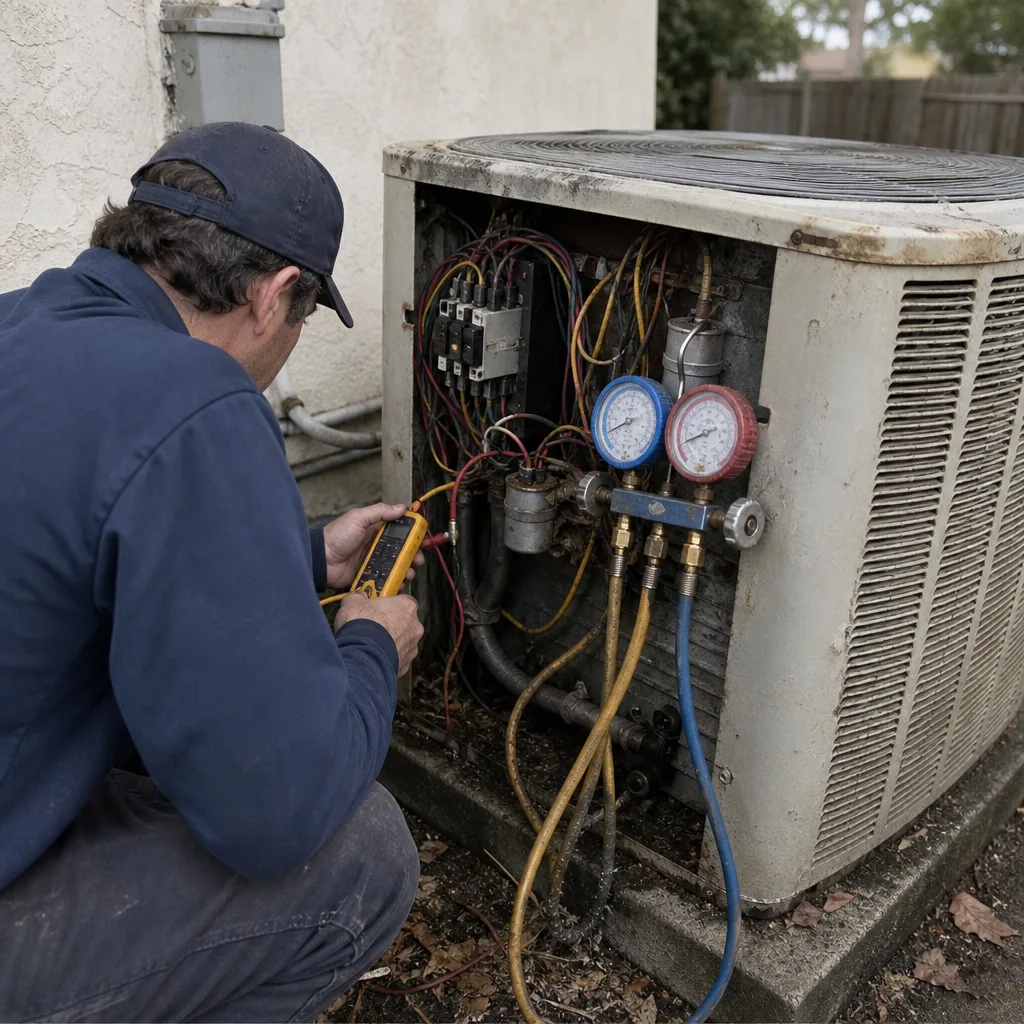 Before
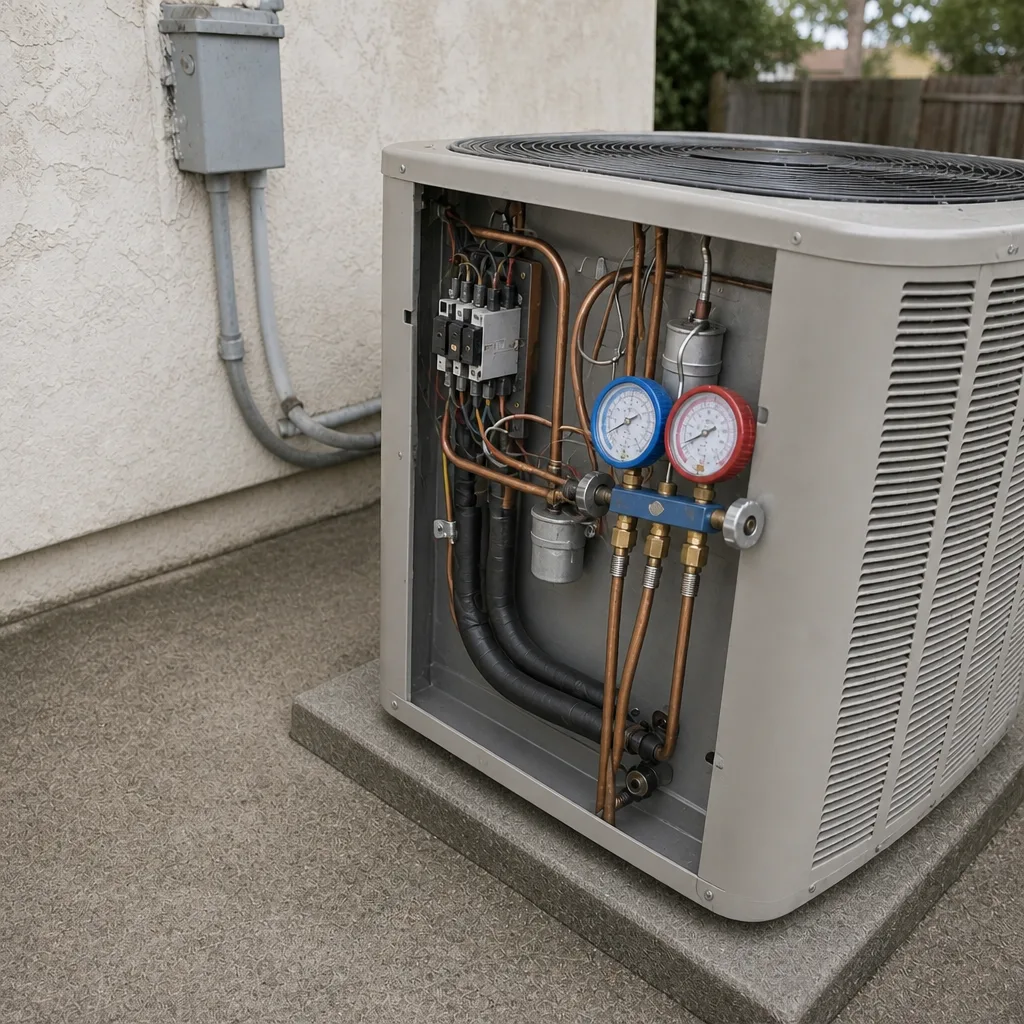 After
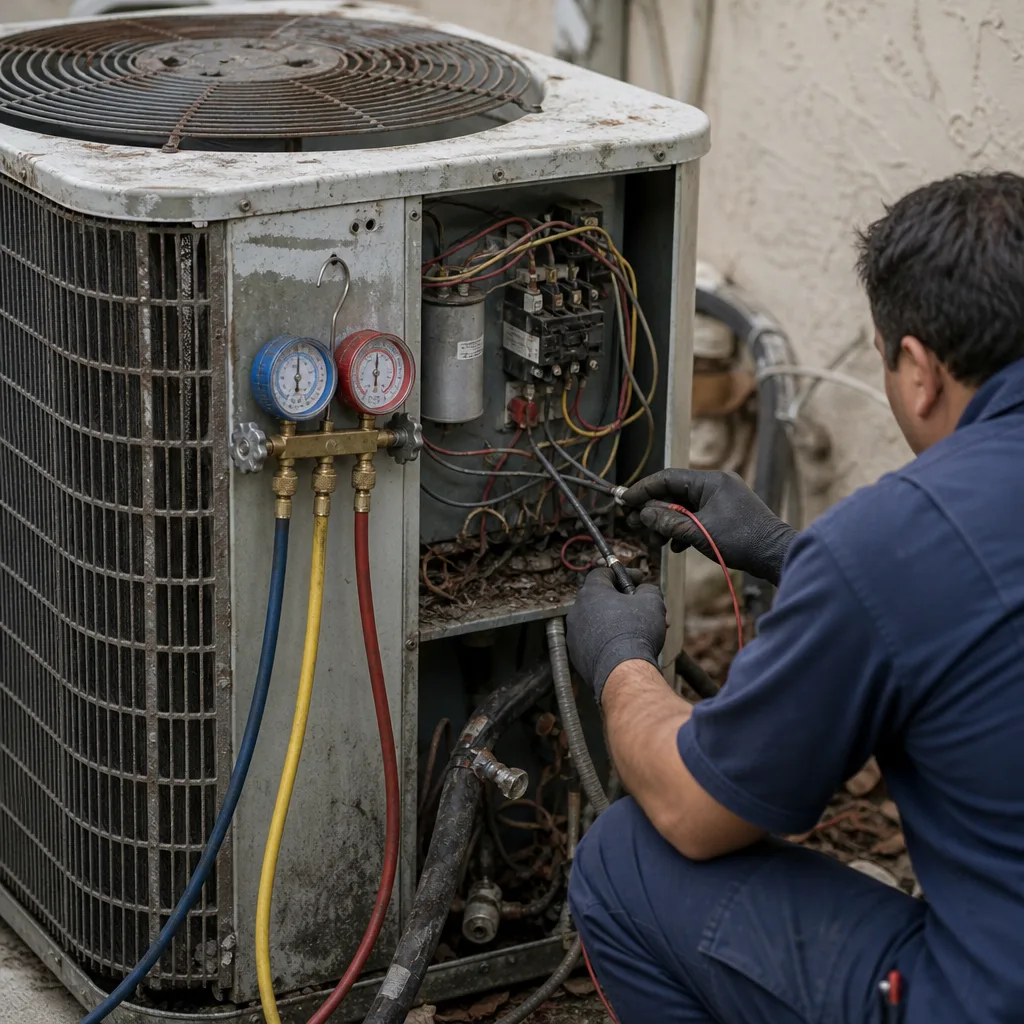 Before
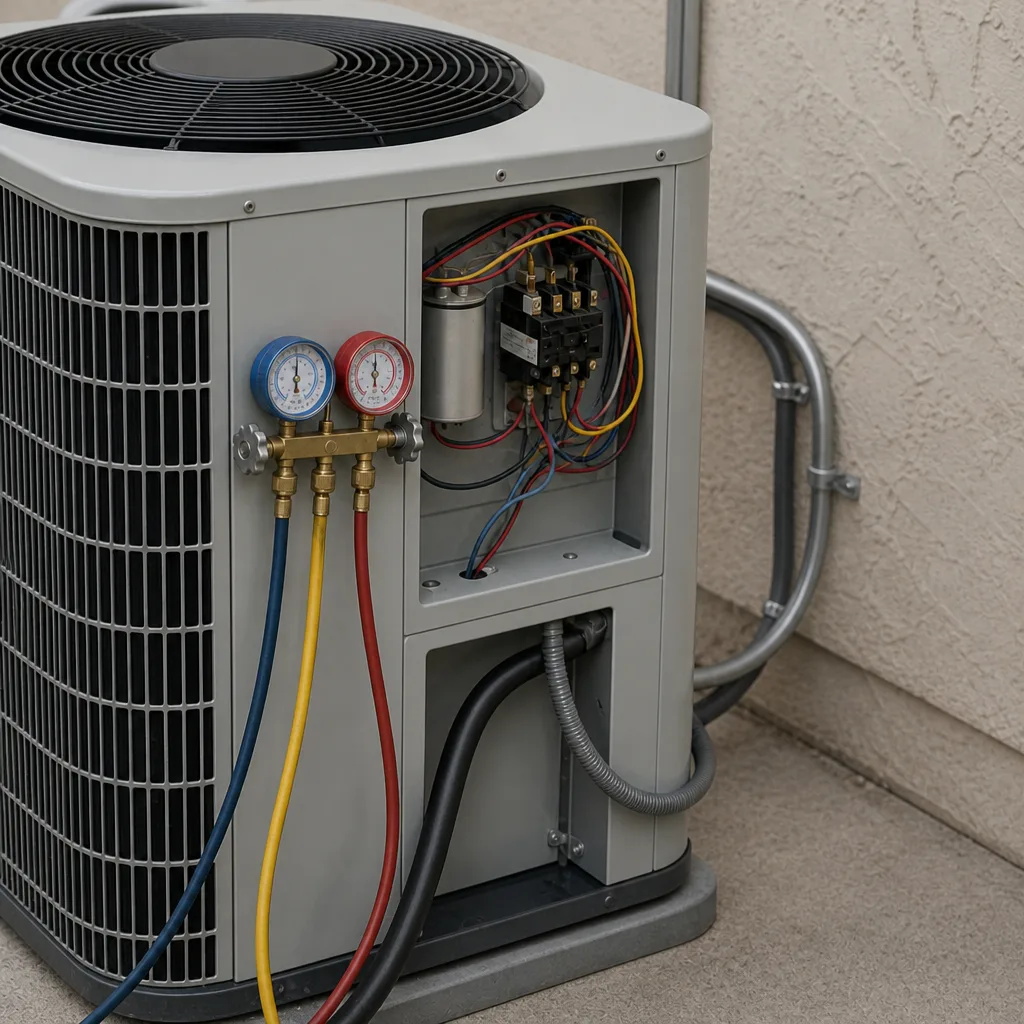 After
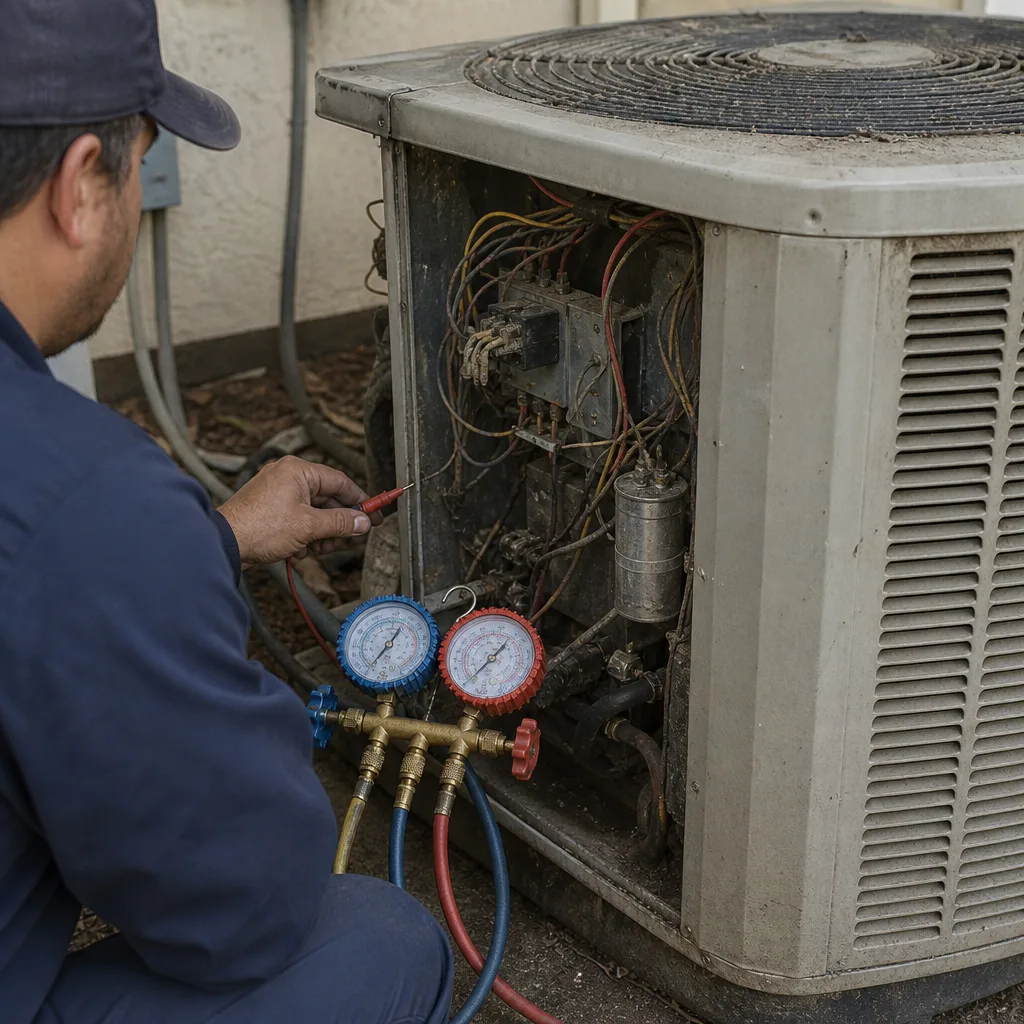 Before
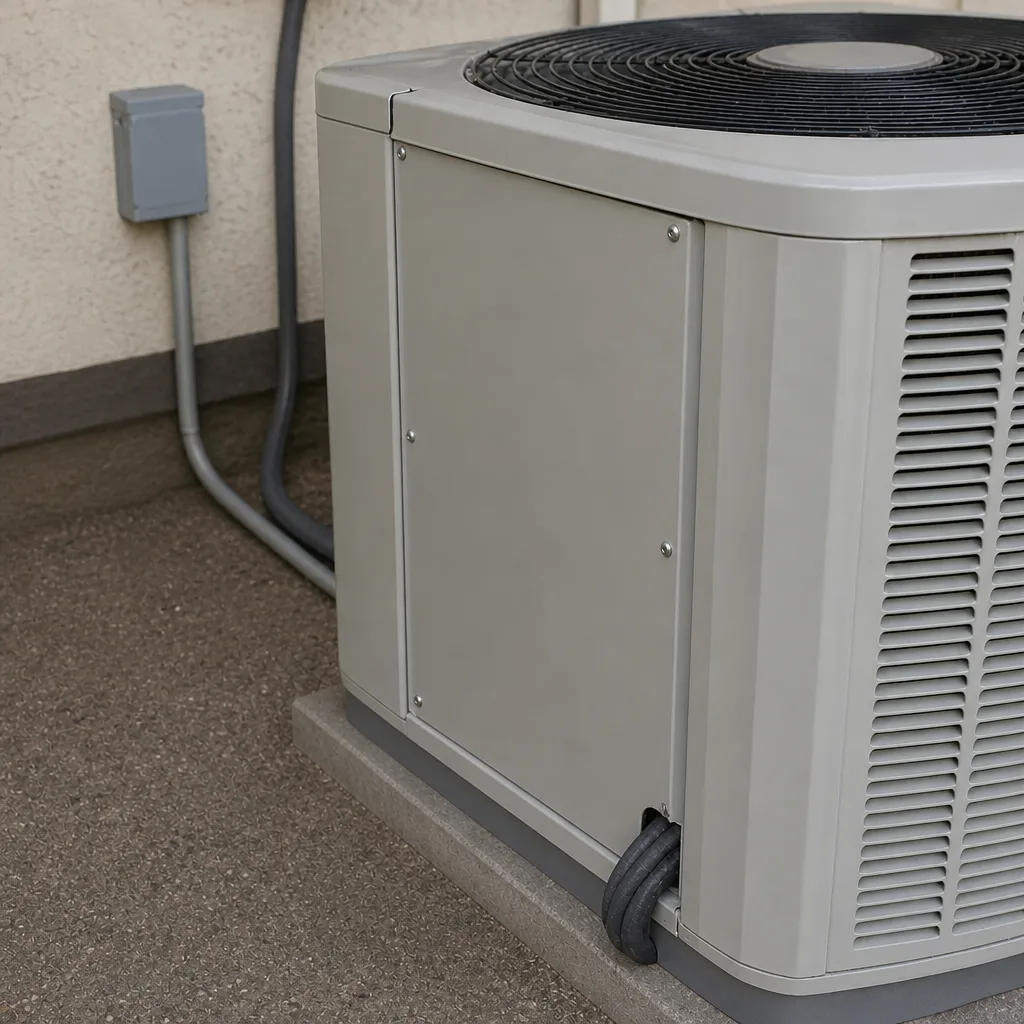 After
When to Call a Professional
Some things are worth checking yourself: whether the thermostat is in the right mode, whether a register is blocked, whether the condensate drain is flowing. Beyond that, refrigerant work, electrical connections, and control board diagnosis all require a trained technician. If your system was installed within the last year and exhibits any of the symptoms in this guide – short cycling, warm air, humidity problems, water leaks, or airflow issues that point to ductwork – the installing contractor should be your first call, and a second opinion from a brand-agnostic technician is reasonable if the first contractor won’t engage. If you’ve moved into a home with a recent install and don’t have the paperwork, that’s also a call. Tidewater AC Repair offers free estimates in Boca Raton – call (855) 552-3403. We work on your system, not just the brands we sell, and our technicians have up to experience diagnosing exactly these post-installation problems.
Frequently Asked Questions
Probably not. Short cycling on a new system is most often caused by an oversized unit installed without a proper load calculation, a thermostat wiring or configuration error, or a refrigerant charge issue. The equipment itself is rarely at fault. Start by requesting the commissioning report and the load calculation from the installer, then ask for a written assessment of the cycling pattern. Call (855) 552-3403 for an exact quote on a diagnostic visit – estimates are free.
A charge problem shows up within the first day or two and stays consistent. A leak tends to appear weeks or months later, often intermittently, and returns after a recharge. If a technician adds refrigerant and the system loses cooling again within a few weeks, that’s a leak and the search should be on the lineset, coils, and fittings. A proper leak search is not the same as a recharge, and the fix depends on where the leak is. Call (855) 552-3403 to schedule a leak diagnostic.
Yes – most Florida municipalities, including Boca Raton, require a permit for AC replacement, and the inspection that follows confirms the work was done to code. Without it, an insurance claim tied to the installation can be denied, and the missing inspection can complicate a future sale. Verify the permit directly with the city building department rather than relying on the contractor’s confirmation. If you’re not sure whether your install was permitted, call (855) 552-3403 and we’ll help you figure out what to check.
A house that’s cool but clammy almost always has an oversized system or one that isn’t configured to run long enough cycles to pull moisture out of the air. Check the thermostat fan setting first – “auto” usually improves humidity control over “on.” If that doesn’t help, the system may need a load calculation review and a possible resize. In Boca Raton’s humidity, this is one of the most common post-install complaints. Call (855) 552-3403 for an exact quote on a humidity assessment.
Document everything in writing – symptoms, dates, times, photos, and the original contract with the commissioning report – then escalate. Contact your county consumer protection office or the state licensing board for HVAC contractors, and if the defect has caused damage, notify your homeowner’s insurance. Many contractors respond quickly once a written record exists, so start there. Call (855) 552-3403 if you’d like a second opinion from a brand-agnostic technician before deciding on next steps.
Yes. The most common culprit is the reversing valve wire on heat pump systems – some brands (Rheem and York among them) energize the reversing valve in heating mode rather than cooling, and an installer who assumes the standard convention can wire it backward. The result is a system that runs constantly without reaching setpoint. It’s a quick fix once identified, but it gets missed more often than it should. Call (855) 552-3403 to have a technician check the wiring and thermostat configuration.
The Bottom Line
Post-installation AC problems in Boca Raton come down to three root causes: rushed commissioning, ignored ductwork, and skipped permits. Identify which one fits your symptoms, report it in writing while the workmanship warranty is active, and get the installing contractor to correct it. The equipment from any major brand – Lennox, Goodman, Rheem, York, or the others – is rarely the issue. For a second opinion from technicians who work on nine major brands and aren’t tied to any single manufacturer, we’re here.
Call (855) 552-3403 for a free estimate. We answer 24/7. Fast dispatch from 7am to 7pm, Sunday through Friday. Whether it’s your Carrier AC or your Goodman furnace, we know it. Straight diagnosis, real options, no runaround. Start with Tidewater AC Repair for service across our Boca Raton coverage area, and if the season turns cold before your cooling problem is sorted, our furnace repair team handles that side of the house too.
Written by the team at Tidewater AC Repair.