
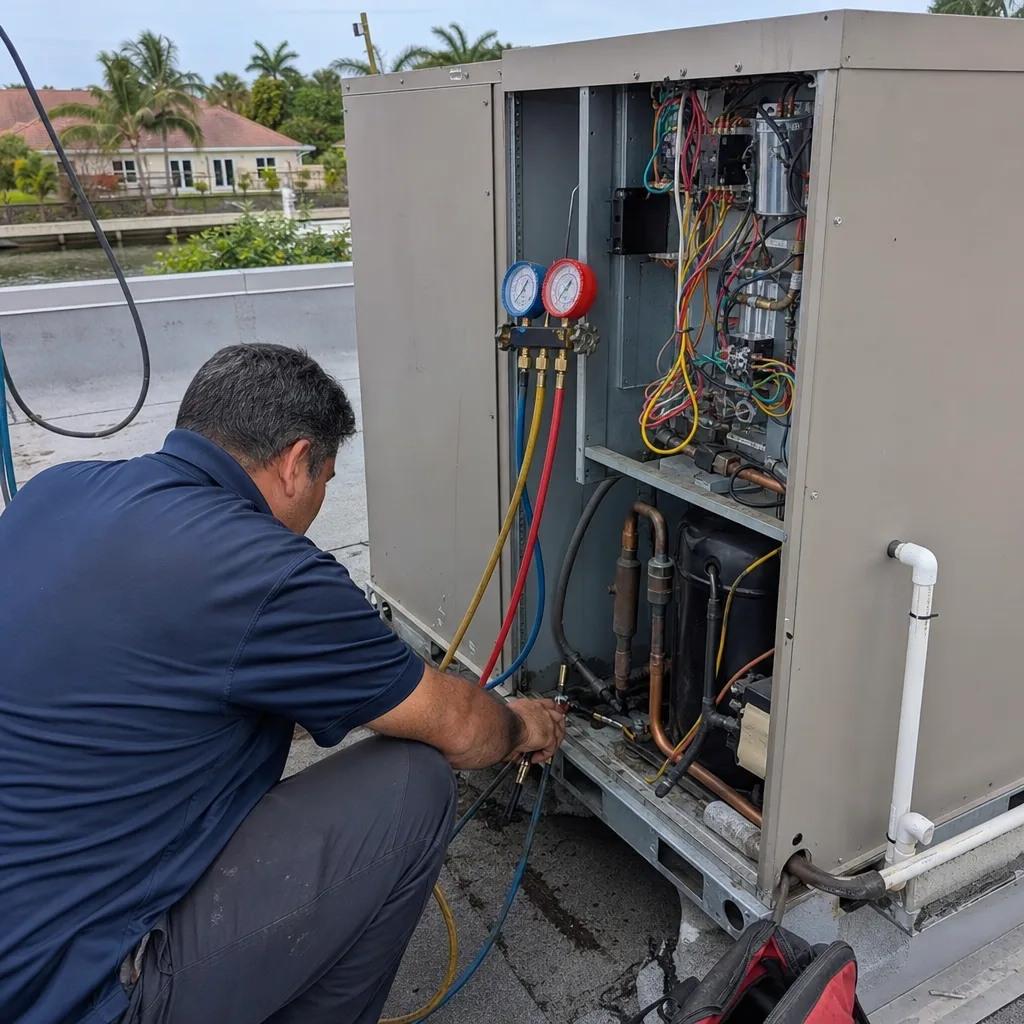
Last updated November 15, 2026
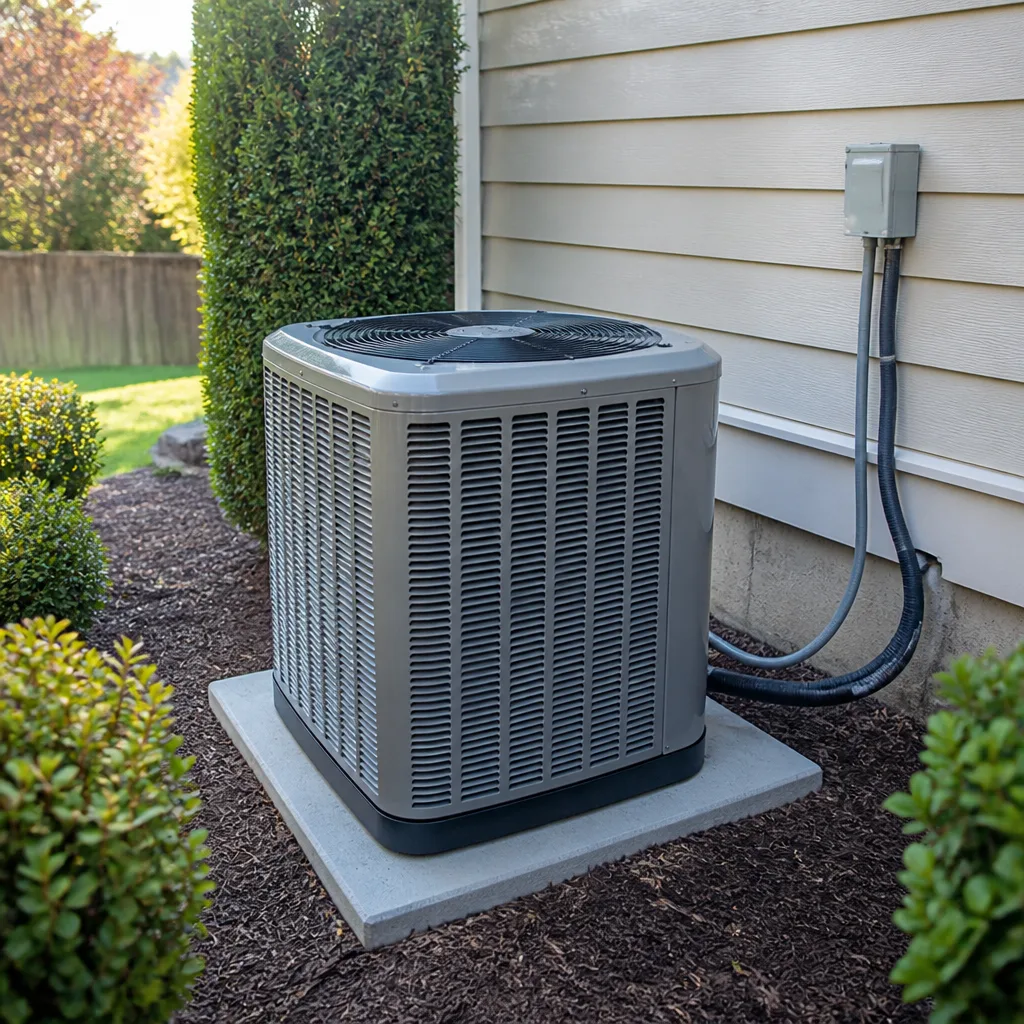 AC repair
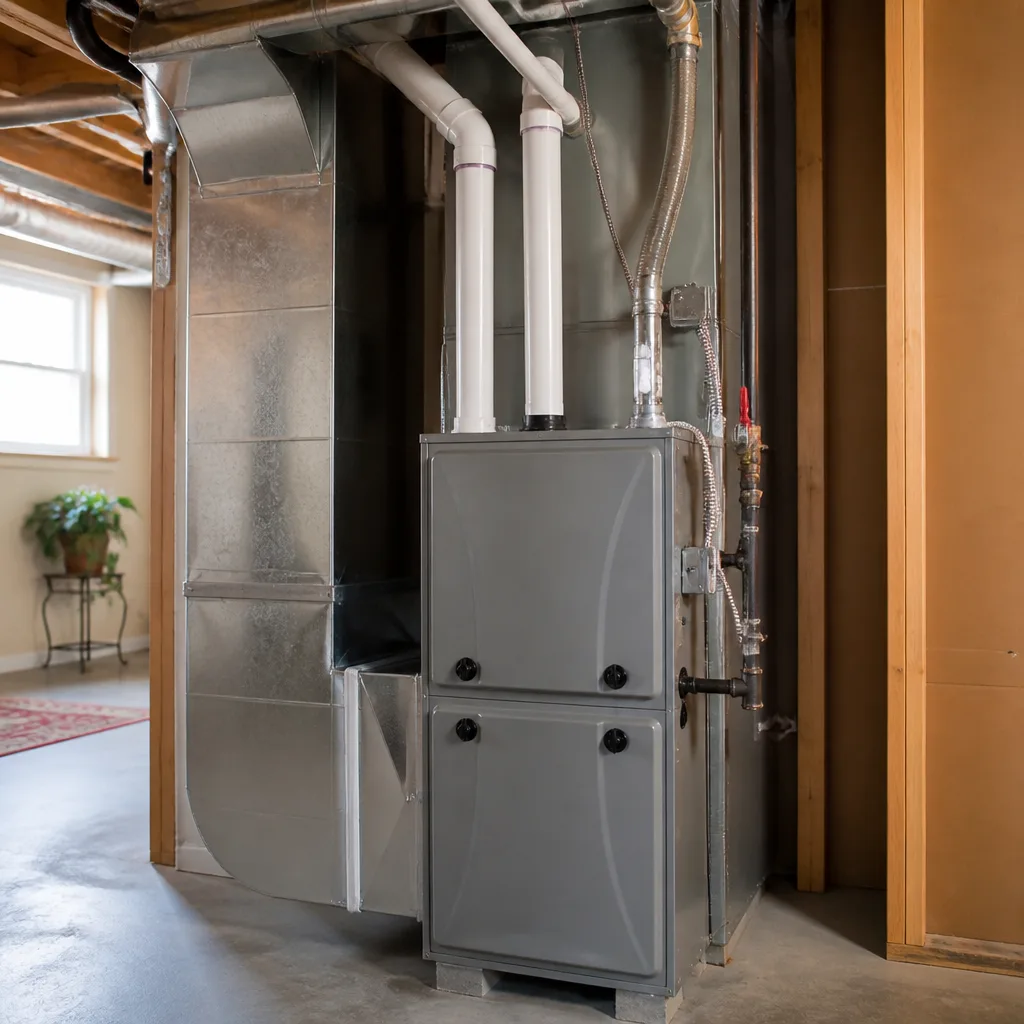 Furnace & heating
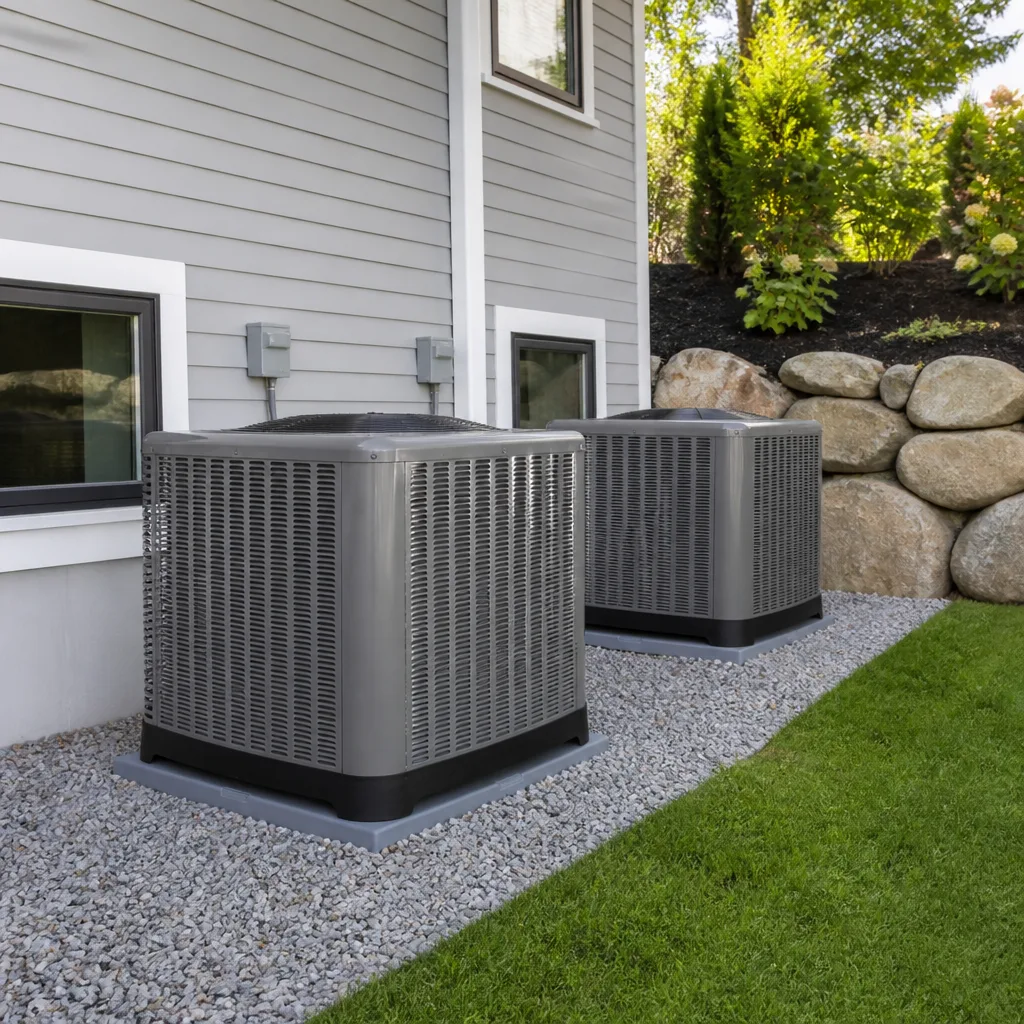 Heat pumps
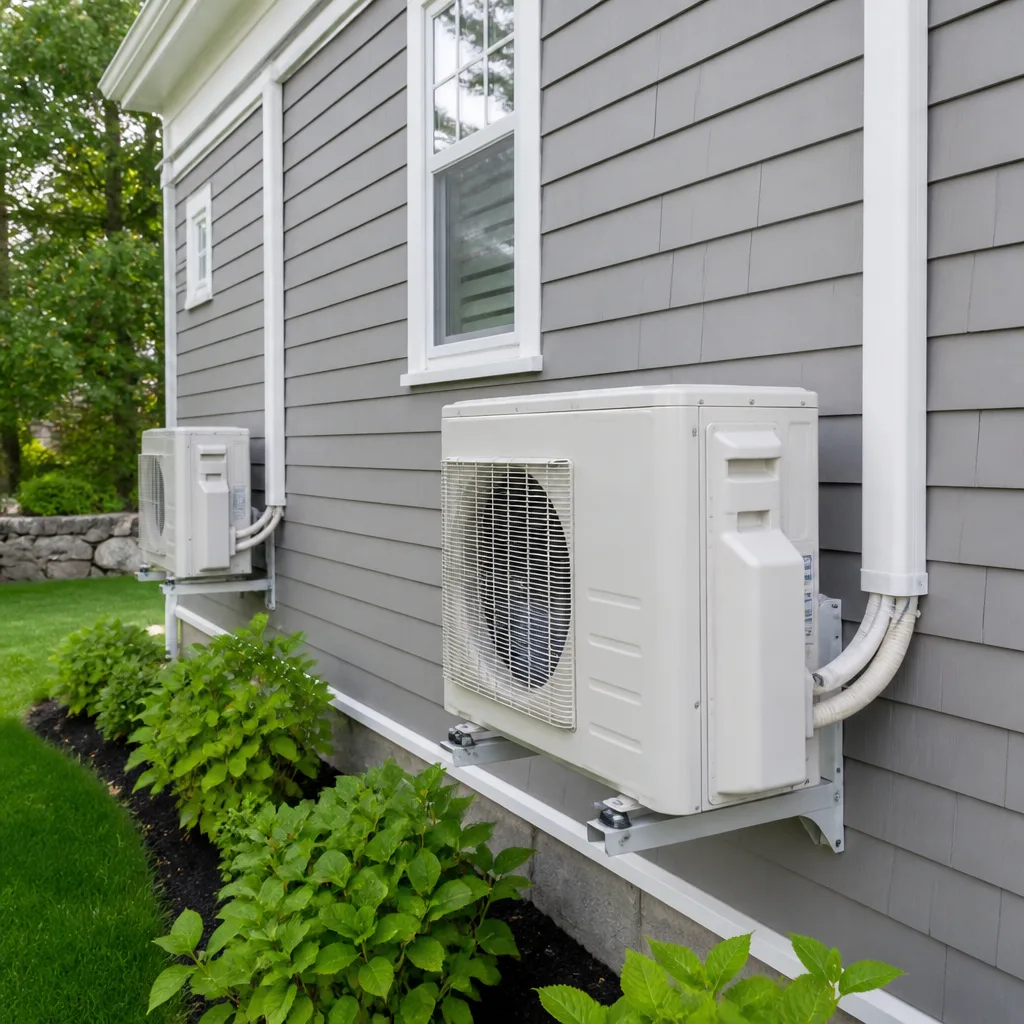 Ductless mini splits
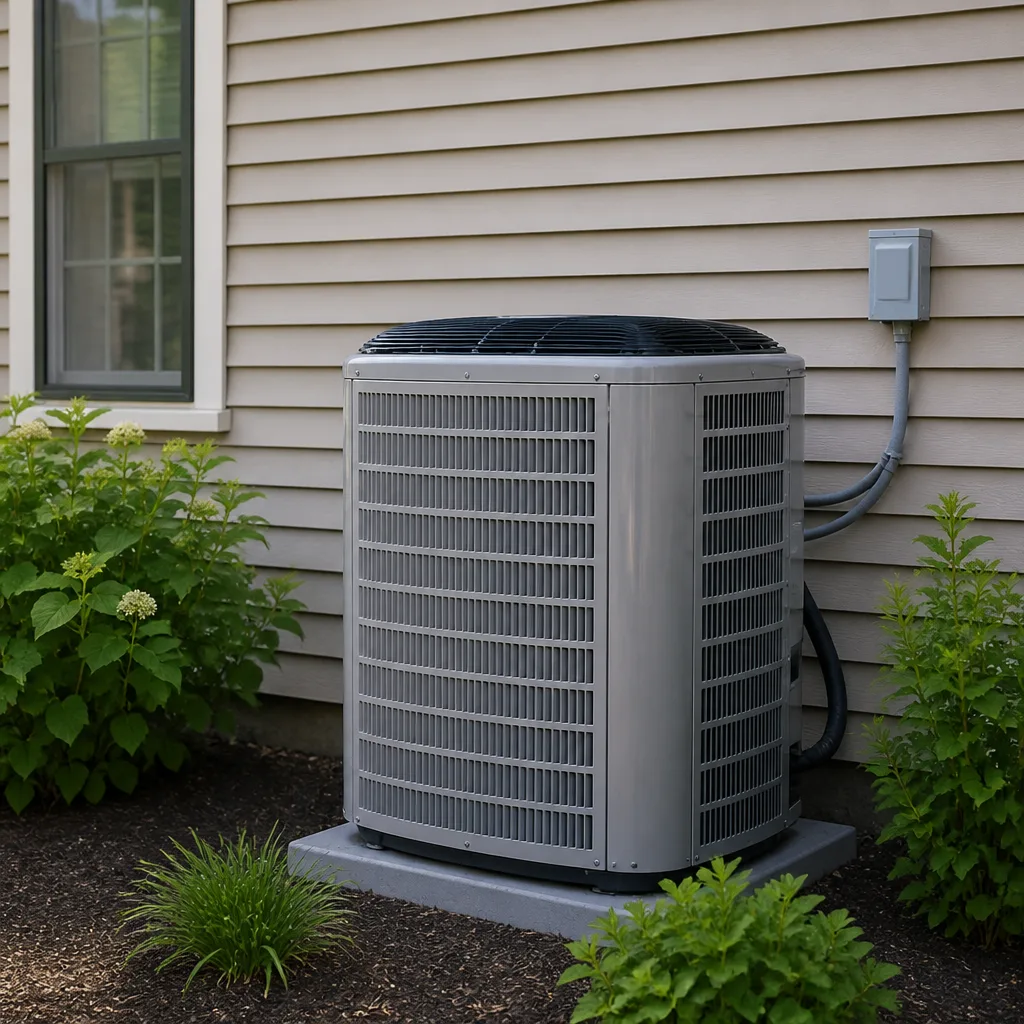 Carrier
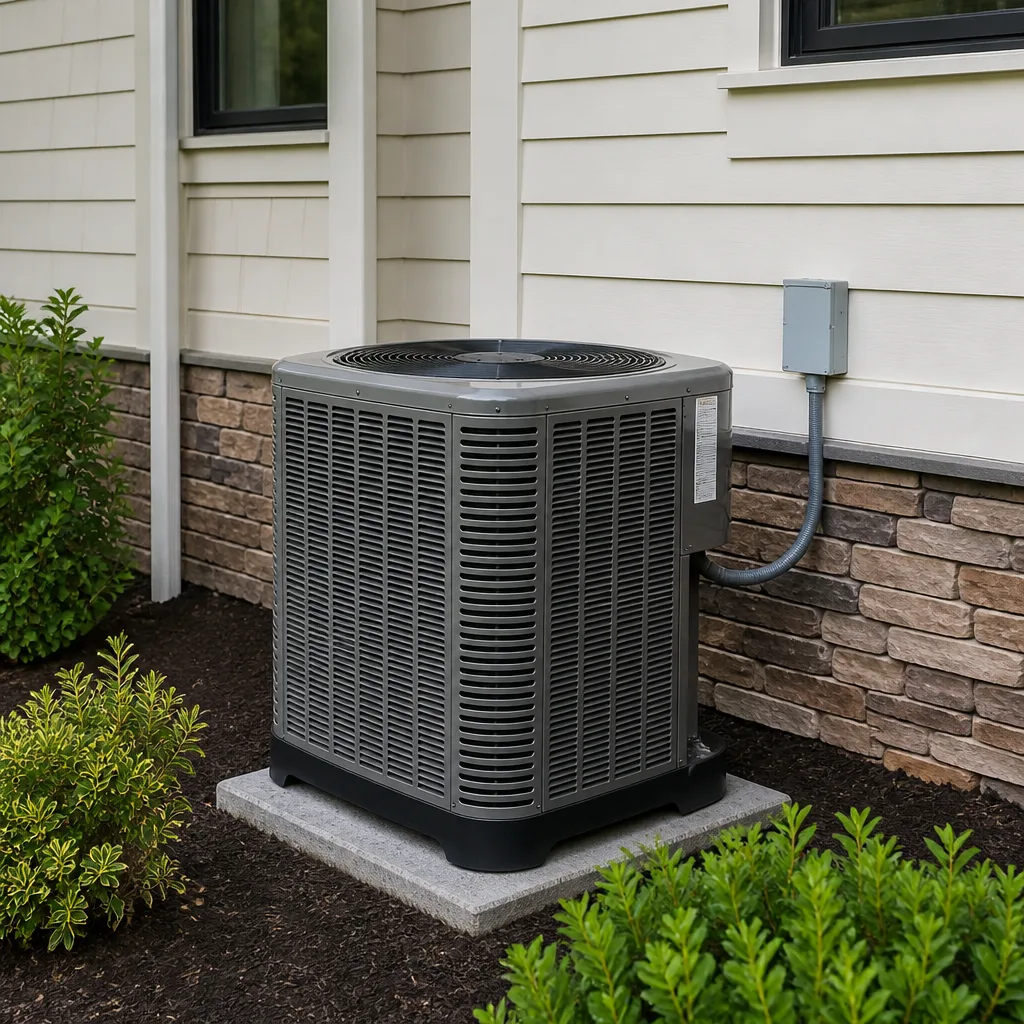 Trane
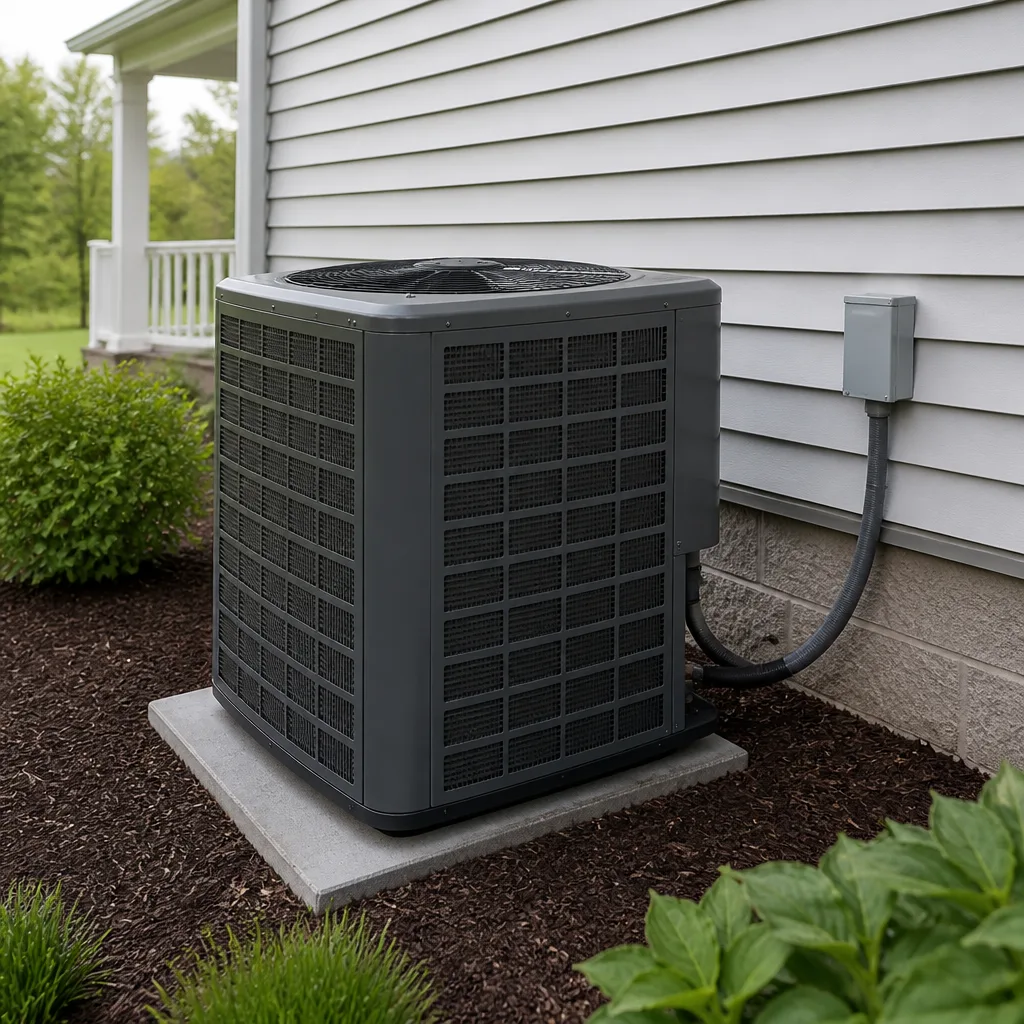 Goodman
Seasonal tune-up and full diagnostic on your Carrier, Trane, or Goodman system - readings shown to you before any repair is proposed
Diagnosis first, numbers second - you approve the repair price before a single part goes in.
Get your free estimateDIY vs Professional HVAC: The Boca Raton Homeowner’s Decision Guide
Most DIY guides for air conditioning assume you live somewhere with no rules. They show a homeowner cracking open a refrigerant line with a wrench and never mention that the can of R-410A or R-32 on the shelf at the supply house is legally off-limits to anyone without an EPA 608 certification. Buying it without that card is a federal violation, not a gray area, and it comes with real fines. That single fact reframes the whole DIY-versus-pro question for Boca Raton homeowners. The decision isn’t a measure of how handy you are. It’s a question of what the law, your insurance policy, and your manufacturer’s warranty actually allow. This guide draws those lines plainly, then shows you exactly where DIY work is worth your Sunday afternoon and where a screwdriver gets expensive.
Quick Answer
You can safely and legally handle a specific set of HVAC maintenance tasks yourself: changing filters, flushing the condensate line, straightening bent coil fins, and swapping a thermostat. You cannot legally purchase or handle refrigerant without an EPA 608 certification, and any work beyond basic maintenance risks your manufacturer’s warranty and can affect your homeowner’s insurance coverage. For anything involving refrigerant, electrical components, gas lines, or the compressor, call a licensed professional.
Styles & brands we work with
- AC repair
- Furnace & heating
- Heat pumps
- Ductless mini splits
- Carrier
- Trane
- Goodman
Table of Contents
- The Legal Boundary Map: What Florida Law Actually Prohibits
- The Florida Self-Permit Exception: What It Really Covers
- High-Value DIY Tasks That Are Worth Doing Yourself
- How DIY Work Can Void Your Manufacturer’s Warranty
- A Risk-Calibration Framework: Judge by Consequence, Not Difficulty
- Why Boca Raton’s Climate Makes Certain DIY Mistakes Costlier
- A Step-by-Step Decision Process Before You Pick Up a Tool
- Where Legitimate DIY Stops and a Pro Call Starts
The Legal Boundary Map: What Florida Law Actually Prohibits
Florida Statute 489 governs contractor licensing across the state, and it carves out a clear perimeter around HVAC work. The law requires a licensed contractor for work that involves refrigerant handling, electrical connections to your system, gas piping, and the installation or replacement of major components. This isn’t a technicality designed to protect contractors’ income; it’s consumer protection built around fire risk, carbon monoxide risk, and the safe handling of pressurized refrigerant that can cause frostbite and asphyxiation in an enclosed space.
The federal layer is EPA Section 608, part of the Clean Air Act. It prohibits anyone without the appropriate certification from buying, handling, or disposing of refrigerants like R-410A or the newer R-32. When you see a jug of refrigerant at a supply counter, know that the card required to buy it takes a proctored exam to earn. That regulation alone removes the most common DIY impulse: topping off a system that seems low.
Here’s the plain-English map:
- Prohibited without a license: Adding, recovering, or handling refrigerant. Connecting or disconnecting electrical components to the system. Working on gas furnace components and gas lines. Replacing a compressor, condenser, or air handler.
- Legal for a homeowner: Routine maintenance that doesn’t open the refrigerant circuit or touch electrical or gas connections. This includes filter replacement, cleaning, external inspection, and thermostat swaps on low-voltage systems.
- The gray middle: Some tasks are technically legal but still impact warranty coverage or insurance. We cover that line in the warranty section below.
We understand the appeal of a project you can finish yourself on a Sunday. But we’ve seen how quickly a “simple” repair on a Carrier or Trane system ends up needing a second visit to correct, and the honest advice is to know where the wall sits. At Tidewater AC Repair, we work on nine major brands, so we can tell you whether the system in your home is one where a small owner task is harmless or whether it’s engineered in a way that punishes even light tinkering.
The Florida Self-Permit Exception: What It Really Covers
There’s a persistent misunderstanding among homeowners that Florida allows an owner-builder to pull a permit and do all the work on their own home, HVAC included. The reality is narrower. Florida’s owner-builder permits cover certain construction and improvement work where the owner occupies or will occupy the dwelling, but they don’t override the licensing requirements that govern HVAC specifically. No owner-builder permit lets you legally handle refrigerant or connect a gas appliance.
In Palm Beach County, permits for HVAC replacement and installation are pulled through the local building department, and the work is inspected. If you replace a condenser or air handler, the installation typically requires a permit and an inspection before the equipment is officially part of your home’s record. That’s why AC installation is never a weekend project, no matter what a video suggests. The permit trail exists because the equipment affects your home’s resale value, your insurance, and the safety of anyone living there.
The practical consequences of skipping the permit are worth naming:
- An unpermitted installation can create an issue at resale, when a buyer’s inspector pulls the permit history.
- Your homeowner’s insurance may deny a future claim if the damage traces to unpermitted work.
- Manufacturers can decline warranty claims when installation wasn’t done to their spec by a licensed professional.
Both permit and prescription are the same story: the rules exist because HVAC work touches fire, air quality, and refrigerant safety. We’re not trying to scare you out of maintenance; we’re telling you where the line actually is, so you don’t cross it by accident. If you want a plain answer about your own equipment, the team at Boca Raton is glad to walk you through what a legal installation looks like.
High-Value DIY Tasks That Are Worth Doing Yourself
The legitimate DIY list is real, and it saves you money. Doing these well extends the life of your system and reduces the likelihood of a mid-July breakdown. None of them requires a license, a permit, or a pro’s hand. They just require a little attention and a bit of regularity.
- Change the air filter. This is the highest-return ten minutes in HVAC. On a 1-inch filter, check it monthly during heavy cooling season and replace it when it’s visibly gray. A clogged filter forces the blower to work against resistance and can freeze the coil. In Boca Raton, where the system runs nearly year-round, filters load faster than a northern homeowner’s ever would.
- Flush the condensate line. A slow drain pan flush with a cup of plain water, or a short blast of low-pressure air, keeps the drain clear. In a humid climate, the condensate drain carries a steady trickle of water all summer, and that trickle feeds algae. A clogged line backs water into the pan, trips the float switch, and shuts the system down. A few minutes twice a season prevents that call.
- Straighten bent coil fins. The soft aluminum fins on the outdoor unit bend easily. You can straighten them with a fin comb, a cheap and safe tool. The goal is simply to keep airflow through the coil. This is cosmetic-level maintenance that protects efficiency.
- Replace a thermostat. A battery-powered or low-voltage thermostat swap is within reach for a careful homeowner if you shut the system off at the breaker first and match the wire labels exactly. If your thermostat is a communicating or proprietary model, or you don’t feel comfortable with wires, leave it. A miswired low-voltage thermostat can fry the control board.
- Clear the area around the outdoor unit. Keep plants, mulch, and stored items a couple of feet back so the condenser can breathe. Summer airflow matters more than winter clearance here.
What all five tasks have in common: they never open the refrigerant circuit, never touch gas, and never require a permit. They’re the right places to put your energy, and doing them consistently means the equipment you rely on stays in better shape.
How DIY Work Can Void Your Manufacturer’s Warranty
A manufacturer’s warranty is a contract with specific clauses, and those clauses usually require that installation, and often repair, be performed by licensed professionals working to the manufacturer’s specifications. Read the warranty document that came with your system before you pick up a screwdriver. The clause language is often plain. You’ll see phrases like “must be installed by a licensed contractor” and “labor performed by unlicensed persons is not covered.” Some policies require a proof of installation by a licensed professional to register the warranty at all.
Trane, Lennox, Carrier, and Goodman all operate under warranty structures with these kinds of conditions, and the specific terms vary by model and whether the equipment is premium or value-tier. A homeowner who installs their own thermostat on a low-voltage system is doing a task the warranty generally doesn’t scrutinize. A homeowner who opens the refrigerant circuit or replaces a component has crossed into work that the warranty explicitly expects a pro to have done.
The warranty isn’t the only document that matters. Your homeowner’s insurance policy likely contains exclusions for water damage or fire caused by unpermitted or unlicensed work. If a DIY repair leads to a leak that damages the ceiling below, the claim could meet an exclusion built for exactly this scenario.
Two things to check before any project:
- Locate the warranty document. Find the section on “installation requirements” and the section on “exclusions.” Those are the clauses that determine coverage.
- Check your insurance policy’s section on exclusions, specifically the language about work performed by unlicensed persons. If it’s ambiguous, call your agent and ask directly.
That half-hour of reading is the cheapest insurance you’ll ever buy. When you’re ready to have work done by a licensed professional, our furnace repair and cooling teams can tell you exactly what your warranty requires for your system.
A Risk-Calibration Framework: Judge by Consequence, Not Difficulty
Most DIY guides rank tasks by difficulty. That’s the wrong measure. The right measure is what happens when the task fails. A return plenum sealed with the wrong tape, or a duct joint taped with ordinary duct tape, can create a moisture trap and a mold problem that costs far more than the repair was worth. The tape looked easy. The failure was expensive. That’s the difference between difficulty and consequence.
Use two questions to calibrate any project:
- If this fails, does it fail safely or dangerously? A blocked condensate line shuts the system off safely. A refrigerant leak fails at the compressor and the environment. A gas connection fails catastrophically. A thermostat miswire fails at the control board. Electrical work fails at the breaker or, in the worst case, the panel.
- If this fails, how much does the fix cost? Small: a filter, a fuse, a fin comb. Medium: a thermostat, a control board. Large: a compressor, mold remediation, water damage. If the downside is in the “large” column, the task belongs to a pro regardless of how easy it looks on video.
We like to frame it this way: HVAC problems fall into three buckets. The first is maintenance, where your attention is the right tool. The second is diagnosis, where a trained eye saves you from buying the wrong part. The third is anything involving refrigerant, gas, or major electrical, where the law and the risk both say stop. Once you can sort a task into the right bucket, the decision makes itself.
And here’s the part that surprises homeowners: many repairs that look like “large” bucket problems are simpler than they seem once a technician is on site with the right equipment. Straight diagnosis beats guessing at parts.
Why Boca Raton’s Climate Makes Certain DIY Mistakes Costlier
Boca Raton’s climate isn’t a footnote to this guide; it’s the reason the stakes are higher here than in many other markets. A system that runs hard through a long cooling season accumulates more runtime hours, cycles more condensate through the drain, and puts more stress on the fan motor and capacitor than a system that gets an off-season. A small error that would be tolerable in a milder climate can fail sooner here.
Humidity is the bigger story. High indoor humidity is a mold issue, not just a comfort issue. A condensate drain that backs up into a pan, a return plenum taped improperly, or an oversized system short-cycling can all leave the air in your home wetter than it should be. The damage from persistent moisture inside a wall cavity or under a ceiling is expensive to remediate and slow to appear. That’s why the plenum tape example matters so much in a humid climate: a bad seal doesn’t just leak air, it feeds a moisture problem.
Our own experience in Boca Raton points to a few recurring realities:
- Systems here run nearly all year, so regular filter upkeep matters more than a once-a-season glance.
- Condensate drains need attention at least twice a year, not once.
- Outdoor units get more debris and organic growth around the coil, which makes clearance and fin care more important.
If you want a system that’s engineered for this kind of load, the equipment choice matters. We help homeowners sort out AC installation for Boca Raton homes with long cooling seasons in mind, and we’re honest about when a value-tier Goodman makes more sense than a premium Trane. The climate sets the requirements; the system has to meet them.
A Step-by-Step Decision Process Before You Pick Up a Tool
Before you start any project on your HVAC system, run this sequence. It takes about five minutes and it will keep you out of the expensive mistakes.
- Identify what the task actually touches. Does it involve refrigerant, gas, line voltage, or the compressor? If yes, stop and call. If it’s a filter, cleaning, or a low-voltage thermostat, keep going.
- Check the legal boundary. If the task requires EPA 608 certification or a Florida license, you’re done here. No amount of confidence substitutes for a certification card.
- Read the warranty clause. Find the installation and exclusions section of your equipment warranty. If the task would be performed by an “unlicensed person” and the clause prohibits that, you’ve found your answer.
- Ask the consequence question. If the task fails, does it fail safely or dangerously, and how expensive is the fix? If the downside is a compressor, a fire, or a mold problem, hire the work.
- Check the permit requirement. If the task is a replacement, not maintenance, call your local building department and ask. Replacing equipment in Palm Beach County typically needs a permit and an inspection.
- Make the safe call. If you’re unsure whether a task is in the legal DIY set, treat it as a pro task. The cost of an estimate is zero, which makes second-guessing pointless.
We’ve watched this sequence play out for a lot of homeowners in Boca Raton, and the pattern is consistent: the tasks that clear all six checks are the ones worth doing yourself, and the rest aren’t worth the risk. Nine major brands, one call is the way to handle the rest.
Where Legitimate DIY Stops and a Pro Call Starts
There’s a natural stopping point, and knowing it saves you money. The line is where a task stops being maintenance and becomes a repair or a service. Maintenance is about attention. Repair and service are about diagnosis, tools, certification, and liability. When a task crosses that line, the pro call isn’t a convenience; it’s the correct and legal path.
The clearest stopping signals:
- Any refrigerant concern. If the system isn’t cooling and the air is warm, don’t add refrigerant. The refrigerant circuit is closed, so low pressure means a leak. A pro finds the leak and repairs it properly; a homeowner can only legally watch.
- Gas concern. Any smell of gas or a furnace that won’t light is a stop-and-call situation. Gas work is licensed for good reason.
- Electrical concern. If the outdoor unit won’t start, breakers trip, or you see scorch marks, the line voltage side of the system needs a pro. Don’t reset a breaker repeatedly to test a theory.
- Compressor or major component. Replacing a compressor, condenser, or air handler is licensed, permitted work. That’s a professional task by law.
- Water in the pan or a ceiling stain. A pan full of water or a stain on the ceiling below the air handler is a moisture problem that points to a clogged drain, a frozen coil, or a duct problem. Those are diagnosis-and-repair territory.
The difference between a task that costs $20 and one that costs thousands is often just knowing where the line sits. That’s the value of a decision guide over a list of hacks. If you want a straight answer on your own system, call us. We’re happy to tell you whether the work in front of you is safe to do yourself, or whether you should leave it to a certified technician.
Common Mistakes to Avoid
- Buying refrigerant off the shelf. If a supply house sells you R-410A without asking for an EPA 608 card, something is wrong, and the sale itself can create a federal compliance problem. Leave the refrigerant circuit to a certified technician.
- Using ordinary duct tape on ductwork or a return plenum. Standard duct tape won’t survive a humid climate. It curls, loses adhesion, and can trap moisture against the duct. A plenum taped with the wrong material can feed a mold problem that costs far more than the duct repair.
- Assuming you can self-permit a full HVAC replacement. Florida’s owner-builder exception doesn’t cover licensed HVAC work. A condenser swap needs a permit and inspection; there’s no DIY shortcut around it.
- Skipping the warranty document. Assuming the warranty will cover a repair is a mistake worth thousands. Read the installation and exclusions clauses before you start.
- Swapping a proprietary thermostat carelessly. A communicating thermostat is not a plug-and-play part. Mismatched wiring can damage the control board, and a board isn’t cheap. Check the manual and shut off the breaker first.
- Ignoring a slow condensate drain. In Boca Raton, a condensate line needs attention twice a year, not once. A clogged drain trips the float switch and shuts the system down at the worst moment.
- Treating a warm house as a refrigerant problem. A system that blows warm air isn’t low on refrigerant until a tech confirms a leak. Guessing sends homeowners toward the one repair the law says they can’t do themselves.
See the difference
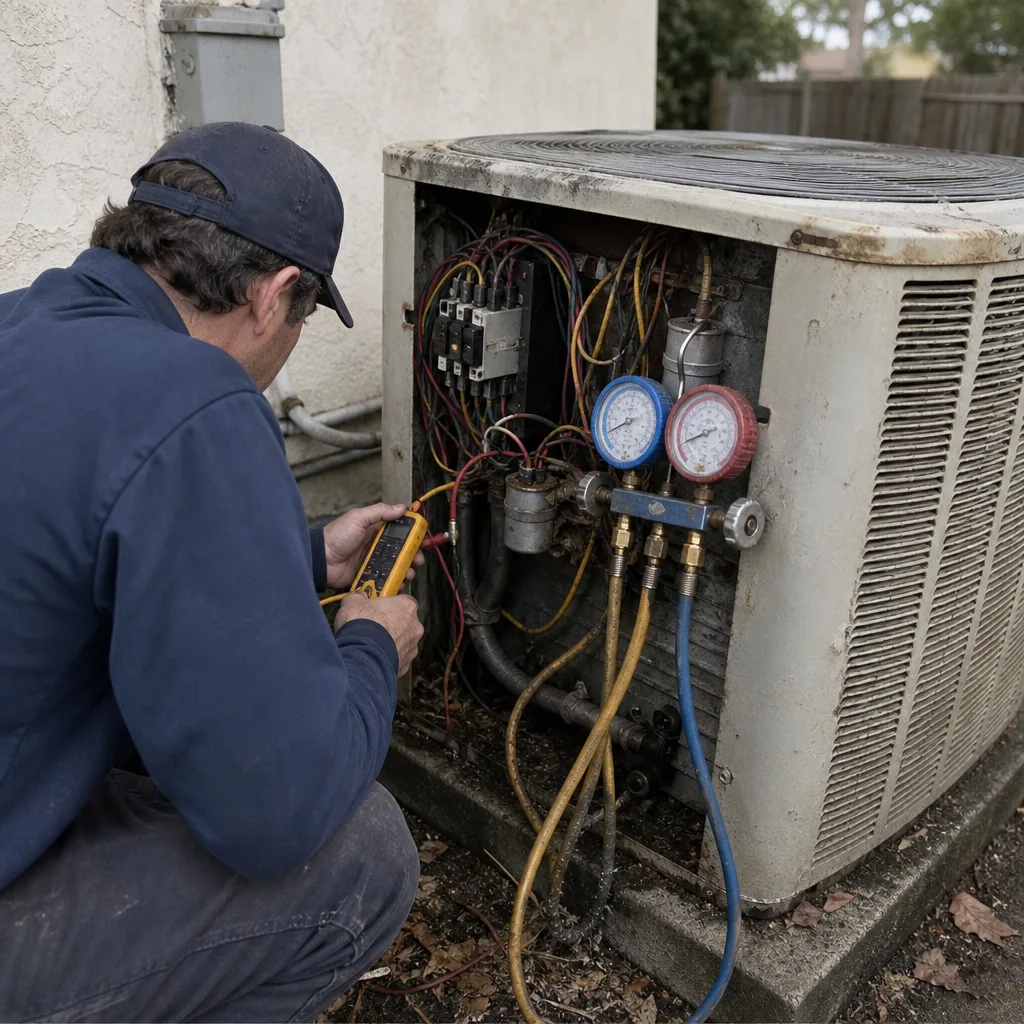 Before
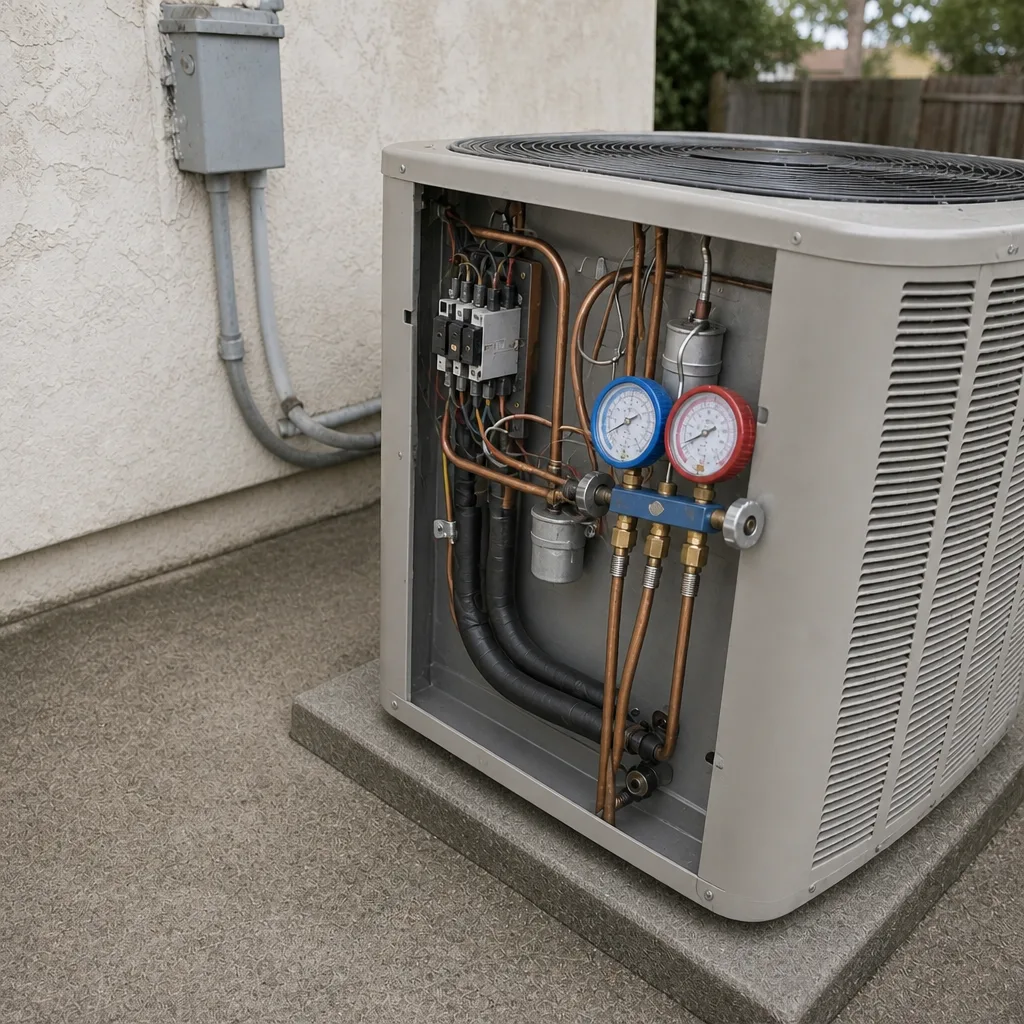 After
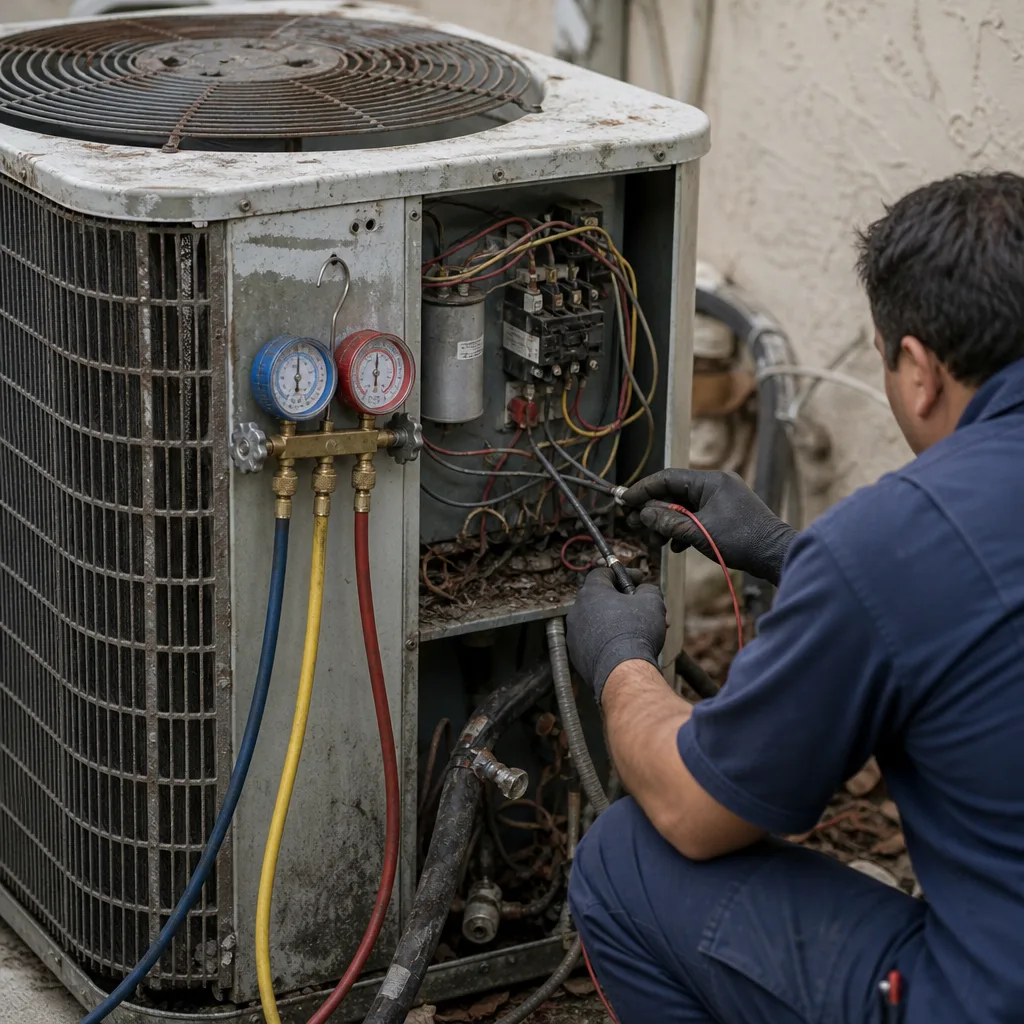 Before
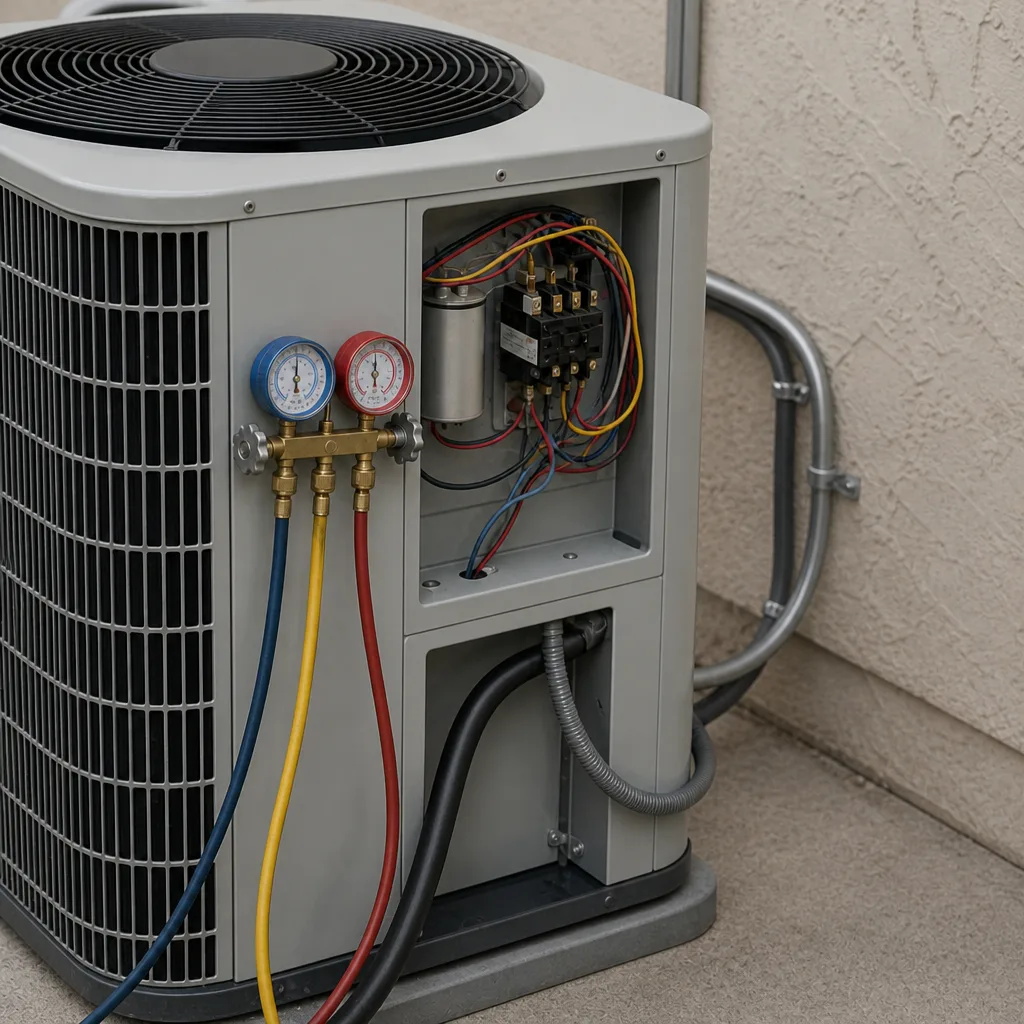 After
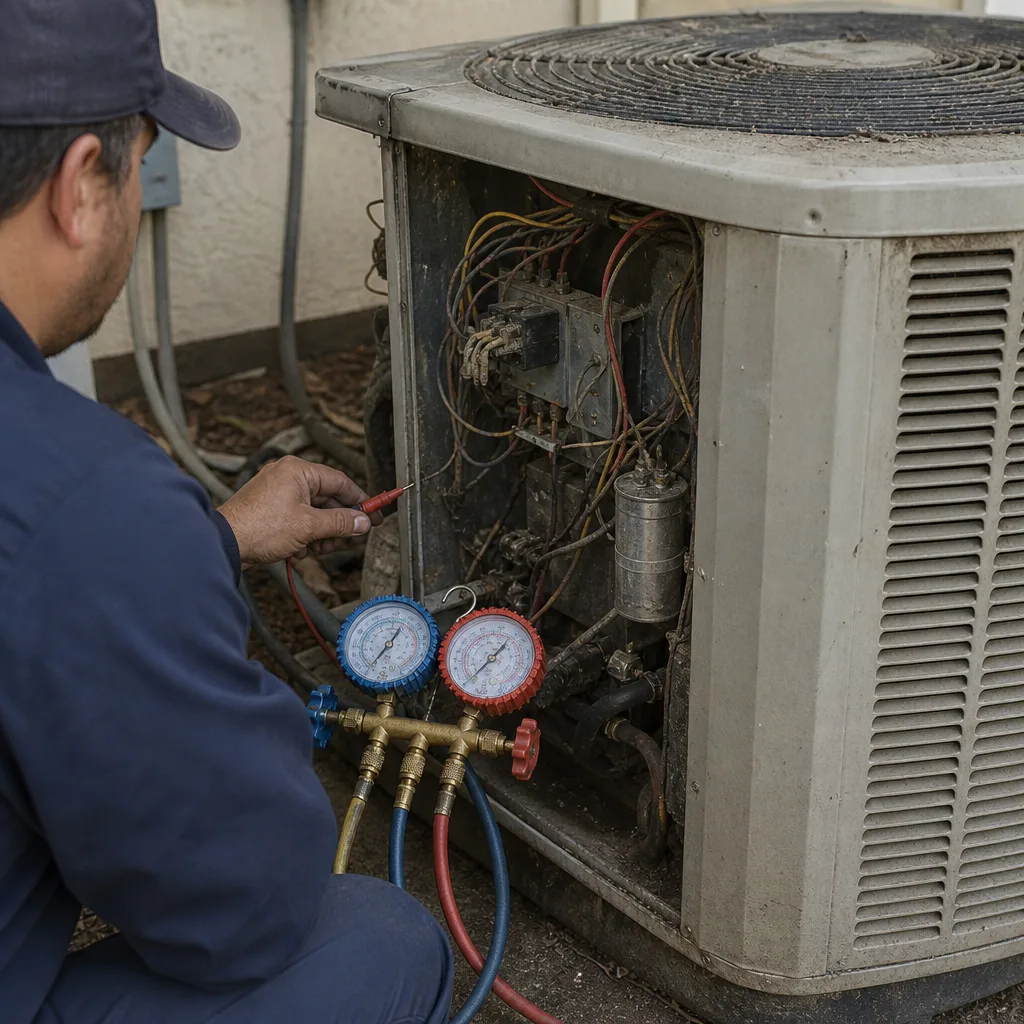 Before
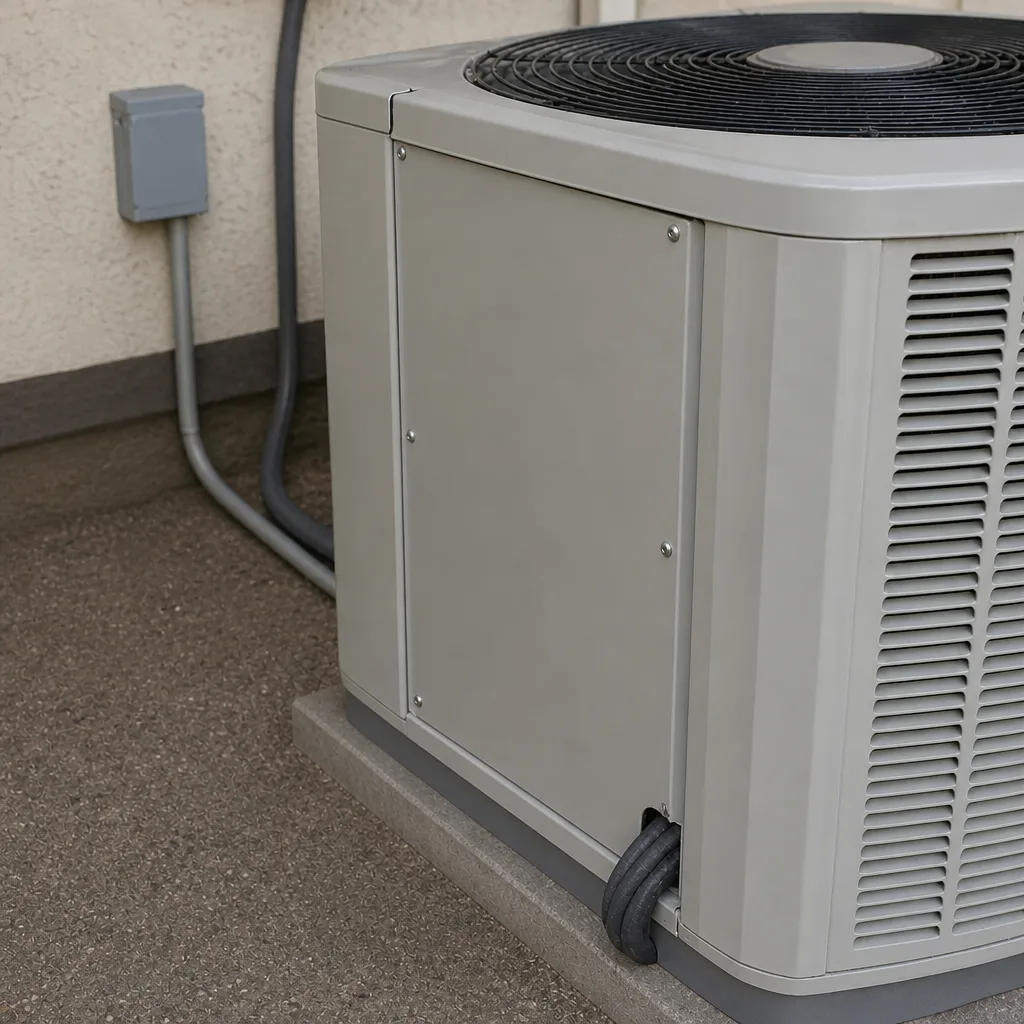 After
When to Call a Professional
Call a professional for any task that involves refrigerant, gas, line voltage, or a major component. Call for a system that’s blowing warm air, a furnace that won’t light, a compressor that won’t start, water in the pan, a ceiling stain below the air handler, or breakers that trip repeatedly. Call when a project feels one step away from the warranty clauses we described. Those are all situations where the correct answer is the licensed one, and where the cost of guessing is higher than the cost of an estimate. Tidewater AC Repair offers free estimates in Boca Raton – call (855) 552-3403. We answer 24/7. Fast dispatch from 7am to 7pm, Sunday through Friday. Our technicians have up to experience and are certified to work on Carrier, Trane, Lennox, Goodman, and five other major brands.
Frequently Asked Questions
No. Purchasing or handling refrigerant requires an EPA 608 certification under federal law, and doing it without one is a violation, not a technicality. Florida Statute 489 and EPA Section 608 together mean refrigerant work belongs to a licensed technician. Call (855) 552-3403 for an exact quote – estimates are free.
Filter changes, condensate line flushing, coil fin straightening with a fin comb, and low-voltage thermostat replacement are the main safe tasks. Clearing space around the outdoor unit also helps. These never open the refrigerant circuit, touch gas, or require a permit. If a task involves anything else, it’s worth a call.
It can. Most manufacturer warranties require installation and often repair by licensed professionals, and the clause language typically prohibits coverage for work performed by unlicensed persons. Read the installation requirements and exclusions sections of your warranty before starting any project. When in doubt, ask us – a free estimate is cheaper than a denied warranty claim.
No. Florida’s owner-builder exception doesn’t override the licensing requirements that govern HVAC work, so it doesn’t let a homeowner replace an AC system. Replacements typically need a permit and an inspection through your local building department, and the work must be done by a licensed contractor. Call (855) 552-3403 to schedule an estimate.
No. Warm air usually means a refrigerant problem or a failed component, and both sit firmly on the professional side of the line. Adding refrigerant is illegal without EPA certification, and low refrigerant pressure means a leak that a tech needs to find. Call (855) 552-3403 for an honest diagnosis.
Pricing is set per job by the written estimate we provide after diagnosis, so there’s no single number to quote here. What we can tell you is that the estimate is free, and the written price sets the final total. Call (855) 552-3403 for an exact quote – estimates are free.
The Bottom Line
The DIY-versus-pro question for HVAC isn’t a test of your skills. It’s a question of what the law allows (no refrigerant without EPA 608, no licensed HVAC work under Florida’s owner-builder exception), what your warranty requires (licensed installation and often licensed repair), and what your insurance will cover (usually not unpermitted work). The legitimate DIY set is real and worth doing: filters, condensate line, coil fins, thermostat, and outdoor clearance. Everything else is a pro task. Judge any project by the consequence of failure, not by how hard it looks. When you’re unsure, call and get a straight answer before you spend a dollar on parts. A free estimate costs less than one wrong guess.
Written by the team at Tidewater AC Repair.