
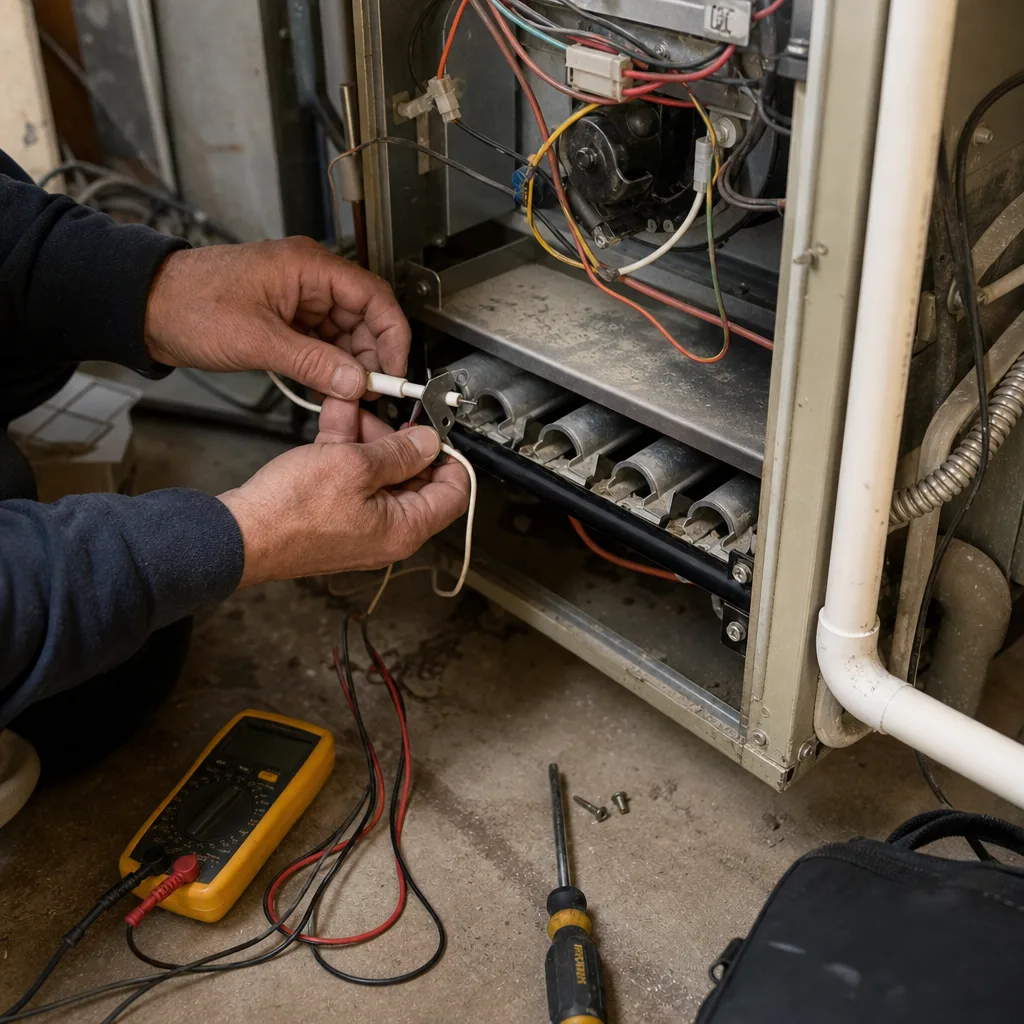
Last updated November 15, 2026
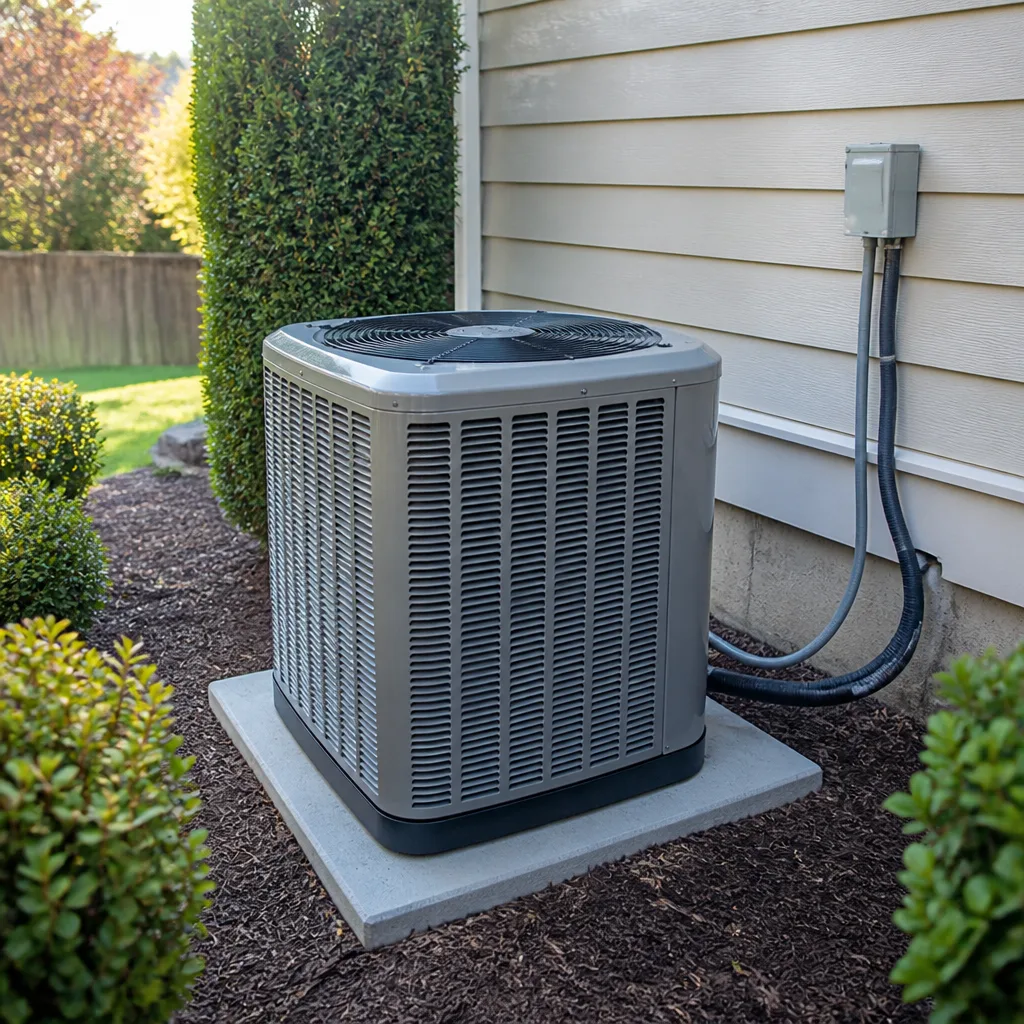 AC repair
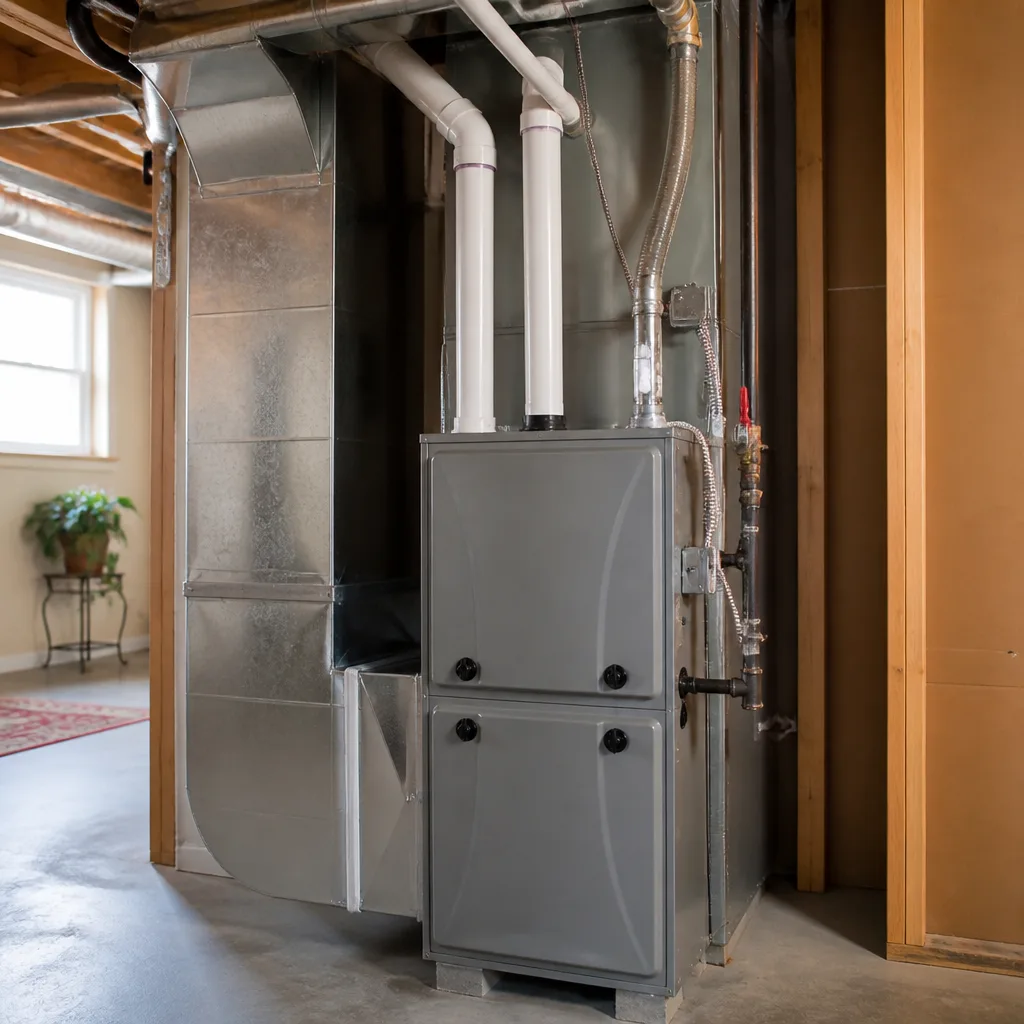 Furnace & heating
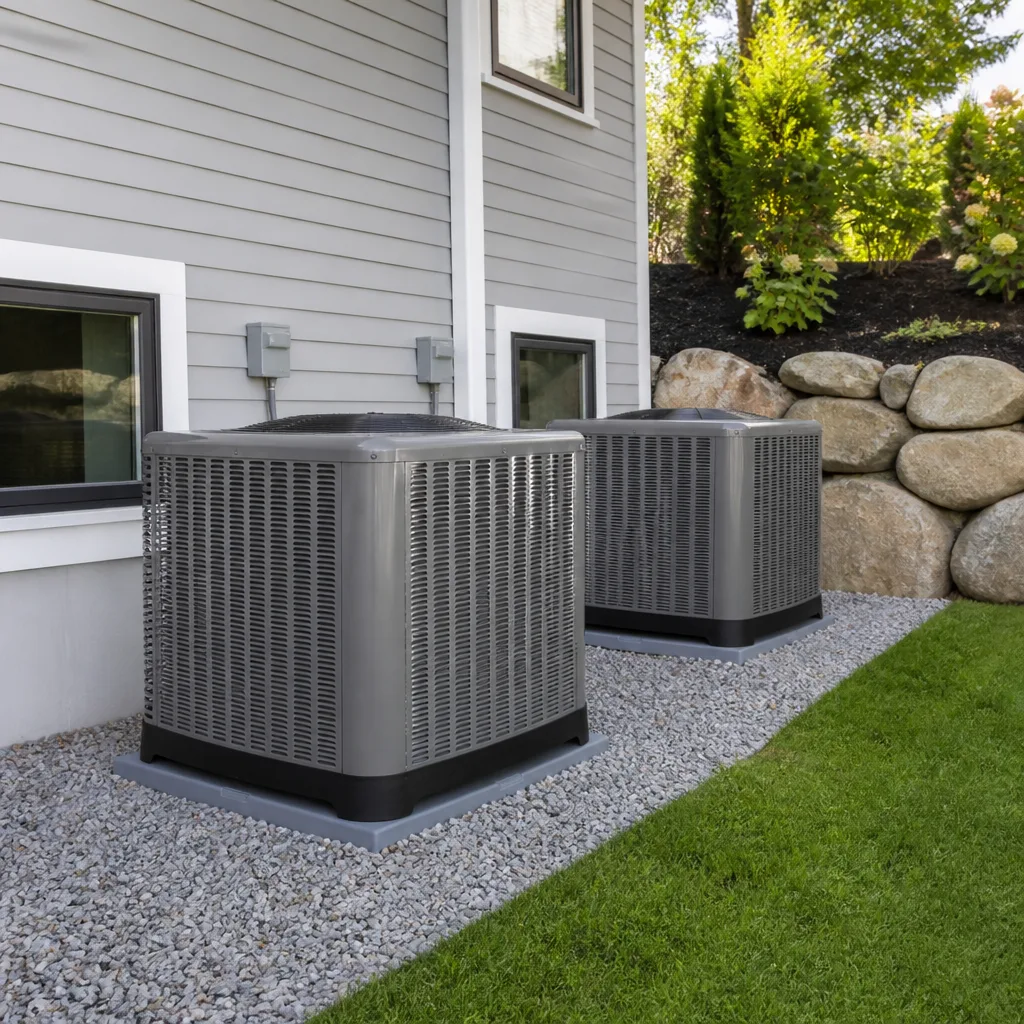 Heat pumps
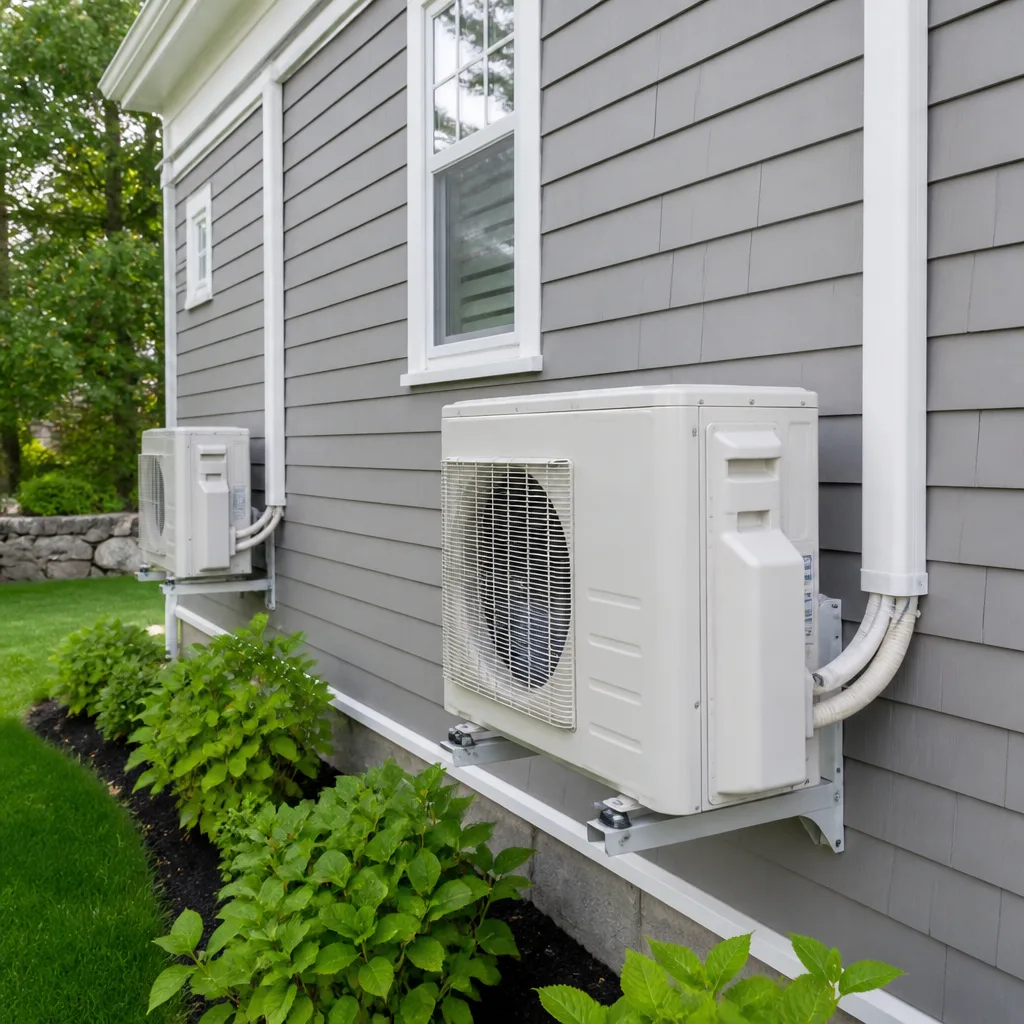 Ductless mini splits
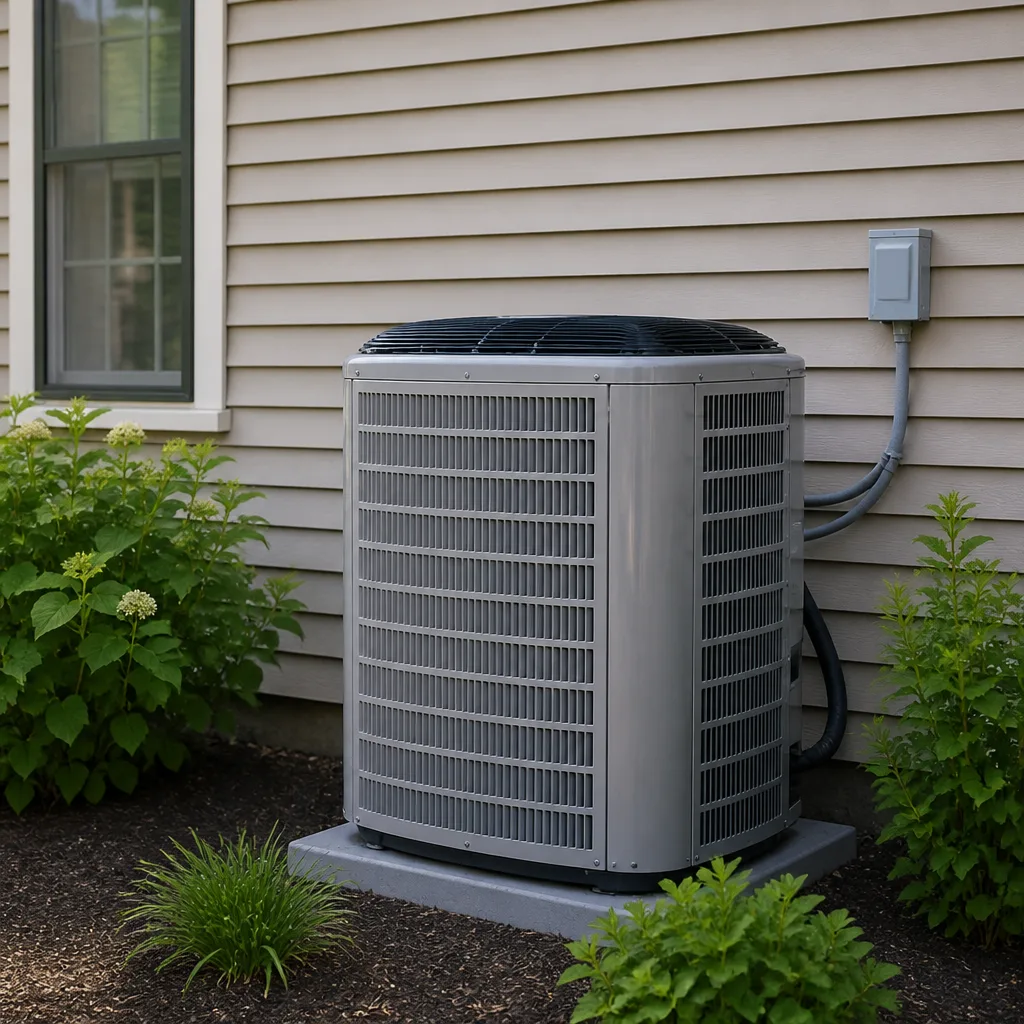 Carrier
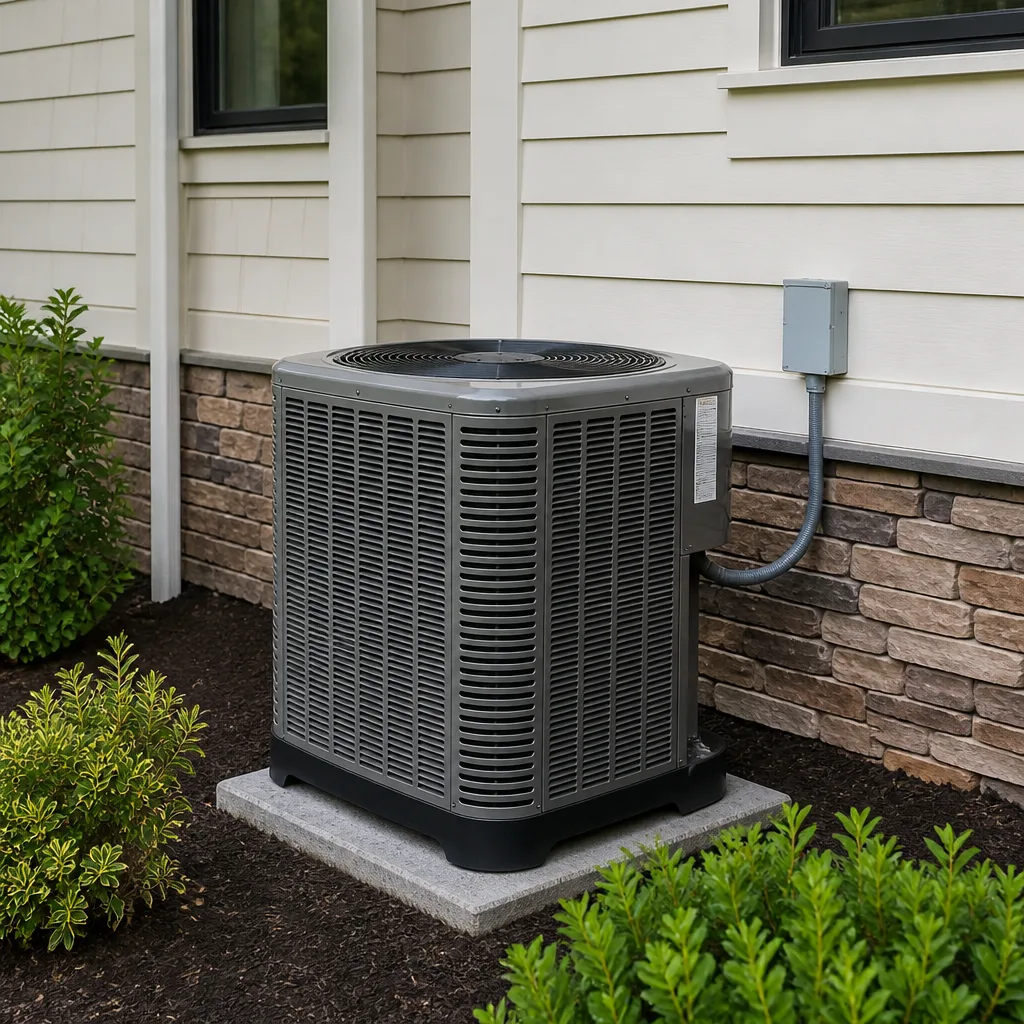 Trane
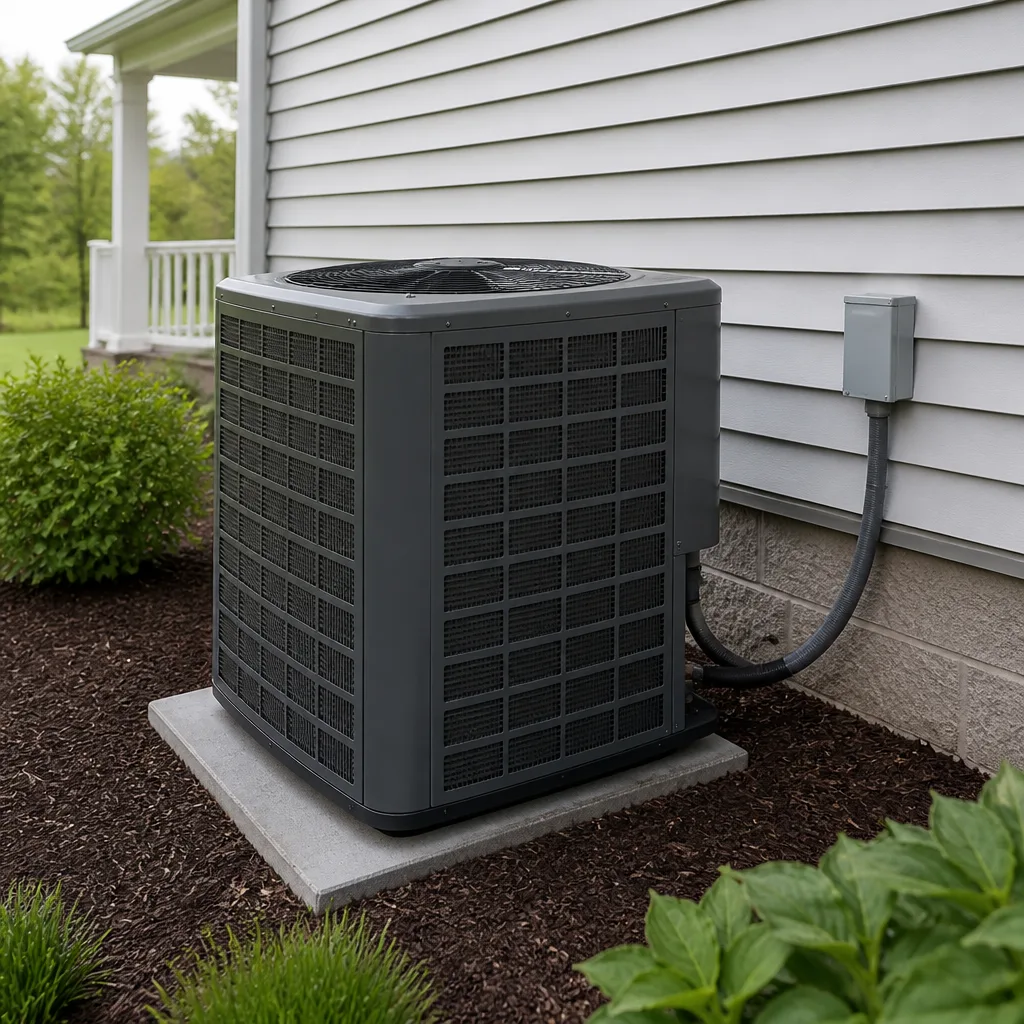 Goodman
Seasonal tune-up and full diagnostic on your Carrier, Trane, or Goodman system - readings shown to you before any repair is proposed
Diagnosis first, numbers second - you approve the repair price before a single part goes in.
Get your free estimateHVAC Warning Signs: A Boca Raton Homeowner’s Reference Guide
Most HVAC warning-sign guides are written for the moment something has already failed. The breaker tripped, the compressor quit, the house is 84 degrees at 2pm in August. By then you’re not diagnosing, you’re reacting, and reacting costs more. The signals that actually matter appear earlier: subtle humidity creep, a utility bill that drifts a few dollars a month, a faint discoloration on a disconnect box, a bedroom that’s never quite as cool as the rest of the house. In Boca Raton, where a system runs hard for most of the year, those signals compress into a shorter window than homeowners expect. This guide teaches you to read them while a repair still costs a repair and not a replacement. You’ll learn what to look for, what’s normal for an aging system, and how to log observations so any technician arrives with real diagnostic context.
Quick Answer
HVAC warning signs in Boca Raton usually show up 30 to 90 days before a system fails outright, and they often appear as comfort problems or electrical anomalies rather than obvious breakdowns. The earliest indicators are rising indoor humidity on a system that used to dehumidify fine, uneven room temperatures, dust accumulating near registers, and small month-over-month jumps in your power bill. Electrical clues on the outdoor unit, like discolored wiring or a breaker that trips more than once, deserve attention immediately because they signal a developing fault in a high-voltage component.
Styles & brands we work with
- AC repair
- Furnace & heating
- Heat pumps
- Ductless mini splits
- Carrier
- Trane
- Goodman
Table of Contents
- Why Boca Raton Systems Signal Failure Earlier
- Early-Stage Refrigerant Loss: The Humidity Clue
- Electrical Warning Signs on the Outdoor Unit
- Duct Leakage Indicators You Can Spot Without Equipment
- Normal Aging vs. Imminent Failure: A Framework
- Building a Home Performance Log
- Heating-Side Warning Signs Fewer Homeowners Watch For
- A Seasonal Walk-Through for Boca Raton Homes
Why Boca Raton Systems Signal Failure Earlier
A cooling system in Boca Raton often runs 10 to 14 hours a day through the hot months. That’s longer than the national average runtime manufacturers design around, and runtime is the single biggest driver of wear. Compressors cycle more, capacitors charge and discharge more, contactors open and close more, and refrigerant lines endure more thermal expansion cycles. Every one of those components has a finite number of cycles before it degrades.
What this means for you in practical terms is that the warning window before a breakdown is shorter here than it is in a milder climate. A capacitor that would give a homeowner in a cooler region several months of sluggish starts before failing might give a Boca Raton homeowner a few weeks. The signs are the same signs. You just have less runway to act on them.
Humidity compounds the problem. A system that’s slightly low on refrigerant or slightly restricted in airflow doesn’t just cool less, it dehumidifies less, and in South Florida you notice the humidity before you notice the temperature. That’s a signal most guides skip entirely, and it’s one of the most reliable early indicators we see. High indoor humidity will show up as a house that feels clammy, sticky floors, or a musty smell in rooms that used to feel crisp.
The good news: catching a system at the humidity-creep stage is cheap. Catching it at the compressor-failure stage is not. The whole skill here is learning to recognize the earliest comfort shift for what it is instead of waiting for a hard failure.
Early-Stage Refrigerant Loss: The Humidity Clue
Refrigerant systems are sealed, so any loss at all is abnormal. Early loss is tiny, though, and the temperature drop it causes in a hot house can be almost invisible. The system still runs, the air still feels cool, and the thermostat still reaches its setpoint most days. What changes is the moisture removal.
Here’s the sequence to watch, in order of how it typically presents:
- Humidity creeps up first. The house feels slightly damp. Towels and sheets take longer to dry. Windows fog faintly in the morning when they didn’t before.
- Cooling struggles only on the hottest hours. The system keeps up at 4pm but runs continuously instead of cycling off and on. In the cooler parts of the day it seems fine.
- The gap between setpoint and actual temperature widens. You set 74, you get 76, and only in the late afternoon.
- Superheat or subcooling readings confirm the fault. A technician diagnoses this with gauges. You can’t and shouldn’t try to.
If you’re watching a Carrier or Trane system that’s three or four years into service and dehumidifying noticeably worse than it used to, that’s worth investigating before the season peaks. Refrigerant work is not a homeowner task. Handling refrigerant requires licensing and equipment, and venting it is illegal. If you suspect loss, get a technician out. That’s a real safety and environmental issue, not a DIY repair.
For a full replacement as the eventual outcome, our AC installation work starts with a load calculation, which is the right time to talk about whether a failing system is worth repairing at all.
Electrical Warning Signs on the Outdoor Unit
The outdoor unit in Boca Raton works through long, hot runtime hours, and its electrical components age in ways you can see if you know where to look. This is the section most homeowners skip, and it’s the one that catches the failures that happen without warning.
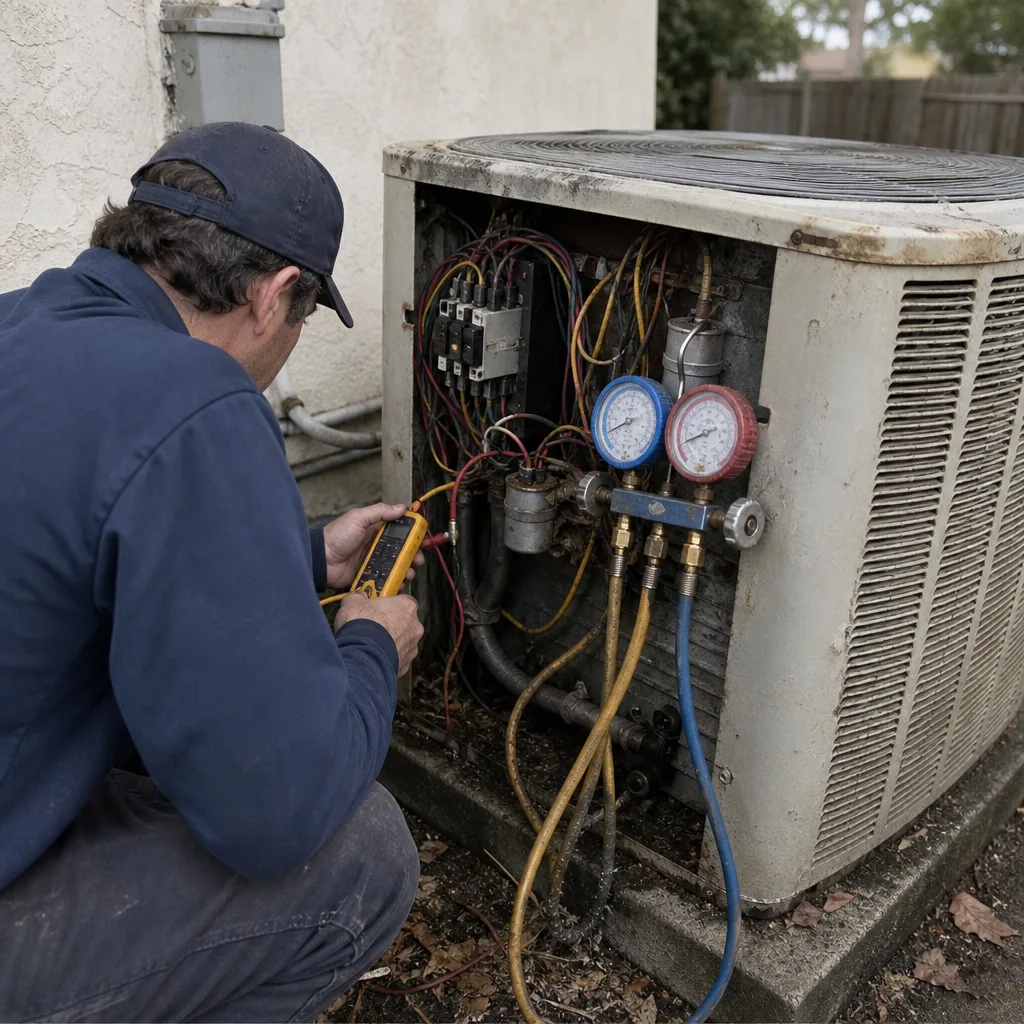
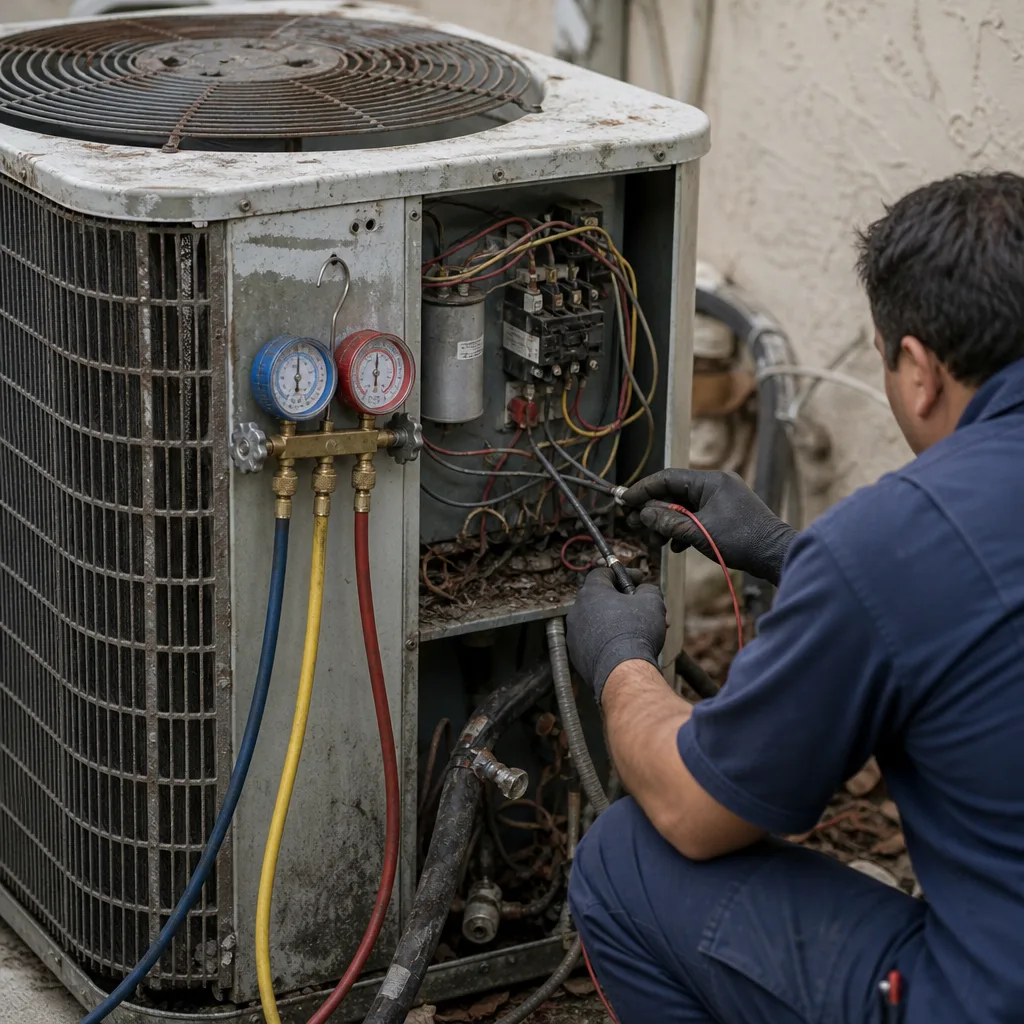
- Discolored or pitted wire terminations. Look at the visible wire connections at the contactor and the disconnect box. Brown or black scorching, pitting, or a burnt smell is a sign of arcing. This is serious and means you turn the system off at the breaker and call for service.
- Breaker behavior. A breaker that trips once during a storm may just be a surge. A breaker that trips more than once in a season, or trips and resets cleanly only to trip again, is telling you about a component drawing more current than it should. Document the dates.
- Buzzing or chattering at the contactor. A contactor that buzzes audibly when the system starts is wearing out. It’s a relatively inexpensive part that fails over time and often takes the compressor with it if it fails under load.
- A capacitor that looks bulged or leaking. If you can safely see the top of a capacitor (system off, breaker off), a swollen dome or oily residue around the base is a failing capacitor. Don’t touch it. Capacitors store charge even when the power is off, and they can shock you badly.
Electrical work on HVAC equipment carries real risk. The capacitor, contactor, and disconnect all sit in a high-voltage circuit, and a shock from that circuit can be fatal. We say that plainly because we’ve seen the temptation to check things on a live unit with a screwdriver. Don’t. Note what you observe from a distance, kill the breaker if something is clearly wrong, and let a professional handle it. Our Tidewater AC Repair team is equipped for that work.
Duct Leakage Indicators You Can Spot Without Equipment
Duct problems are common in Boca Raton homes because ductwork in attics bakes in the heat, and seams and joints open up over time from thermal cycling. You don’t need a blower door or a duct-blast test to spot the early signs. You need to notice patterns.
- Uneven room temperatures. One or two rooms run warmer or cooler than the rest, and the gap has widened slowly over a year or more. A closeted duct run or a bad joint serving a specific room is a common cause.
- Dust patterns at registers. Dark streaks around the perimeter of supply registers, or dust accumulating on ceiling tiles near a register, suggest air is escaping through a poorly sealed opening. If one register is visibly dustier than the others, that run has a problem.
- Utility bill drift. A leaky duct costs money every month because conditioned air escapes into the attic before it reaches your rooms. That shows up as a creeping bill rather than a spike. Track it month over month against the same month last year.
- Whistling or airflow noise. A duct joint with a poor connection can create a faint whistle at the register. It’s easy to miss, and it’s an indicator worth logging.
Duct leakage is different from refrigerant work and electrical work in one important way: it’s fixable with sealing and insulation, and it doesn’t involve high-voltage or refrigerant handling. But finding the leak requires a technician, and sealing it properly in an attic requires crawl-space access and correct materials, so it’s a job for a pro even when the problem is small. The point of watching for these signs is to catch leakage when a repair is a reseal and not an entire run replacement.
Normal Aging vs. Imminent Failure: A Framework
The hardest judgment in home HVAC is telling “this is a normal old system” from “this is about to break.” Here’s a simple framework.
Normal aging means the system is a little less efficient than it was, runs a little longer, and shows wear consistent with its age. Nothing is getting worse quickly.
Imminent failure means the rate of deterioration has changed. Something that was stable is now moving.
Ask yourself these questions each season:
- Is any symptom new in the last 90 days? A symptom that appeared recently and hasn’t resolved is a red flag. A symptom that’s been steady for two years is probably just old age.
- Is the symptom accelerating? Humidity up a little this month, up more next month. Cooling that struggles one afternoon a week, then three afternoons a week. Acceleration is the signal.
- Does the system need to run longer to reach the same setpoint? If the answer is yes and the weather is similar to last year, the system is working harder for the same result.
- Has anything failed twice? A component that fails, gets replaced, and fails again is usually a symptom of a larger problem, not a bad part.
- Are costs and comfort both trending the wrong way? If the bill and the discomfort are trending together, the system is degrading, not just aging.
If two or more of those answers point in the same direction, you’re in imminent-failure territory and it’s time to have the system looked at. A good technician will walk the same framework with you while diagnosing. Any system, whether it’s a Lennox or a Goodman, gets read the same way under pressure, and the brand is not the deciding factor. What matters is the pattern.
Building a Home Performance Log
A simple log takes five minutes a month and hands any technician the single most useful diagnostic tool they can get: a record of how your system has behaved over time. It also makes patterns obvious to you before a technician ever steps in. Here’s how to build one.
- Pick a monthly date. Same day every month works best. It takes discipline for the first three months and becomes automatic after.
- Log the electric bill, not just the usage. Note both the kWh and the dollar amount. This matters because rate changes distort the picture if you only track dollars.
- Log a humidity reading from one room in the house. A cheap hygrometer from any hardware store is enough. Use the same room each month.
- Log the setpoint and the actual temperature during the hottest part of the day. If setpoint is 74 and the actual reads 75 or 76, write that down.
- Log any noise, smell, or observable anomaly. Buzz at the outdoor unit, dust at a register, water near the condensate drain, a room that feels steadily warmer than the rest. Brief notes.
- Log any service events. If a technician came out, what was done, and any part that was replaced.
When a technician walks into a Boca Raton home with 12 months of this log, the conversation is completely different from a cold diagnosis. They can see whether humidity has been trending up, whether the bill has been drifting, and where the problems have concentrated over the year. That gives them a fast track to the actual fault. It also means your furnace repair conversation in January comes with the same context you built for the cooling side in July.
We keep the recommendation for this reason: a log converts speculation into observation, and observation saves money. It also protects you when the question becomes repair versus replace. Nobody can argue with the trend line in your own handwriting.
Heating-Side Warning Signs Fewer Homeowners Watch For
Winters in Boca Raton are mild, so heating systems often sit mostly unused for much of the year and then get asked to work during a cool snap. That unused-idle pattern has its own set of warning signs, and they matter because a heating failure in January is caught on the coldest night of the year instead of in the milder month before.
- Yellow or lifter-flagged burner flame. A healthy gas burner flame is mostly blue. A yellow, orange, or “lifting” flame means the burn isn’t clean, and that’s a carbon monoxide concern. Anything that looks wrong with a gas flame is a call-a-professional moment, not a wait-and-see moment.
- Soot or scorch marks around the burner compartment. Even faint deposits indicate incomplete combustion or a flue problem.
- Carbon monoxide alarms. If your CO alarm has gone off, treat it as a real event. Get out, call from outside, and don’t run the system until it’s inspected.
- Cold spots in the house that didn’t used to be there. A furnace that’s throttling down because a flame sensor is failing gives you less heat before it gives you none at all.
- Straining or unusual sounds from the blower. A worn blower bearing or a failing blower motor will usually announce itself with a rumble or a whine.
- Increased gas usage on comparable weather. If the bill goes up while the weather is similar to last year, the system is working harder for the same comfort.
Gas furnace work has real safety stakes. If you smell gas, leave the house and call your gas utility first, then call us. If you don’t smell gas but notice a colored flame, soot, or anything off, shut the system down and get a technician out. This is one of the areas where doing more in the way of DIY makes the problem worse, not better. A furnace replacement is often the right answer for an aging system that’s showing more than one of these signs, and it’s cheaper to sort out in a mild month than during a cold snap.
A Seasonal Walk-Through for Boca Raton Homes
Once a season, do a five-minute walk-around. Nothing here needs technical skill. It’s just observation. Note anything unusual. If any two items on this checklist line up together, that’s your call.
- Outdoor unit exterior. Is it clear of debris and vegetation? Is the fan turning freely with the power off? Are there rust streaks or dark stains that weren’t there last season?
- Visible electrical. Is the disconnect box intact and closed? Any scorching, brown staining, or a burnt smell?
- Indoor registers. Are the supply registers unobstructed? Any dust shadows around a register that weren’t there before?
- Condensate drain. Is water draining freely? Any standing water or algae buildup at the drain pan or the outdoor termination?
- Filter. Is the filter clean and correctly seated? A dirty filter will fake almost every other symptom on this list, so rule it out first before you assume something else is failing.
- Comfort notes. Walk every room and rate it on how comfortable it feels on a hot afternoon. Any room that stands out, note it.
- Heating side. If you have a furnace, run it briefly before cool weather gets here. If it doesn’t fire, you have time.
Add anything you find to your log. That’s it. You’ve now given yourself and any technician a running picture, and it takes one page per year to maintain.
Common Mistakes to Avoid
- Cleaning the outdoor unit coil with a pressure washer. High pressure bends the aluminum fins that carry the coil’s heat exchange. A gentle garden-hose rinse is safe. A pressure washer is a coil replacement.
- Chasing symptoms rather than the trend. A single warm afternoon is not a diagnosis. Three warm afternoons a week, for three weeks, is a pattern worth acting on.
- Watching the thermometer and ignoring the humidity. In Boca Raton, humidity rises before temperature suffers, and the humidity signal is the more reliable one.
- Replacing a part that failed without asking why it failed. A second failure of the same part usually indicates a deeper problem, not bad luck with parts.
- Touching anything electrical on the outdoor unit yourself. Capacitors hold a dangerous charge even with the breaker off. This is the wrong place to save a service call.
- Sealing ducts with standard tape. Ordinary duct tape doesn’t last in attic heat. If you’re going to seal, use proper duct sealant and mastic, and know that a proper seal usually requires a technician with attic access.
- Waiting for the peak of the season. Diagnosing a marginal system in July is much harder than diagnosing it in April. In Boca Raton, the best time to look at a warning sign is the milder month before the season peaks.
See the difference
 Before
 After
 Before
 After
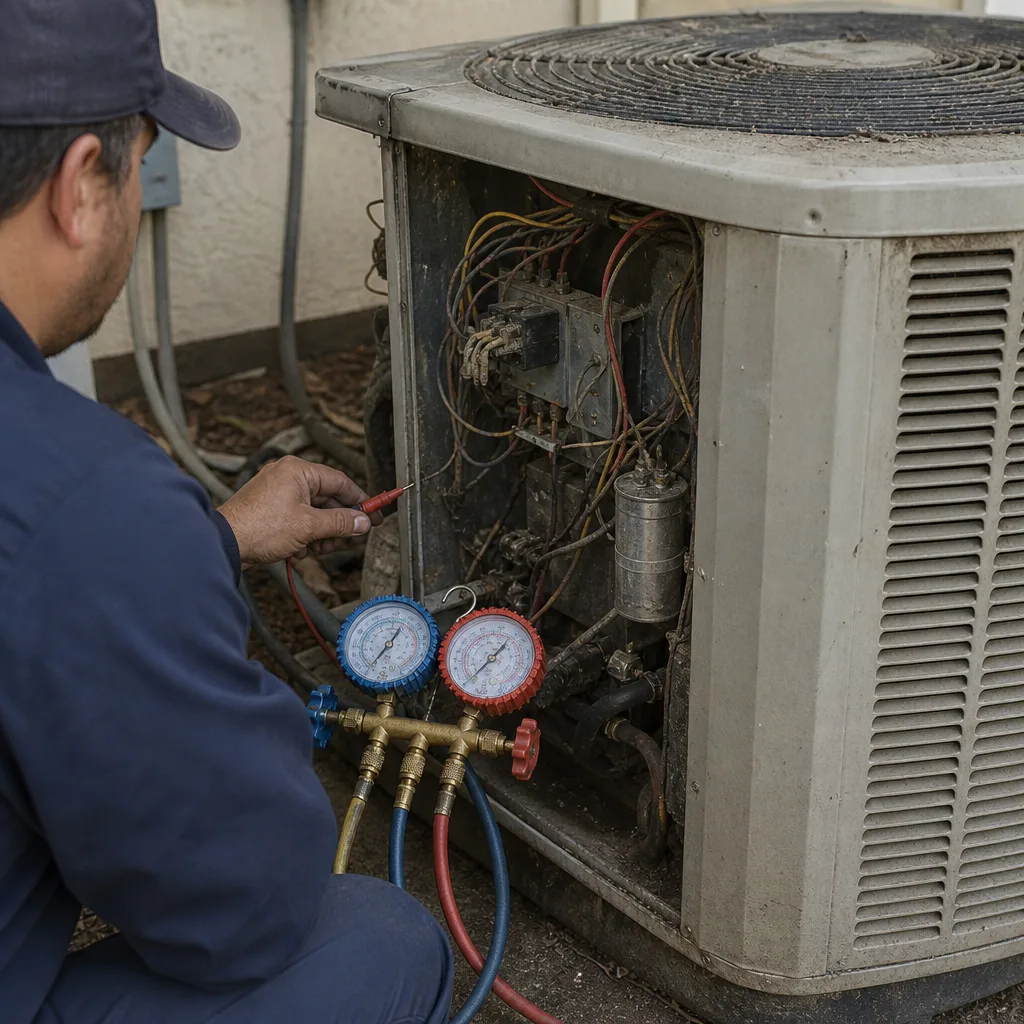 Before
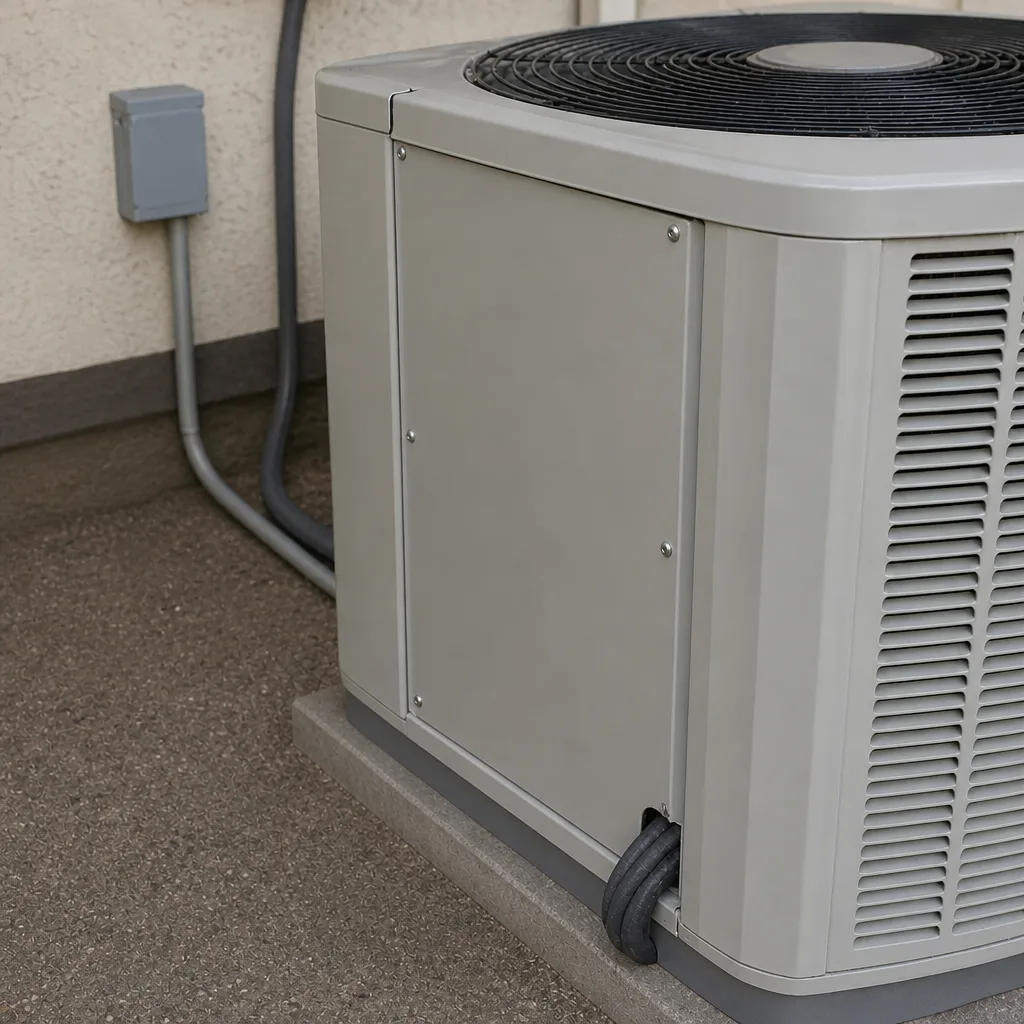 After
When to Call a Professional
Call for a technician when any of the following is true: the breaker on the AC has tripped more than once this season, you see discoloration, pitting, or a burnt smell at the outdoor unit’s electrical connections, the flame on a gas furnace is yellow instead of blue, your CO alarm has gone off, indoor humidity has risen noticeably without weather explanation, or two or more warning signs from this guide are showing at the same time. Tidewater AC Repair offers free estimates in Boca Raton – call (855) 552-3403. We answer 24/7. Fast dispatch from 7am to 7pm, Sunday through Friday. Our technicians have up to experience, and we service Carrier, Trane, Lennox, American Standard, and five other major brands. We work on your system, not just the brands we sell.
Frequently Asked Questions
Most warning signs in a Boca Raton system appear 30 to 90 days before an outright failure, though the window can be shorter for electrical components in peak summer. The reason is runtime: a system running 10 to 14 hours a day through the hot months cycles its components faster than the national averages assume. Catching a sign at the humidity-creep stage usually means a small repair. Catching it at the compressor-failure stage usually means a replacement. If you’re seeing two or more of the signs in this guide, call (855) 552-3403 for a free estimate before the season peaks.
Rising indoor humidity is often the first sign of refrigerant loss, ahead of any obvious temperature drop. The system still cools, so the temperature reading doesn’t jump out at you, but the coil is running at the wrong pressure and it no longer pulls the same amount of moisture out of the air. You’ll notice a clammy feel, longer drying times for towels and sheets, and windows fogging faintly. Refrigerant handling is a licensed technician task, so call (855) 552-3403 for a diagnosis rather than trying to sort it out yourself.
A breaker that trips more than once in a season is a warning about a developing electrical fault, not a nuisance. A single trip during a storm may just be a surge, but a second trip means a component is drawing more current than it should. Turn the system off at the breaker and call a professional. Do not reset it repeatedly and keep running the system. Call (855) 552-3403 for a free estimate.
You can identify duct leakage by observing uneven room temperatures, dust patterns around register perimeters, a drifting utility bill that climbs month over month, and faint whistling at a register. None of those confirms a leak on their own, but a pattern across two or three of them is worth investigating. Given how much of the duct run in Boca Raton homes sits in the attic, leaks there waste money every month they go unnoticed. Call (855) 552-3403 to get an estimate on duct diagnostics.
A yellow, orange, or lifting flame at the burner, soot or scorch marks around the burner compartment, and a carbon monoxide alarm going off are all signs you should never ignore. A healthy gas flame is mostly blue. Anything different is a combustion problem and a CO risk. If you smell gas, leave the house, call your gas utility from outside, then call us. For anything else on that list, shut the system down and call (855) 552-3403 for a free estimate.
Very likely yes. We’re certified to work on 9 major HVAC brands, including Carrier, Trane, Lennox, Goodman, Rheem, York, Daikin, Bryant, and American Standard. That means whether you have a premium system or a value-tier one, we can diagnose and service it. Cooling and heating under one roof – no seasonal gaps in your service. Call (855) 552-3403 for a free estimate.
The Bottom Line
The warning signs that matter most show up before the failure, not after. In Boca Raton, where a system runs hard for most of the year, the window to act on those signs is shorter than the national averages suggest, and the earliest signals usually show up as comfort drift and electrical anomalies rather than obvious breakdowns. Watch humidity before temperature. Log your bill, your setpoint, and any odd noise or smell once a month. Treat a second breaker trip as a call, and treat any colored flame on a gas furnace as a call. Do those things and you’ll catch the system while a fix is still a fix.
If you’re seeing warning signs at your Boca Raton home and want a straight diagnosis, call Tidewater AC Repair at (855) 552-3403 for a free estimate. We answer 24/7. Fast dispatch from 7am to 7pm, Sunday through Friday. Nine major brands. One call.
Written by the team at Tidewater AC Repair.