
Last updated November 15, 2026
 AC repair
 Furnace & heating
 Heat pumps
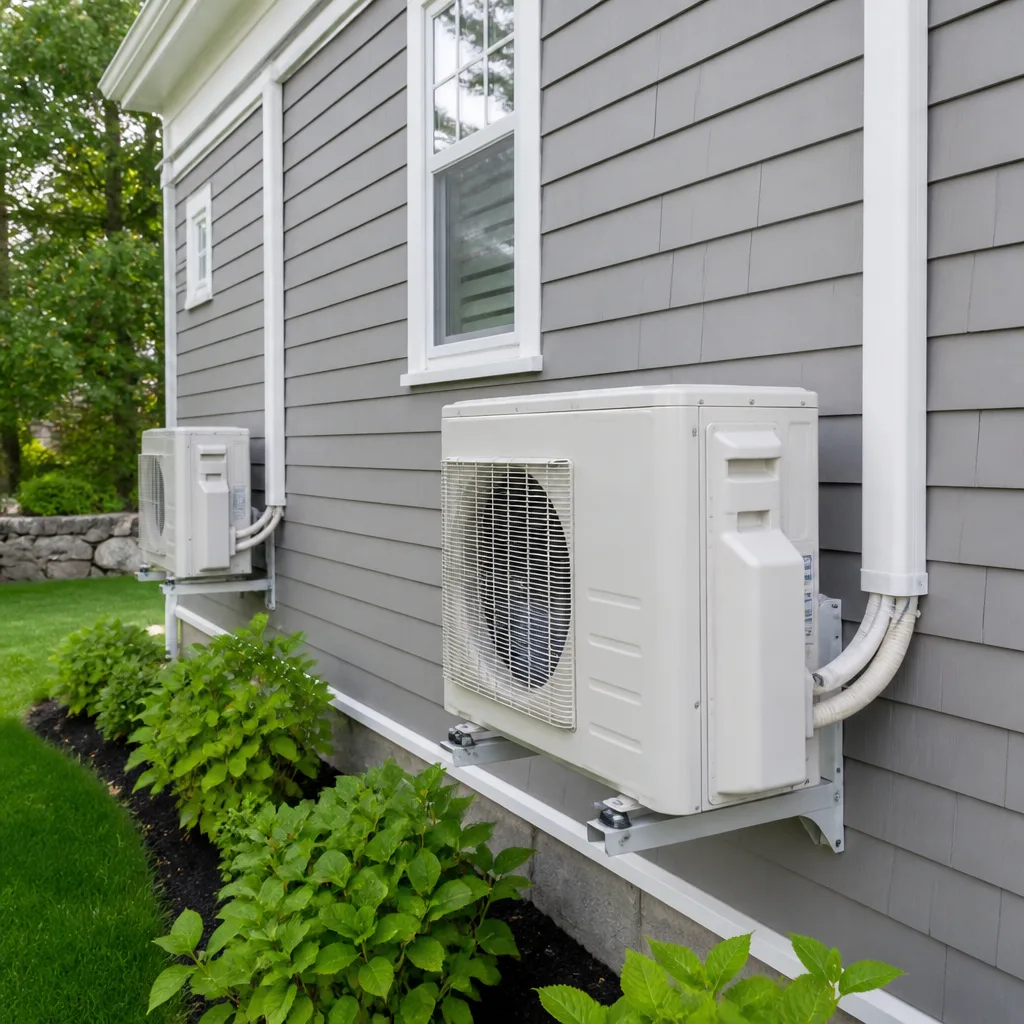 Ductless mini splits
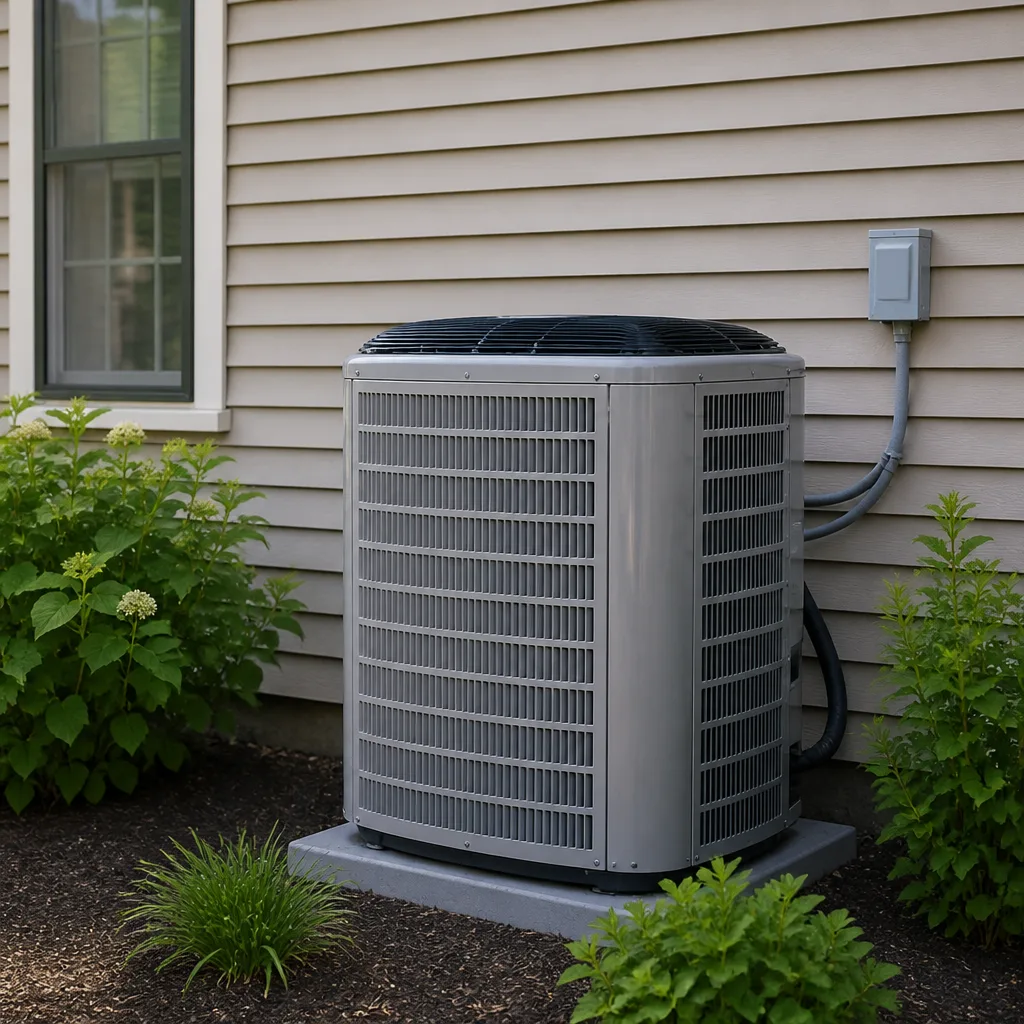 Carrier
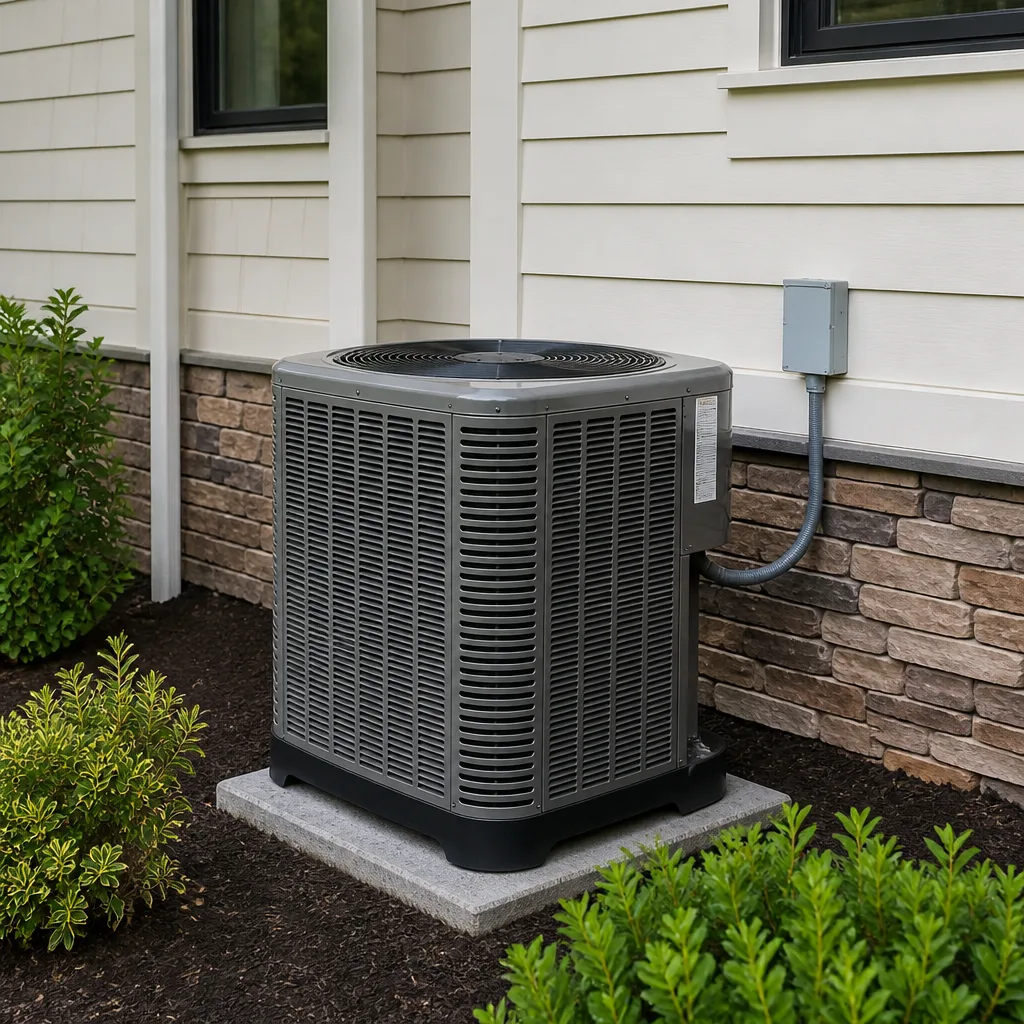 Trane
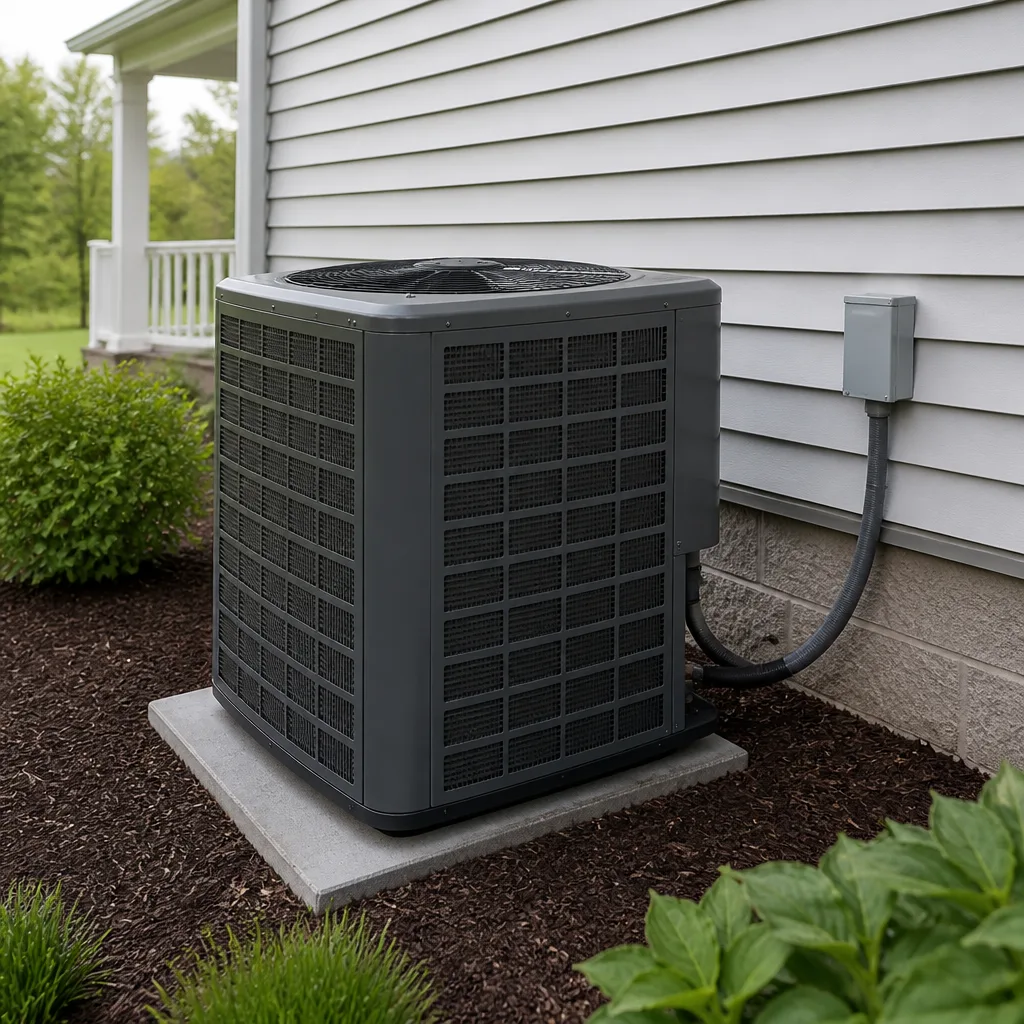 Goodman
Seasonal tune-up and full diagnostic on your Carrier, Trane, or Goodman system - readings shown to you before any repair is proposed
Diagnosis first, numbers second - you approve the repair price before a single part goes in.
Get your free estimateThe Complete AC Installation Guide for Boca Raton Homeowners
Most AC units in South Florida fail before their rated lifespan, and the equipment is usually not the reason. The installation underneath it is. A system sized by square footage, dropped on a standard pad, connected with bare copper linesets, and drained through a line that never accounted for a flat lot will run hard from day one and never recover. Boca Raton homes sit in a humid subtropical climate with year-round runtime, wind-load code requirements, and an environment that punishes shortcuts. This guide covers the variables most national install guides skip: humidity-based sizing, coil and lineset materials, drain design, permit compliance, and how to keep your indoor and outdoor units from locking you into one manufacturer’s ecosystem.
Quick Answer
AC installation in Boca Raton requires more than swapping a box: you need a Manual J load calculation built on a humid-climate template (not square footage), equipment placed and anchored per local wind-load requirements, coil and lineset materials suited to a long cooling season, and a condensate drain designed for flat grade. The written estimate should specify all of it before any work starts. Get that in writing, and the installation will outlast a cheaper one by a wide margin.
Styles & brands we work with
- AC repair
- Furnace & heating
- Heat pumps
- Ductless mini splits
- Carrier
- Trane
- Goodman
Table of Contents
- Why Sizing for Boca Raton Is a Humidity Calculation, Not a Square-Footage Guess
- Permits, Wind Load, and Equipment Placement in Boca Raton
- Coil Coatings, Linesets, and Material Specs That Matter Here
- Drain Line Design on Florida’s Flat Lots
- Avoiding the Single-Brand Trap When Pairing Equipment
- How a Proper Installation Actually Runs, Step by Step
- What Drives the Cost of AC Installation in Boca Raton
- How to Choose an Installer
Why Sizing for Boca Raton Is a Humidity Calculation, Not a Square-Footage Guess
An oversized AC cools a Boca Raton home fast and leaves it clammy. That sounds backwards until you understand how an air conditioner removes moisture: it does that work while it runs. A system that satisfies the thermostat in ten minutes shuts off before it has pulled enough water out of the air, and you end up with a house at 74 degrees that feels like 80. The fix is a proper load calculation, and it has almost nothing to do with how many square feet you have.
A Manual J calculation measures the actual heat and moisture load on your house. In a humid climate, that means accounting for:
- Latent load: the moisture in the air, which is significant here year-round, not just in summer.
- Infiltration: how much humid outdoor air leaks in through doors, windows, and penetrations. This drives the latent number more than anything else.
- Window orientation and shading: a west-facing wall of glass loads differently than a shaded north wall, and it matters in a house that runs cooling most of the year.
- Duct location: ducts in an unconditioned attic gain heat and lose cold in ways a closet duct system doesn’t.
- Occupancy and appliance load: a kitchen that gets heavy use and a household with more people living in it both add load.
Most problems we see trace back to a contractor who used a rule of thumb, often a half-ton per 500 square feet figure that was never accurate in this climate and is worse now that homes are tighter and better insulated. Ask for the Manual J in writing. A serious installer runs it and hands it to you. If someone can’t produce one, they’re guessing, and you’ll pay for the guess in comfort and electricity for years.
For a deeper look at the installation side, see our AC installation page.
Permits, Wind Load, and Equipment Placement in Boca Raton
Air conditioning installation in Florida is permitted work, and in South Florida the permit draws on wind-load requirements that shape where the equipment can sit and how it’s anchored. This is the section national guides skip entirely, and it’s the one that determines whether your new condenser is still standing after a serious storm.
Here’s what to verify before anyone touches the equipment:
- A permit is pulled in your name. Ask to see the permit number and confirm it’s for your address. Unpermitted installations create problems at resale and can void manufacturer warranties.
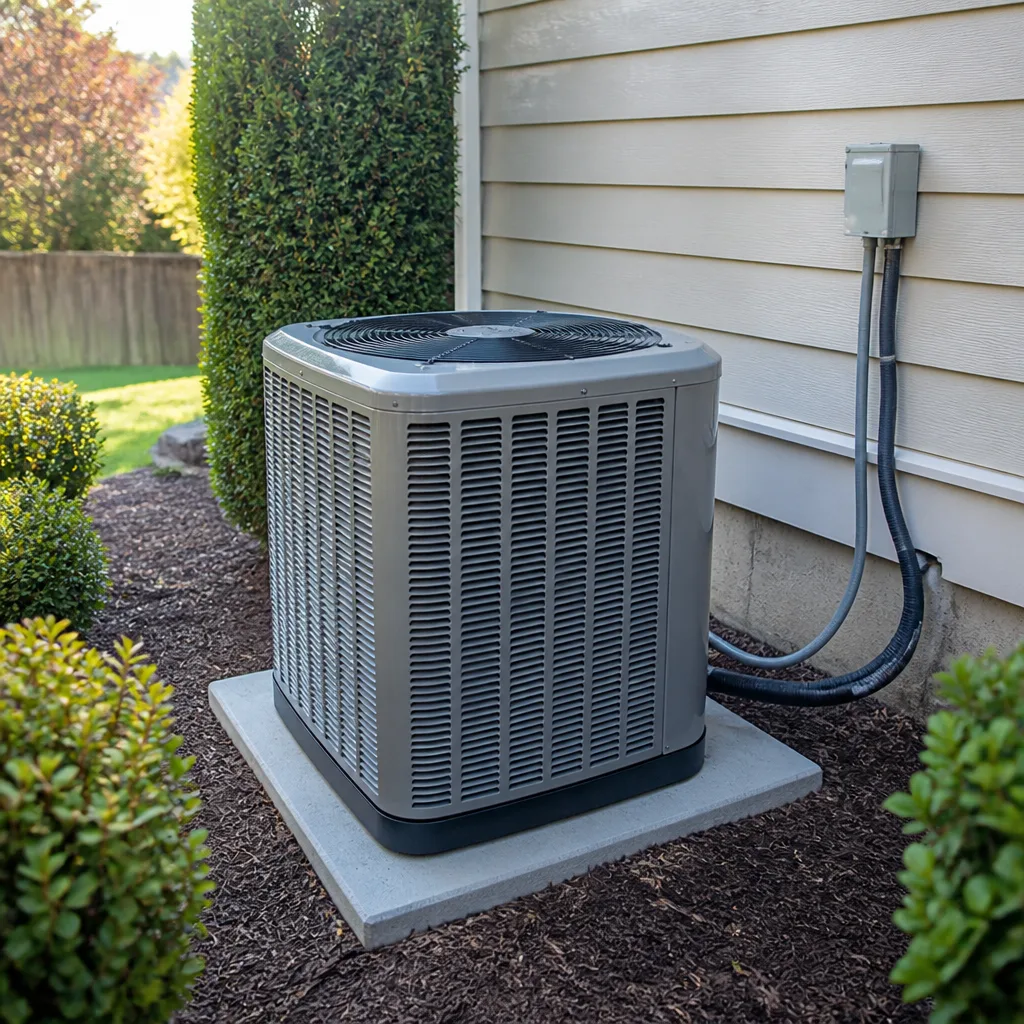
- The pad or platform meets the anchoring spec. Condensers and their mounting need to resist wind uplift per the code in force. That can mean a poured pad, an anchored platform, or specific strapping and fasteners depending on where the unit sits.
- Clearance to the structure is observed. Manufacturers specify minimum clearances for airflow, and inspectors check them. Cramming a condenser against a wall because it’s the only spot that fits is a callback waiting to happen.
- Electrical and disconnect are done to code. The disconnect, the whip, and the breaker all need to match the equipment’s requirements and pass inspection.
- The installation is inspected. A final inspection is part of the process, not an optional extra. If your installer suggests skipping it, that’s the whole answer to whether you should hire them.
The specific code edition and wind-speed requirements for your property come from your local building department, so confirm the current rules with them or ask your installer to show you the permit documentation. What matters is that the documentation exists and covers your home. Most cities require a permit for this work. Boca Raton is no exception, and the anchoring requirements in this part of the state are stricter than inland.
Coil Coatings, Linesets, and Material Specs That Matter Here
Materials age faster in a humid, long-runtime environment than in a climate where the system rests half the year. Two components deserve real attention before you sign anything: the condenser coil and the copper lineset.
Condenser coils. The outdoor coil is aluminum fins on copper tubing, and moisture plus airborne debris plus time equals corrosion. Manufacturers offer coil coatings and treatments that slow that process. If you’re choosing between two units of similar capacity, ask what coil protection each one includes, and price the upgrade. It isn’t glamorous, but it’s the difference between a coil that lasts and one that fails early.
Linesets. The copper lineset carries refrigerant between the indoor and outdoor units, and its insulation jacket matters as much as the copper. Cheap insulation breaks down under UV and moisture, exposing bare copper and losing efficiency. Ask what the insulation spec is and whether it’s rated for outdoor exposure. Ask too about how the lineset is routed and supported: lineset runs that aren’t properly secured vibrate, and vibration is a slow leak waiting to happen.
What to request upfront:
- The specific coil coating or treatment on the equipment you’re buying, in writing.
- The lineset insulation type and exposure rating.
- New lineset versus reused, and if reused, an inspection and pressure test before commissioning.
- Brazing practice: nitrogen-purged brazing to keep oxidation out of the lines. Ask. The answer tells you a lot about how the crew works.
None of this is exotic. It’s standard practice for a crew that installs in this climate regularly, and it’s the first thing cut by a crew that doesn’t.
Drain Line Design on Florida’s Flat Lots
Your AC pulls gallons of water out of the air every day in cooling season. All of it has to go somewhere, and in Florida it can’t rely on gravity the way it can on a sloped lot. This is where mold callbacks start, and it’s why drain design deserves as much attention as the equipment.
How condensate is handled on a Boca Raton installation:
- Primary drain with proper slope. The drain line needs continuous fall from the air handler to its discharge point. On a flat lot, that can mean a condensate pump rather than gravity.
- Secondary drain or float switch. A float switch shuts the system down if the primary drain clogs. It’s cheap insurance against water damage, and it’s required in many jurisdictions. Ask for it.
- Discharge location. Water has to go somewhere it won’t pool against the foundation or cause a nuisance. That calculation changes with the grade and the landscaping.
- Cleanout access. A drain you can’t access is a drain you can’t maintain. That matters in a climate where the system runs nearly all year and the line stays wet.
What you want to ask before signing:
- Where does the condensate discharge, and can I see that location before the work is done?
- Is there a float switch or secondary drain, and is it tied to shut down the system?
- If a pump is used, where does it discharge, and what happens if the pump fails?
- How do I clear the drain line myself, and where’s the access point?
A drain that backs up into a ceiling or an interior wall does real damage and encourages mold growth in a house that’s already humid. It’s a small part of the installation and one of the most common sources of first-year callbacks. Get it designed right.
Avoiding the Single-Brand Trap When Pairing Equipment
One of the least-discussed issues in AC installation is that the indoor unit and outdoor unit have to be paired correctly for the system to perform as rated, and that pairing is often brand-specific. Buy an outdoor condenser from one manufacturer and an indoor air handler from another, and depending on the equipment, you can end up with a mismatched system that delivers far less than its rated efficiency and may not be covered as a matched system under the warranty.
Here’s how to keep your options open:
- Ask for the matched system number. Manufacturers publish matched combinations of outdoor unit, indoor coil, and air handler. Ask your installer to show you the match for what they’re proposing.
- Consider the whole system, not just the box outside. The condenser is the visible part, but the air handler and coil do most of the moisture work. Replacing only half a system is sometimes right and sometimes wasteful. Ask what’s staying and why.
- Look at the broader brand landscape. Some manufacturers build equipment that crosses over well with common indoor components. Others are more proprietary. This matters if you plan to replace the indoor half now and the outdoor half later.
- Don’t get steered by dealer incentives. A dealer who only carries one brand will propose that brand. That’s not dishonest, but it’s not neutral either. Ask whether the recommendation is driven by your home’s load and budget or by what the installer stocks.
At Tidewater AC Repair, we work on equipment from Carrier, Bryant, American Standard, Daikin, Trane, Lennox, Goodman, Rheem, and York, so a recommendation is driven by your home rather than a single dealer relationship. That’s the whole model: we work on your system, not just the brands we sell.
Curious how we apply that across both seasons? Start with Tidewater AC Repair.
How a Proper Installation Actually Runs, Step by Step
A quality installation is a sequence, and each step depends on the one before it. Skipping ahead is what produces the problems this guide is about. Here’s the order:
- Load calculation. Manual J, run on a humid-climate template, expressed in writing. This sets the tonnage.
- Equipment selection and matching. You choose the system based on the load, your budget, and the matched systems available. Coil treatment and lineset spec get decided here.
- Permit submittal. The permit covers placement, anchoring, electrical, and inspection. This happens before installation, not after.
- Removal and prep. Old equipment out, pad or platform prepped to the anchoring spec, pathways checked.
- Installation. New lineset if needed, nitrogen-purged brazing, electrical disconnect, condensate drain and float switch, equipment set and anchored.
- Commissioning. The system is charged to spec using superheat or subcooling, airflow is verified, and static pressure is checked. This is where a lot of installs quietly fall short.
- Inspection and documentation. The permit inspection passes and you get the documentation for your records.
Ask any installer to describe their commissioning process. If they can’t tell you how they charge the system and verify airflow, the installation is not being finished properly. A system that’s undercharged or overcharged from day one runs hot, uses more electricity, and shortens its own life. That step is the one that separates a professional installation from equipment swap.
What Drives the Cost of AC Installation in Boca Raton
Installation cost is set by the system, the home, and the scope. We price per job by written estimate, so the number you see is for your house, not a national average. What drives that number:
- System capacity and efficiency tier. Higher efficiency equipment costs more upfront. It also costs less to run, and in a climate where cooling runs year-round, that difference adds up.
- Home configuration. Two-story homes, additions, and duct systems in a hot attic cost more to serve than a ranch with accessible ducts.
- Ductwork. New or repaired ductwork changes the scope significantly. Existing duct that leaks or is undersized undercuts even a great new system.
- Electrical and permit work. Disconnect, breaker, permit, and inspection are real line items.
- Drain and lineset requirements. A pump versus gravity drain, new lineset versus reused, and the routing all affect the total.
- Brand and tier. Premium lines and value lines are both legitimate. Our job is to match the equipment to the home and the budget, not to steer you up.
What to insist on in any estimate: itemized scope, the matched system numbers, the model numbers of the equipment, and the permit fees listed separately. Free estimates exist because a real installation estimate takes work to prepare, and a contractor who won’t put it in writing is telling you something about how the job will go.
How to Choose an Installer
Ask the same questions of every bidder and compare the answers.
- Do you run a Manual J, and can I see it? A no here ends the conversation.
- What coil coating does the equipment include?
- How is the condensate drain designed, and is there a float switch?
- How will the system be charged and commissioned?
- Will you show me the matched system numbers?
- Can you service the equipment you’re proposing? Our technicians have up to experience and are familiar with nine major brands, including the systems we install.
You want a contractor who answers these without hesitation and who will do the same work on a value-tier Goodman system as a premium one. That’s the standard we hold ourselves to.
Common Mistakes to Avoid
- Sizing by square footage. A rule-of-thumb estimate over- or undersizes the system almost every time in a humid climate. An oversized system cools and never dehumidifies.
- Skipping the permit. Unpermitted work creates problems at resale and with insurance, and it means the anchoring and electrical work never got inspected.
- Ignoring coil and lineset specs. Bare copper and cheap insulation break down in this climate. Ask for the details and get them in writing.
- No float switch. A backed-up condensate drain on a flat lot can put water into a ceiling. The switch costs almost nothing and prevents that.
- Replacing the condenser only. Pairing a new outdoor unit with an aging, mismatched indoor coil often delivers less efficiency than the sticker promises.
- Choosing the installer by bid only. A low bid that skips commissioning and ductwork is not actually cheaper over the life of the system.
- Not asking about brand compatibility. Locking your indoor and outdoor units into one manufacturer’s ecosystem limits options down the road, especially if you replace in stages.
See the difference
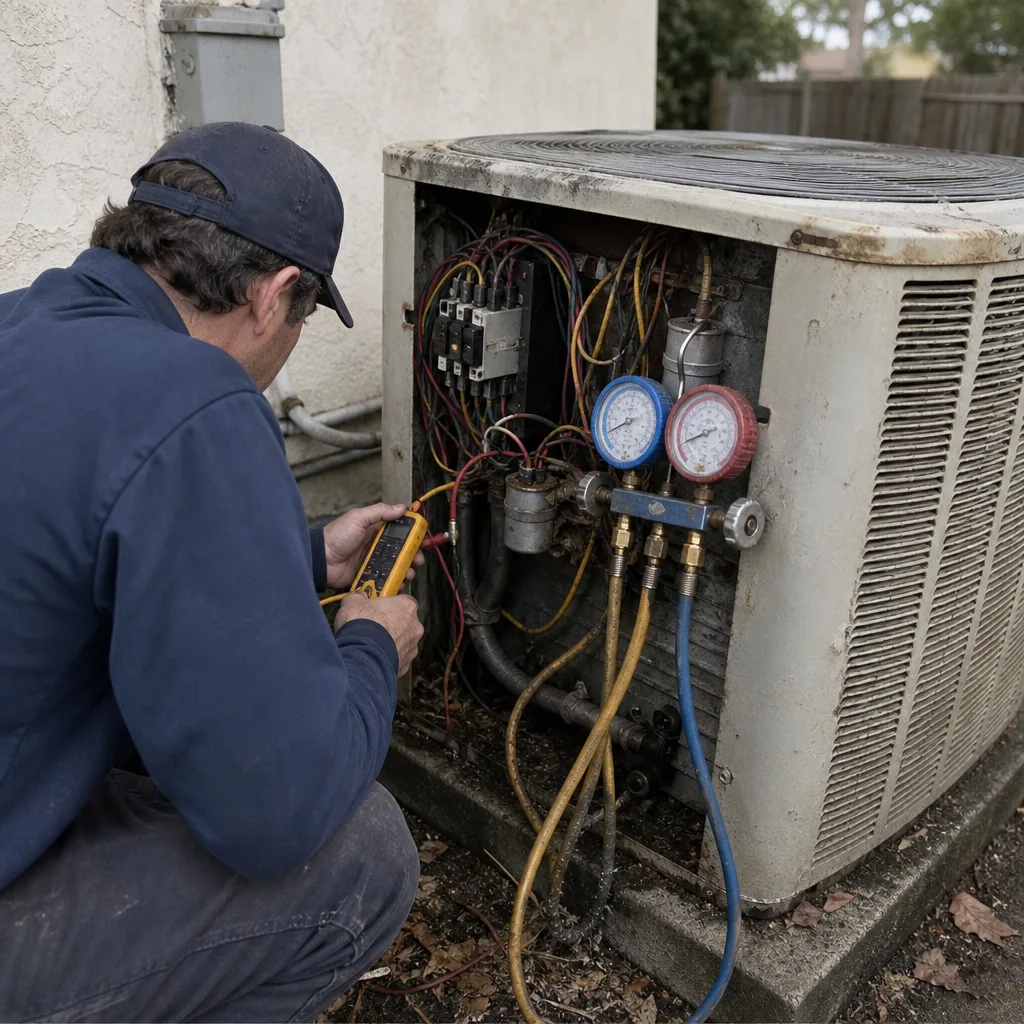 Before
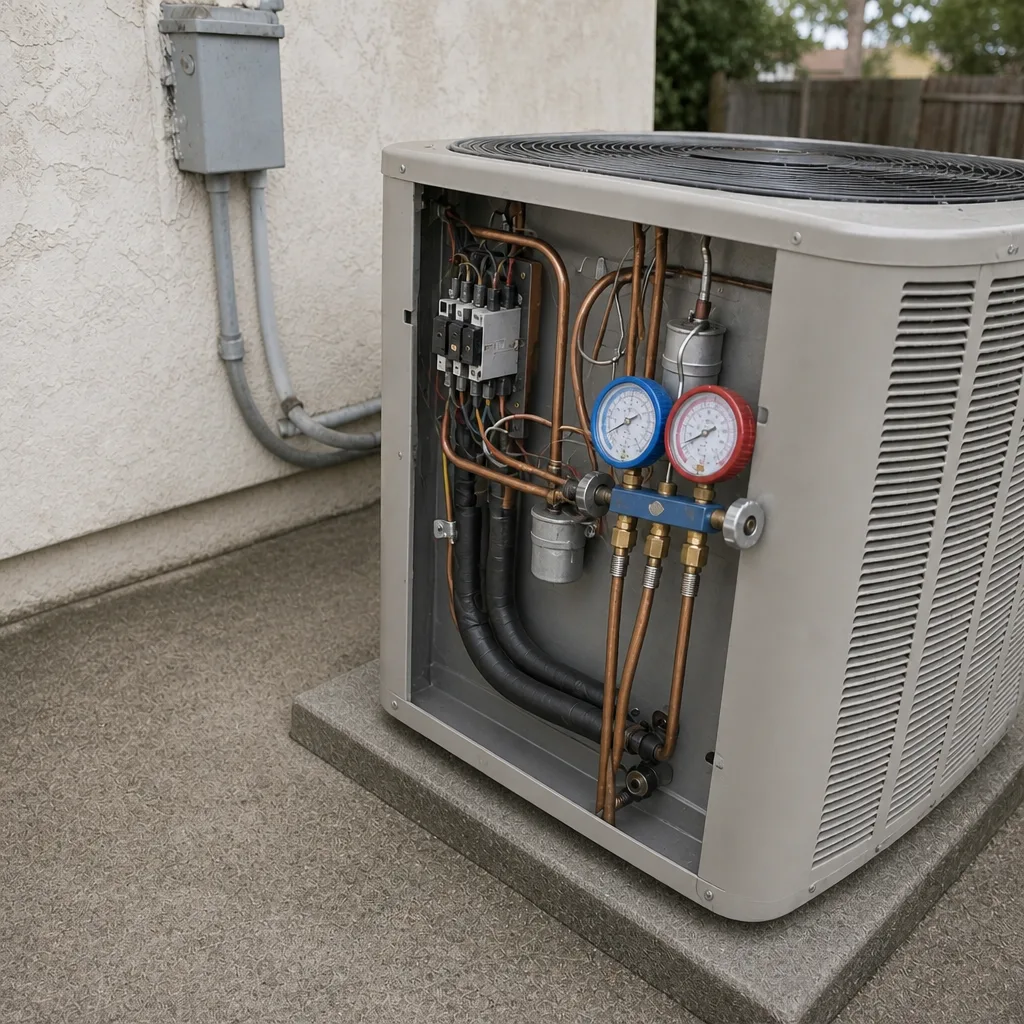 After
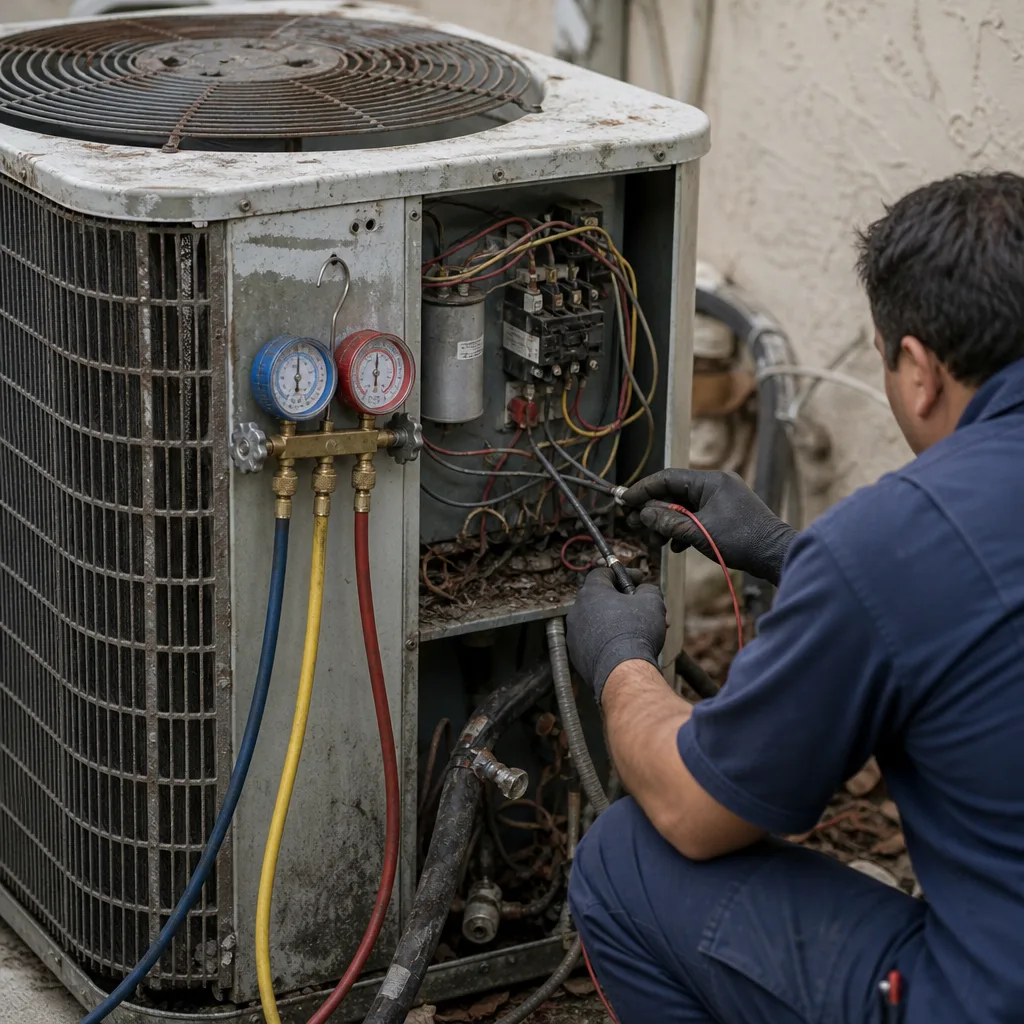 Before
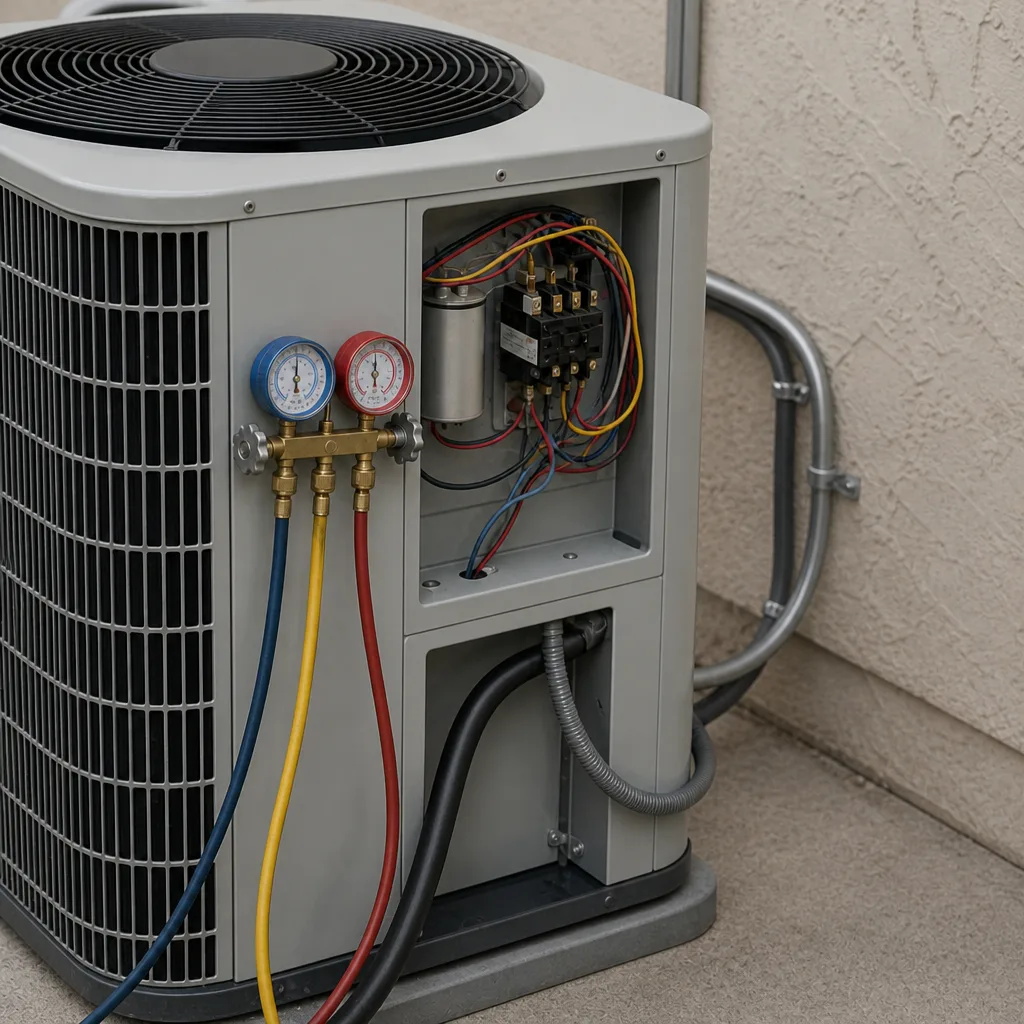 After
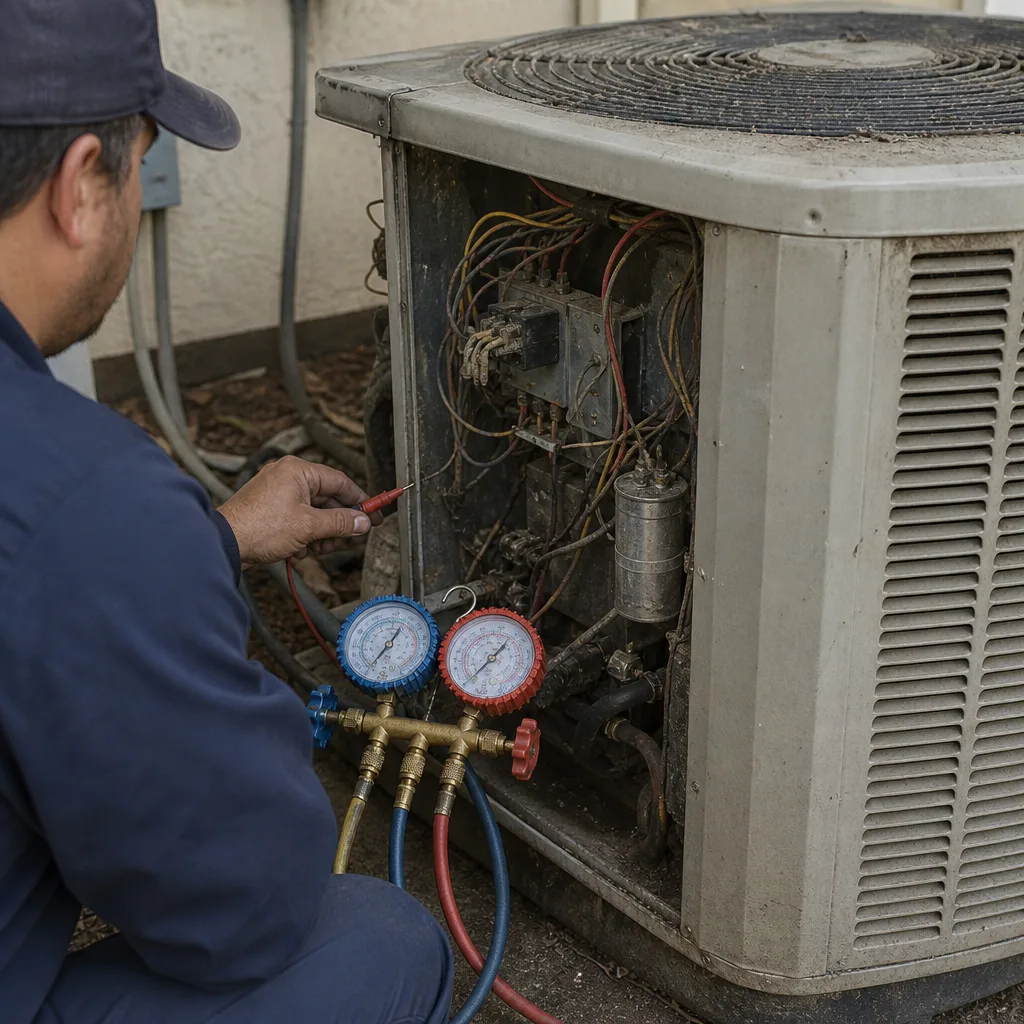 Before
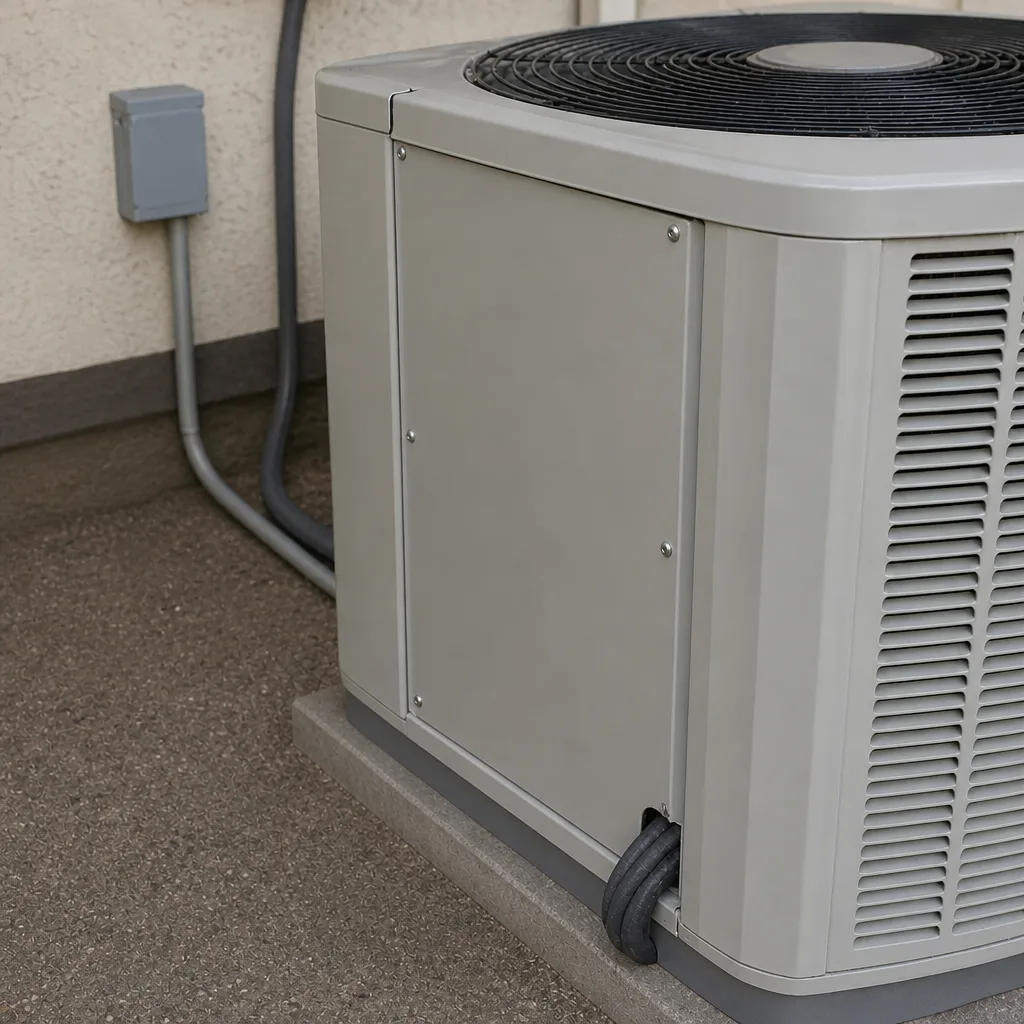 After
When to Call a Professional
Any of these means it’s time for a professional look, not a DIY attempt. If your system is more than a decade old and running constantly, if your electric bill jumped without a rate change, if rooms won’t stay comfortable while the thermostat says otherwise, or if you’re seeing water near the air handler, call. Refrigerant work requires a license and equipment, and electrical work on the disconnect and breaker is not a homeowner job. We can’t work on improperly sourced refrigerant or on equipment that’s been tampered with, and that’s for everyone’s safety.
Tidewater AC Repair offers free estimates in Boca Raton. Call (855) 552-3403. We answer 24/7. Fast dispatch from 7am to 7pm, Sunday through Friday, closed Saturday. For heating and everything else once the seasons shift, we handle furnace repair too. If you’re still figuring out whether repair or replacement is the right call, our Boca Raton page covers the market basics.
Frequently Asked Questions
We price installation per job by written estimate, so the number depends on the system, the home, and the scope. The factors that move the price most are capacity and efficiency tier, ductwork condition, electrical and permit work, and whether you need a new lineset or drain pump. Call (855) 552-3403 for a free, itemized estimate. Estimates are free and the number you get in writing is the number.
Yes. Most cities require a permit for AC installation, and in this part of Florida the permit covers equipment placement, wind-load anchoring, electrical, and inspection. Ask to see the permit number for your address and confirm the work passes inspection. If an installer suggests skipping the permit, hire someone else.
It’s legal but it’s a mistake. An oversized system cools too quickly to remove enough moisture, so your home stays humid even at a comfortable thermostat setting. The right size comes from a Manual J load calculation on a humid-climate template. Ask for it in writing.
A Manual J measures the actual heat and moisture load on your house, including windows, insulation, infiltration, and latent load. A square-footage estimate skips all of that and guesses. In Boca Raton’s humidity, the difference shows up in comfort, not just efficiency.
Replacing the indoor and outdoor units together as a matched system delivers the efficiency and warranty coverage the equipment is rated for. Replacing only the outdoor unit is sometimes right and sometimes wasteful. Ask your installer to show you the matched system numbers before deciding.
We work on equipment from Carrier, Bryant, American Standard, Daikin, Trane, Lennox, Goodman, Rheem, and York. We’re brand-agnostic on purpose: recommendations are driven by your home’s needs and your budget, not a dealer incentive. Call (855) 552-3403 for a free estimate.
The Bottom Line
AC installation in Boca Raton is a humidity calculation, a permit and anchoring exercise, and a materials decision, in that order. Get the Manual J right, get the permit and wind-load anchoring documented, specify the coil and lineset, design the drain for a flat lot, and confirm the matched system numbers before you sign. The equipment brand matters less than those five steps, and most early failures trace back to one of them being skipped. Do it right, and the system will cool and dehumidify the way it was rated. Call (855) 552-3403 for a free estimate. We answer 24/7. Fast dispatch from 7am to 7pm, Sunday through Friday, closed Saturday.
Written by the team at Tidewater AC Repair.