
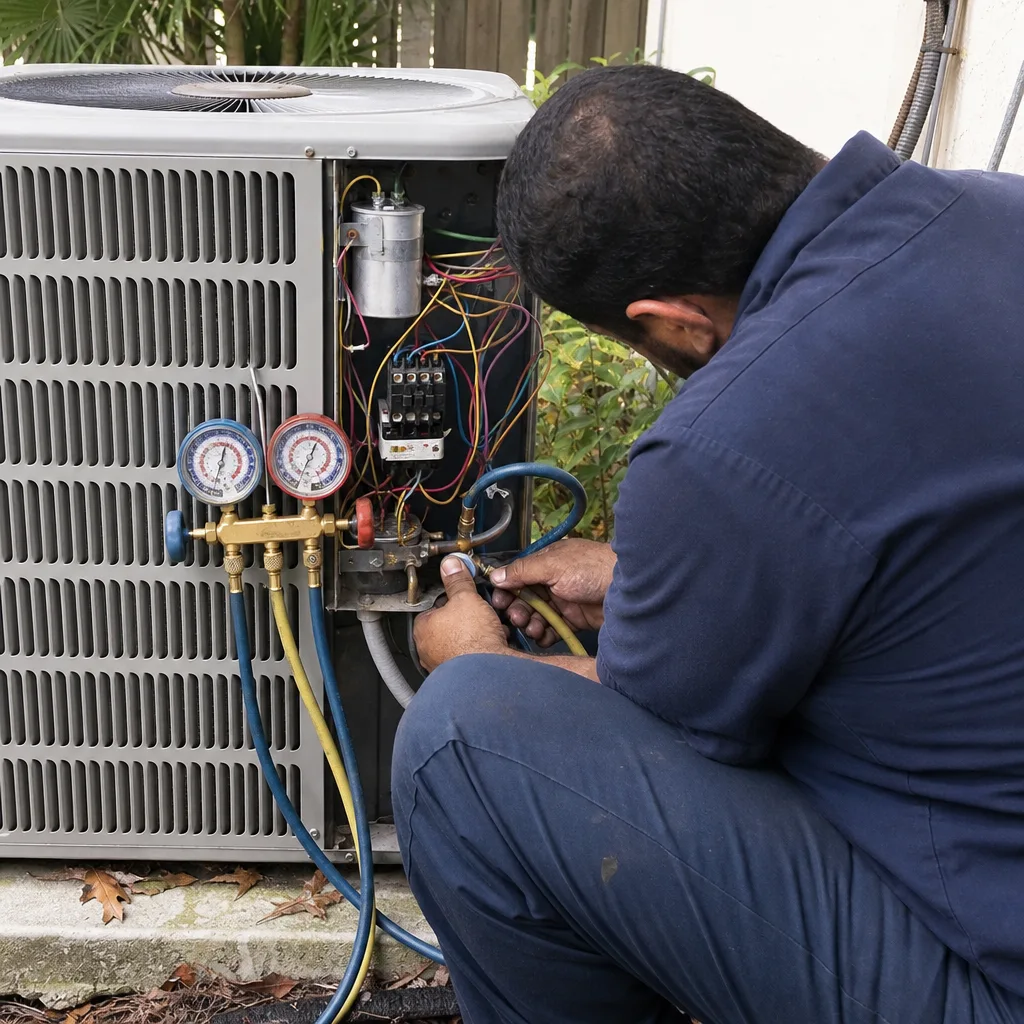
Last updated November 15, 2026
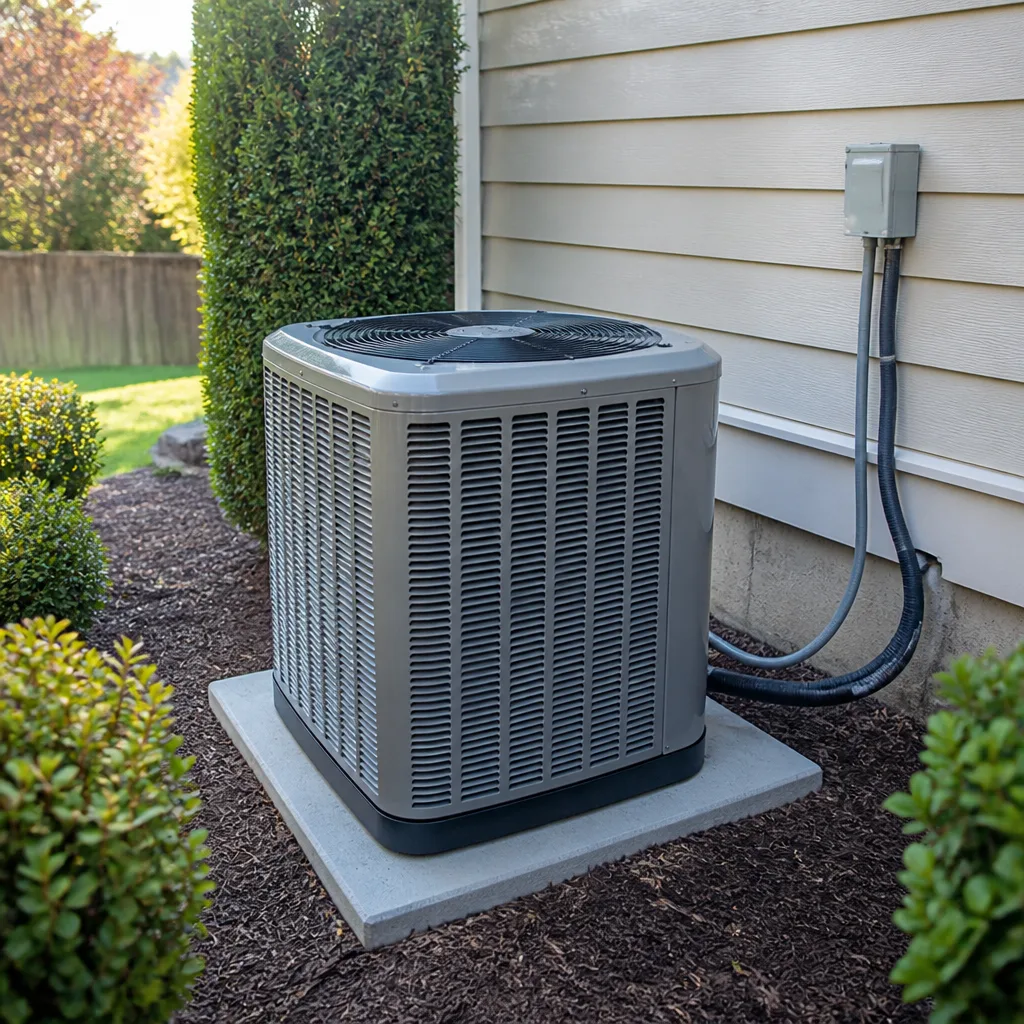 AC repair
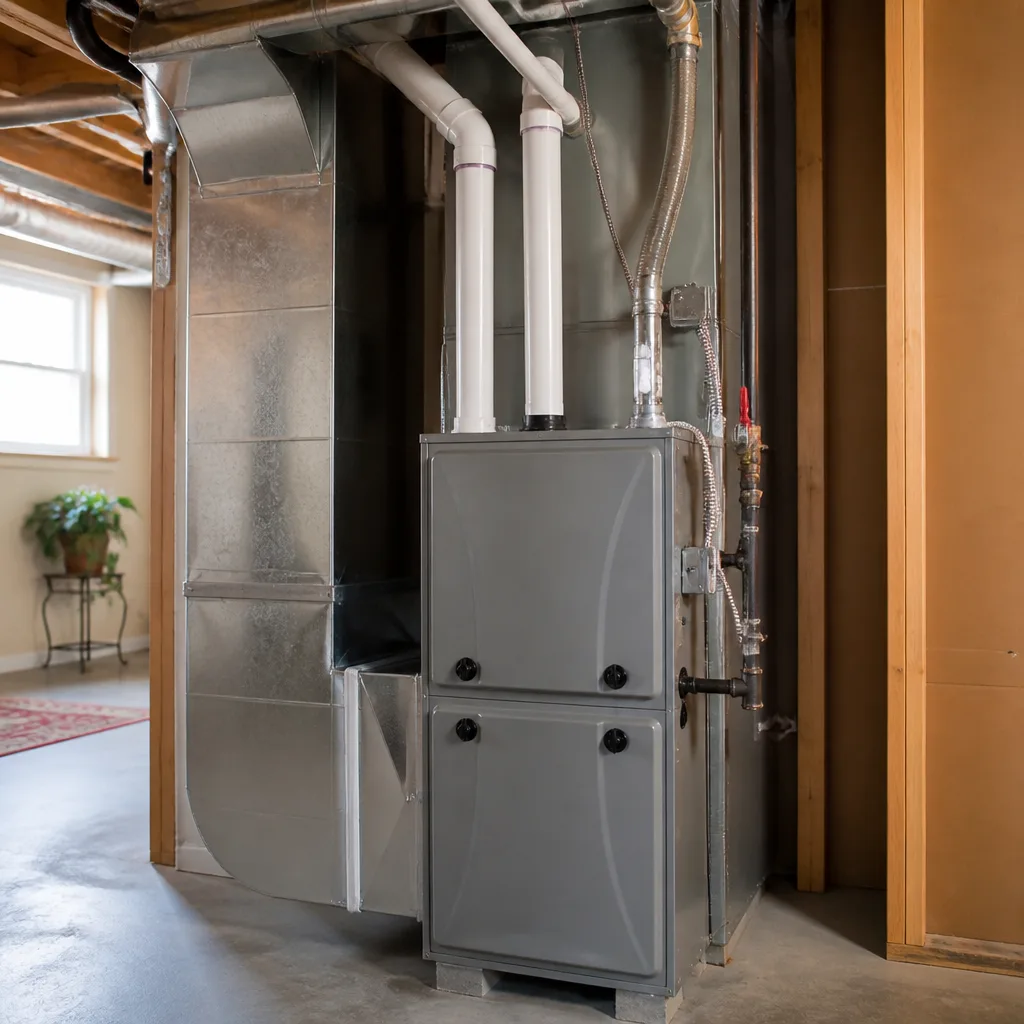 Furnace & heating
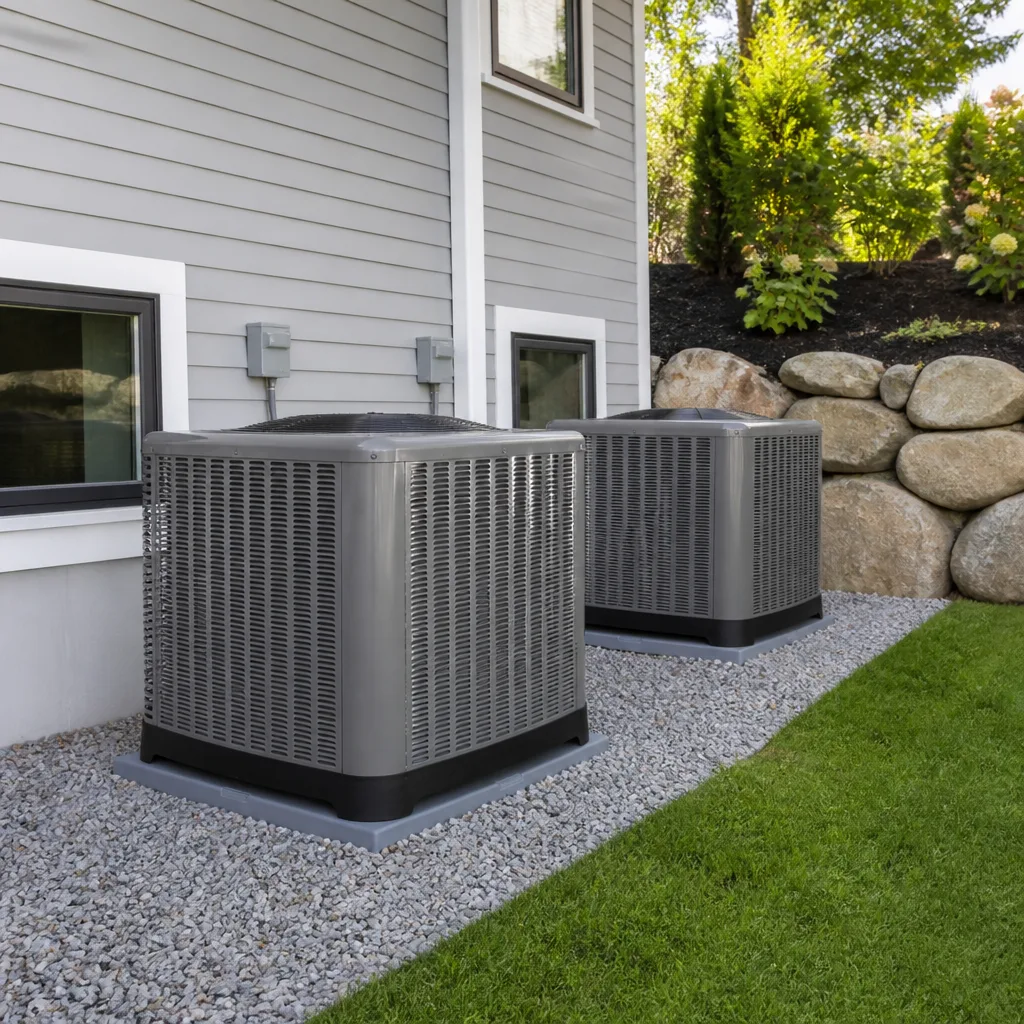 Heat pumps
 Ductless mini splits
 Carrier
 Trane
 Goodman
Seasonal tune-up and full diagnostic on your Carrier, Trane, or Goodman system - readings shown to you before any repair is proposed
Diagnosis first, numbers second - you approve the repair price before a single part goes in.
Get your free estimateHVAC Permits, Codes & Inspections in Boca Raton, FL: What You Need to Know
Most homeowners in Boca Raton assume a permit is just paperwork the contractor handles, so they never ask whether one was pulled. That gap between assumption and reality is where trouble starts. An unpermitted AC replacement can leave you with a system your homeowner’s insurance may not fully cover, a home sale that stalls at closing, and no paper trail showing the work met the Florida Building Code. This guide explains which jobs in Boca Raton require a permit, which don’t, what the inspection actually checks, and how to verify your own home’s HVAC history before anyone touches your equipment.
Quick Answer
In Boca Raton and the rest of Palm Beach County, any HVAC work that replaces equipment, adds a new system, relocates a unit, or changes ductwork substantially requires a permit and a passing inspection before the job is legally closed. Straight repairs that swap a component for a like-for-like part, such as a blower motor, capacitor, contactor, or thermostat, typically don’t need one. A licensed contractor pulls the permit and signs the application; homeowners can self-permit only a narrow set of owner-builder mechanical work on a home they occupy.
Styles & brands we work with
- AC repair
- Furnace & heating
- Heat pumps
- Ductless mini splits
- Carrier
- Trane
- Goodman
Table of Contents
- Which HVAC Jobs in Boca Raton Trigger a Permit?
- Florida Building Code and Palm Beach County: How the Rules Stack
- What the Inspection Actually Looks Like
- How to Pull Your Home’s HVAC Permit History
- What Homeowners Can Self-Permit in Florida
- Insurance, Resale, and the Real Cost of Skipping the Permit
- Red Flags in the Permit Conversation
- How Boca Raton Housing Shapes the Work
Which HVAC Jobs in Boca Raton Trigger a Permit?
The line between a repair and an installation is where most confusion begins, and it’s the question we get asked most in Boca Raton. The short version: if the equipment itself is being replaced, added, or relocated, expect a permit. If a single part on an existing system is being swapped for the same part, you usually don’t need one. Everything sits on a spectrum between those two points.
Permit-exempt work
- Replacing a failed run capacitor, contactor, or relay
- Swapping a blower motor or fan motor for a matching unit
- Replacing a thermostat with a compatible model, wiring unchanged
- Cleaning or clearing a condensate drain line
- Replacing a burnt-out disconnect or fuse at the equipment
- Topping off refrigerant during a documented repair (though refrigerant handling itself requires EPA certification)
- Sealing a leaking duct joint with mastic or tape
Work that requires a permit
- Replacing an air conditioner, heat pump, or air handler with a new unit
- Replacing a furnace or any combustion heating appliance
- Adding a new system, such as a mini-split in an addition or converted garage
- Relocating equipment, indoors or outdoors
- Replacing more than a small stretch of ductwork, or any change to duct sizing and layout
- Changing a system’s type, such as moving from a gas furnace to a heat pump or vice versa
- Any work that alters the electrical circuit feeding the equipment
A straight like-for-like compressor swap can go either way depending on scope. If the whole condensing unit comes out and a new one goes in, that’s a replacement and needs a permit. If only the compressor inside the existing cabinet is changed, ask your contractor to confirm the scope with the county before work begins. When in doubt, the safe assumption is that a permit is required.
Florida Building Code and Palm Beach County: How the Rules Stack
Florida’s HVAC rules start with the Florida Building Code, Mechanical volume, which the whole state uses as a baseline. Palm Beach County layers its own administrative rules and amendments on top, mostly around permitting procedure, inspection requirements, and specific installation details. The code volume itself sets the technical standards: equipment sizing, clearances, duct construction, combustion air, condensate disposal, and refrigerant handling. The county governs how those standards get verified through the permit and inspection process.
A few areas where the two layers matter most for residential work in Boca Raton:
- Equipment sizing. The FBC Mechanical requires new systems to be sized with an accepted load calculation method, not just matched to whatever unit came out. This matters in Boca Raton homes because a system sized for an older, less insulated house can be wrong for the same house today.
- Outdoor unit clearances. The code sets minimum distances from walls, property lines, and other equipment. In Boca Raton’s tighter zero-lot-line and villa communities, these clearances come up often, and they’re checked at inspection.
- Duct and plenum ratings. Ductwork within the building envelope carries material and sealing requirements. The county checks the installation against those ratings, particularly in garages and mechanical closets.
- Condensate disposal. The code specifies safe drainage of condensate. A properly sloped, trapped drain line matters more than homeowners realize, since a failed line is a common source of water damage.
- Combustion air and venting. Furnace installs carry specific venting and combustion air requirements, and those are checked closely.
The county’s local role is mostly administrative and inspection-driven. It decides what forms you file, when the rough inspection has to happen relative to the work, and what triggers final sign-off. For high-rise condos and townhomes, expect the building or HOA to have its own equipment approval process on top of the county’s.
We work on AC installation jobs across Boca Raton and see the practical difference the code makes. A properly sized Carrier or Daikin system with correct clearance and ducting may run quieter, cycle less, and last longer than one installed to fit whatever space was left over.
What the Inspection Actually Looks Like
Having a permit is only half of a legal job. The other half is the inspection, and this is where timelines slip if the contractor hasn’t planned ahead. In Palm Beach County, most residential HVAC replacements involve a rough-in inspection and a final inspection, sometimes combined into one visit depending on the scope.
Who shows up
An inspector from Palm Beach County’s building department, not your contractor, not the manufacturer, not a third-party review company. The inspector is a municipal employee whose job is to verify the work matches the scope of the permit and meets the code references on that permit.
What the inspector checks
- Permit accuracy. The model numbers on the installed equipment should match what’s on the approved permit. A common failure point is a contractor substituting a different unit without updating the permit.
- Equipment placement. Setbacks from walls, property lines, and other equipment, plus service access clearances.
- Electrical connections. Disconnect, whip, breaker sizing, and grounding on the equipment circuit.
- Refrigerant line routing and insulation. Line sets supported, insulated, and routed outside of any passage where rubbing could cause failure.
- Condensate disposal. Trap, slope, and termination point, including whether it discharges where it should.
- Ductwork. Sealing, support, material ratings, and installation methods where duct work was part of the scope.
- Combustion appliances. Flue venting, combustion air, and clearances when a furnace is involved.
- Plaque and labels. The permit card must be signed off, and equipment data plates readable and accessible.
What a failed inspection means
If the rough or final inspection fails, the work isn’t closed. The contractor gets a correction list, addresses the cited items, and requests a reinspection. That means an extra visit, a possible reinspection fee from the county, and a delay before the permit is officially closed. In our experience, most failures come from small discrepancies: a mismatched model number, a clearance too tight, or a missing trap. All three are avoidable when the contractor walks the job before the inspector does.
For homeowners, the practical consequence is simple: a job priced without permit and inspection overhead isn’t actually the same job. And a job where the contractor promised same-day completion and skipped the inspection hasn’t been closed on paper, which is where it counts.
How to Pull Your Home’s HVAC Permit History
Before a single contractor quotes work on your home, pull the permit history. This step takes 15 minutes and can change the entire scope of the job. Here’s how to do it.
- Start with Palm Beach County’s online permit portal. Searchable by property address, it returns permit records for work performed under county jurisdiction. You’ll see permit types, dates, status (open, closed, expired), and sometimes the contractor who pulled it.
- Log every HVAC permit you find. Note the permit type, the date issued, the model numbers listed, and whether the permit was closed with a passing final inspection.
- Check for open or expired permits. An open HVAC permit from a past replacement can block new permits from being issued on the same address until it’s resolved. That’s a conversation to have before signing anything.
- Confirm the equipment matches the permit. If the permit says a 3-ton Carrier was installed but your outdoor unit is a 2.5-ton Daikin, someone swapped equipment without a permit. That’s a red flag for both code compliance and insurance.
- For condos or townhomes, check the association’s records too. Many communities keep their own file of install approvals, which can fill gaps in the county record.
- Bring the history to your contractor. A good one will use it to scope the job accurately instead of guessing.
Boca Raton has neighborhoods where homes were built in waves across different decades, and the HVAC history often shows middle-of-the-line equipment installed quickly during a real estate turnover. Those records tell a story about the system you have and what a new installation should look like. This is exactly the kind of thing we look at first when we arrive for a furnace repair or an AC quote. Nine major brands cross our bench, so we’re not guessing at whatever equipment the last person left behind.
What Homeowners Can Self-Permit in Florida
Florida allows a homeowner to act as their own contractor under what’s called the owner-builder exemption, but the exemption is narrow and easy to misread. Here’s where the line sits for HVAC work.
What you can typically self-permit
- Work on a home you own and occupy as your primary residence (the exemption doesn’t apply to rental property or second homes)
- Work you personally perform on your own property
- Signing the owner-builder affidavit and taking on the associated liability
What requires a licensed contractor’s signature
- Any HVAC work on a home you don’t occupy as your primary residence
- Any work where the homeowner doesn’t intend to do the labor personally
- Refrigerant handling, which requires EPA Section 608 certification regardless of who owns the home
- Electrical work beyond like-for-like component swaps on existing circuits
- Any commercial or investment-property work
The exemption is often misunderstood as a loophole. It isn’t. Self-permitting doesn’t transfer risk to the county, and it doesn’t change inspection requirements. It also won’t satisfy most insurance carriers or lenders at resale, since those parties typically want licensed trade work on record. If you’re not going to do the labor yourself, the permit needs a licensed HVAC contractor’s signature.
Insurance, Resale, and the Real Cost of Skipping the Permit
This is the part of the permit conversation that rarely gets the seriousness it deserves. An unpermitted AC replacement isn’t just a code and permit problem. It becomes an insurance problem the first time a claim touches that equipment.
Most homeowner’s policies contain provisions that treat unpermitted or non-compliant work as a coverage question. If a condensate line from a unit that was installed without a permit fails and water damages a ceiling, floor, or wall, the carrier may investigate the installation and, depending on the policy language, argue the damage flows from work that wasn’t done to code. We’ve seen claims in Boca Raton get complicated because the permit history was incomplete. A roof leak unrelated to HVAC usually goes through cleanly. A water claim traced to a mechanical closet missing a permit can drag.
Three ways an unpermitted install typically turns expensive:
- Insurance coverage disputes. Even where the carrier ultimately pays, the investigation adds time to the claim.
- Resale headaches. Buyers’ inspectors and title agents often review permit history, and an open or missing permit on a major system can hold up closing or force a retroactive permit process.
- Code compliance costs. Bringing unpermitted work into compliance after the fact means a permit retrofit, an inspection, and any corrections the inspector requires, at the homeowner’s expense.
The initial savings from a job priced without permit and inspection overhead don’t hold up against those costs. And the honest comparison matters: the difference between a permitted and unpermitted install in Boca Raton isn’t the quality of the equipment, it’s the paper trail that proves the install was done to code.
Red Flags in the Permit Conversation
Contractors cut corners on permits in both directions. Some skip them to lower the price. Others use permit complexity as a reason to push a full replacement over a repair that would have solved the problem. Here’s what to watch for.
- “We don’t need a permit for that.” Sometimes true for a component swap. Always false for a replacement, addition, relocation, or a large duct job. Ask the contractor to specifically tell you which jobs require a permit and which don’t, and to put that in writing.
- “I’ll pull the permit after I start.” Not how it works. The permit needs to be issued before work begins, and the inspector expects to see it before the rough inspection.
- “We’ll skip the inspection and just send you the signed card.” Inspections are performed by the county, not the contractor. Anyone offering to handle the sign-off is describing something that doesn’t exist.
- “The repair will cost almost as much as a new system, so let’s replace.” A legitimate repair-replace conversation includes real numbers, code considerations, and the age and condition of the existing equipment. A contractor who jumps straight to replacement without the diagnostic on the table is a red flag.
- “The unit we’re installing is a substitute, but it’s the same thing.” A different model than the one on the permit means the permit needs updating. Substitutions without permit changes show up at inspection.
- “We don’t need a load calculation for a replacement.” The code disagrees. Sizing matters, and a system sized to the same tonnage as the old one isn’t automatically the right system for the home today.
- “You don’t need to check the permit history, we already looked.” Pull the history yourself. It takes minutes and protects you from inheriting a problem.
What we hear from homeowners most often, in our experience, isn’t that they distrust contractors. It’s that nobody told them what to ask. A few specific questions before work starts will separate the people who run clean jobs from the ones who don’t.
How Boca Raton Housing Shapes the Work
Boca Raton isn’t a single housing market. The HVAC work differs by neighborhood, and the permit and inspection process follows the housing stock.
In neighborhoods like Boca Villas, Lake Rogers Isle, and the older streets near downtown, homes range from mid-century ranches to newer rebuilds on the same block. Mechanical closets are often tight, and the code clearances for air handlers and duct chases get tested. Outdoor units can be near property lines on tighter lots, and clearance rules mean an install plan has to walk the property before equipment placement is decided.
Further west, in communities like Broken Sound, Woodfield Hunt Club, or the neighborhoods around Mission Bay, many homes are single-story villas and club homes with equipment located centrally or in a soffit. Ductwork in those homes is often attic-based, which brings duct ratings, support, and access questions into play. In our experience, those installs live or die on whether the contractor looked at the attic before quoting.
High-rise condos along the oceanfront and Intracoastal corridor add another layer. The building association usually has its own approval process for equipment changes, especially for anything mounted on common-area balconies or in shared mechanical units. Punch that approval in early if you’re working in a tower, because the county permit and the association approval both need to be in hand before the equipment goes in.
We work across Boca Raton because we know these homes individually. Whatever brand sits in your closet, from American Standard to Bryant, we’re diagnosing the system you have and not the one we’d rather sell you.
Common Mistakes to Avoid
- Assuming the contractor pulled the permit because the work looks comprehensive. Ask for the permit number before work begins. If it’s not available, the job hasn’t been filed.
- Skipping the permit history check before signing. An open permit from a prior install can block a new one and delay your project for weeks. Pull the history first.
- Taking a lapsed permit as proof work was closed. An expired permit with no final inspection is not the same as a completed job. Check the status field, not just the permit date.
- Letting an HOA approval slip. In many Boca Raton associations, county permits and building approvals run in parallel, not in sequence. Manage both.
- Believing the “same tonnage means same equipment” pitch. Sizing is more than tonnage. Load calculation, duct condition, and the home’s insulation all factor into what goes in.
- Accepting a verbal promise on the inspection. The signed inspection card or the county’s closed status is the only proof. Verify both.
- Treating resale as the only reason to care. Insurance coverage is the reason to care during ownership. The permit protects you if a claim touches the system, not just when you sell.
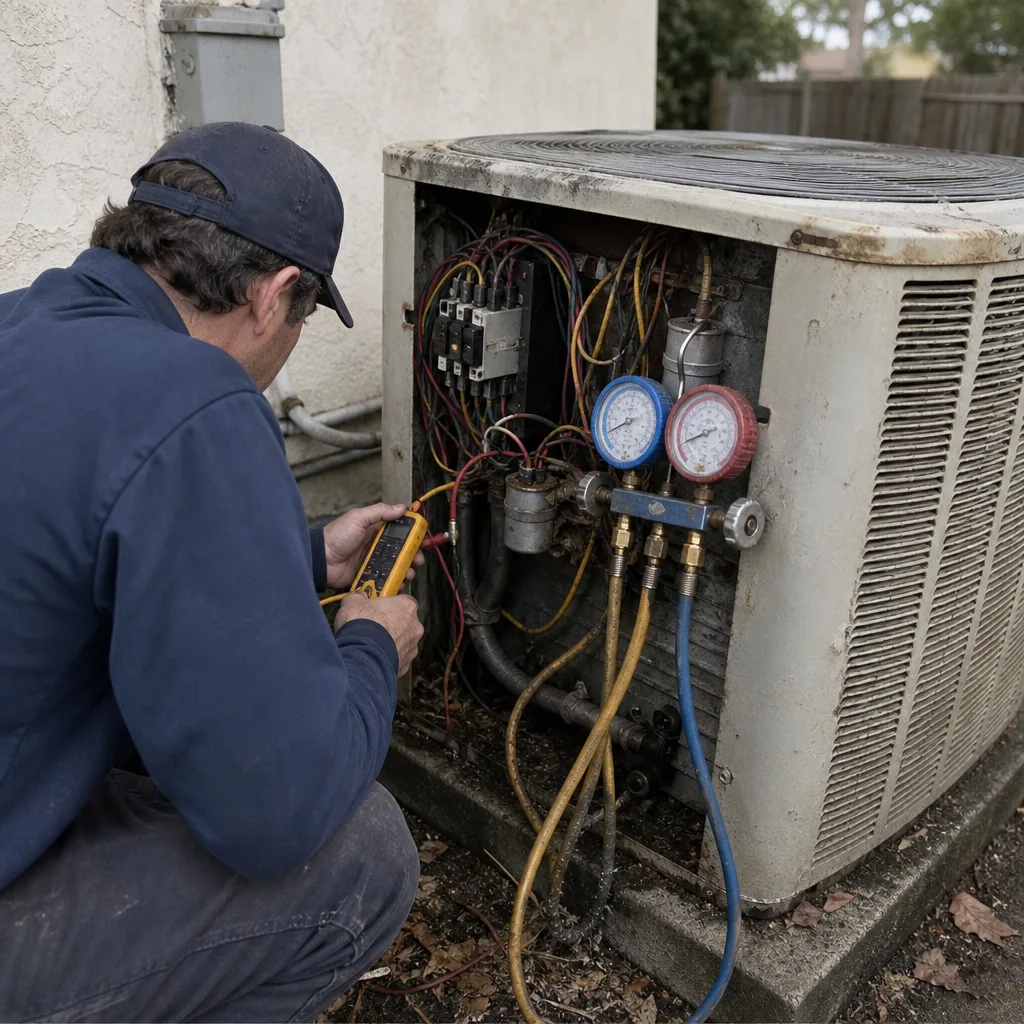
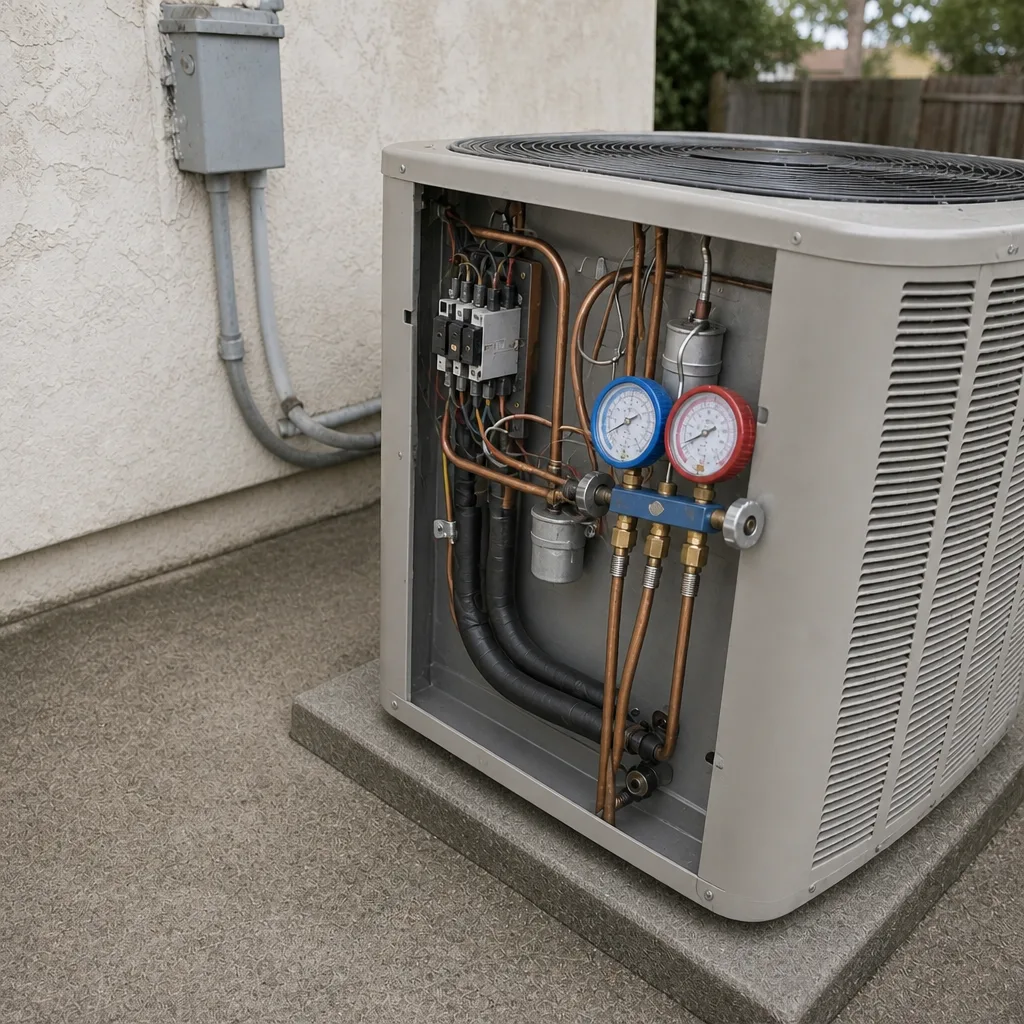
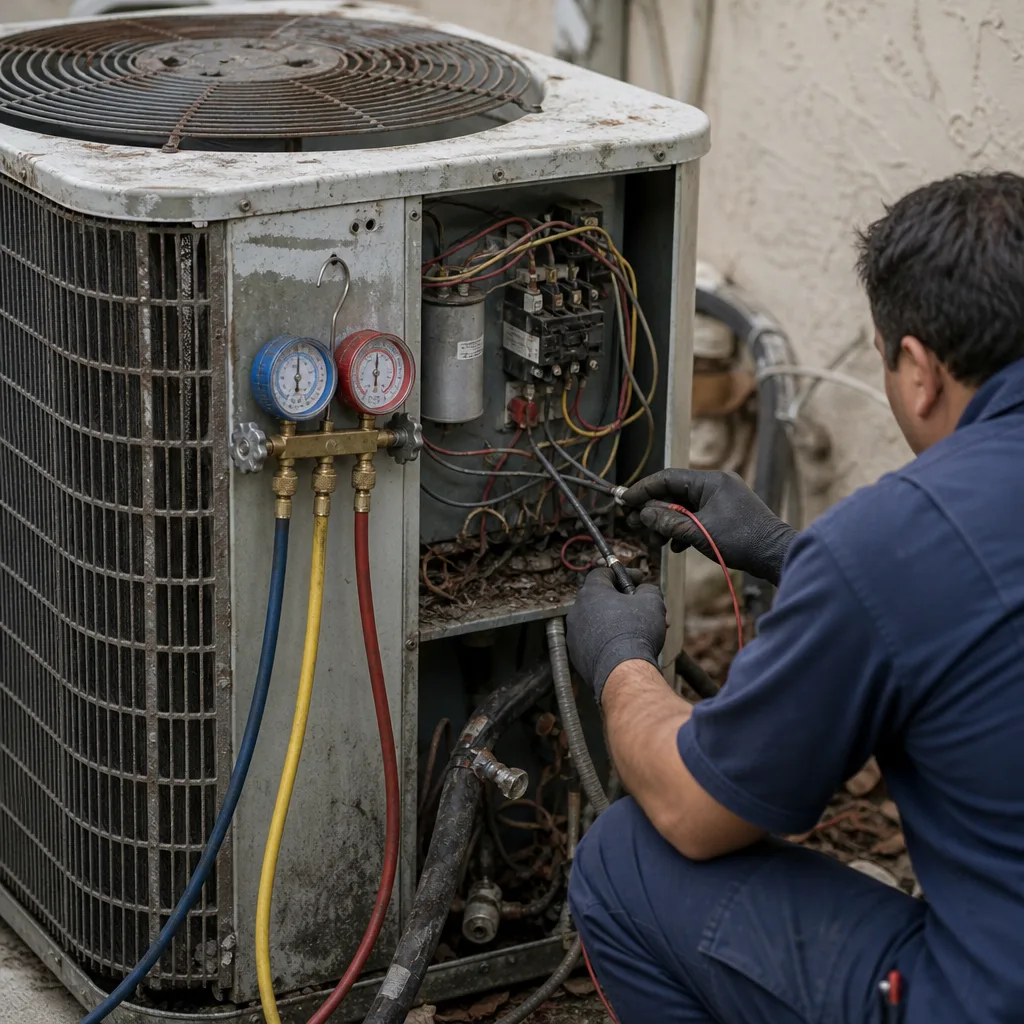
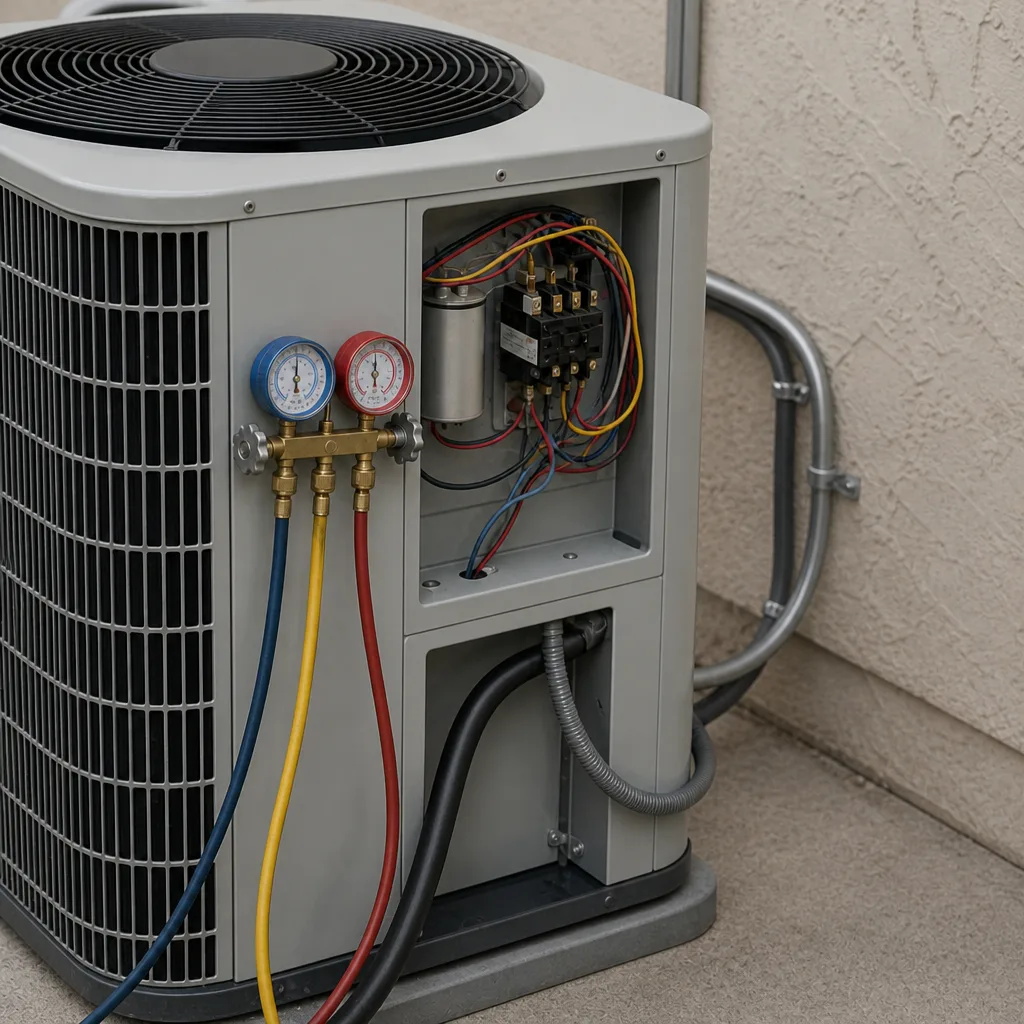
See the difference
 Before
 After
 Before
 After
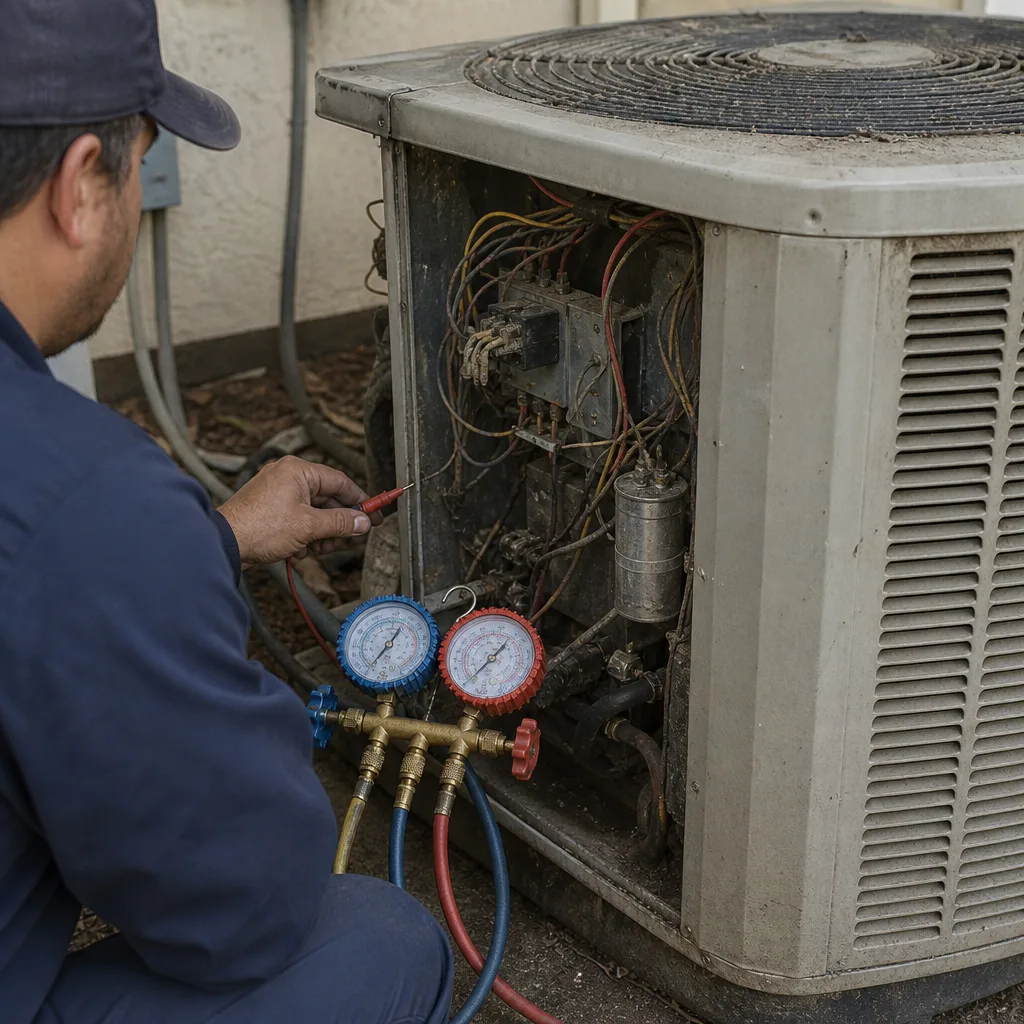 Before
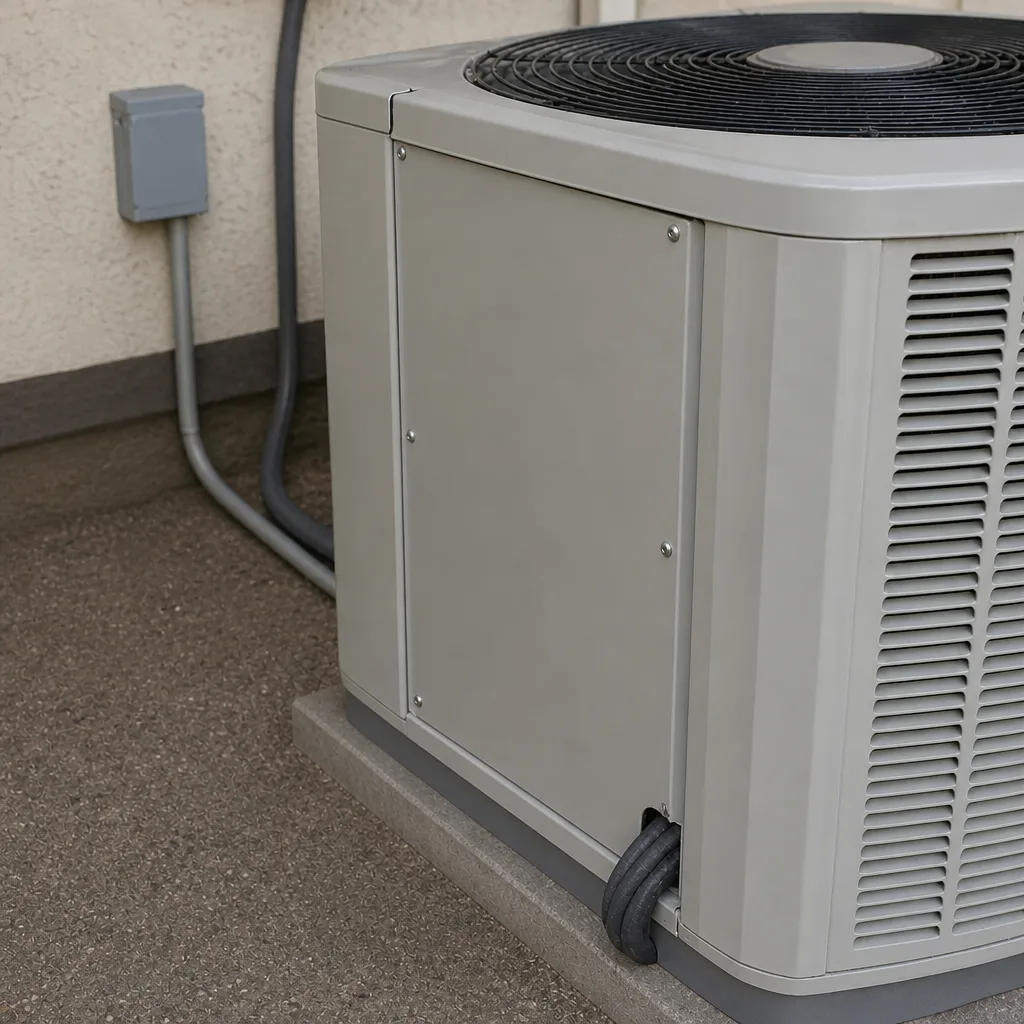 After
When to Call a Professional
Getting a permit and inspection right is a small part of a bigger job, and it’s not something homeowners should try to run themselves unless they’re genuinely doing their own work. Call a professional when the equipment failed and you’re considering replacement, when an inspection came back with corrections, when a contractor refused to pull a permit, or when you pulled your own history and found a problem. Call when you’re not sure whether a job needs a permit. In our experience, the worst outcomes come from guessing on that question. We work with Palm Beach County’s permit process regularly and can tell you what your specific job requires before anyone starts. Tidewater AC Repair offers free estimates in Boca Raton. Call (855) 552-3403.
Frequently Asked Questions
Yes. Replacing an AC unit in Boca Raton requires a Palm Beach County permit, followed by inspection before the job is legally closed. The permit covers the equipment, its electrical connection, refrigerant line routing, condensate disposal, and any duct work included in the scope. The permit must be issued before work begins, not after.
Only under narrow owner-builder conditions. Florida’s owner-builder exemption allows a homeowner to self-permit work on a home they own and occupy, where they personally perform the labor. Work on rental property, second homes, or any job the homeowner isn’t physically doing requires a licensed contractor’s signature on the application. Refrigerant handling requires EPA certification regardless of who owns the home.
The job stays open until corrections are made and a reinspection passes. The contractor receives a correction list, addresses the cited items, and requests the reinspection. Depending on the county, that may come with a reinspection fee and additional delay. Most failures we see come from small discrepancies like mismatched model numbers, tight clearances, or a missing condensate trap.
Start with Palm Beach County’s online permit portal and search by property address. Look for open, closed, and expired HVAC permits, note the model numbers and dates, and check whether each permit was closed with a passing final inspection. For condos and townhomes, check the association’s records as well, since those can fill in gaps the county record doesn’t have.
It can. Policies commonly contain provisions addressing unpermitted or non-compliant work, and a claim that touches the system (including water damage from a failed condensate line) may get complicated during the carrier’s investigation. Even when coverage is ultimately confirmed, the claim takes longer than a fully documented one. The permit is the paper trail that supports the claim.
The Florida Building Code requires new systems to be sized using an accepted load calculation method, not simply matched to the tonnage of the equipment being removed. A home’s insulation, windows, duct condition, and layout all factor into the calculation. Contractors who skip it are guessing at the size of the system going into your home. Ask to see the calculation before the job is quoted.
The Bottom Line
The permit isn’t paperwork, and the inspection isn’t a formality. Together they’re the paper trail that proves your HVAC work in Boca Raton was done to the Florida Building Code, and that record is what your insurance carrier and future buyer will look at. Replacement, addition, relocation, and substantial duct work need a permit; like-for-like component repairs typically don’t. Pull your home’s permit history before any contractor starts. Ask for the permit number. Verify the inspection card. Those three steps separate the jobs you can trust from the ones that leave you holding the risk.
If you want straight answers on what your job requires, we’re here. Tidewater AC Repair handles AC installation and furnace repair across Boca Raton and works on equipment from nine major manufacturers including Carrier, Daikin, and American Standard. Our technicians have up to experience, and we’ll tell you which permits and inspections your job needs before we schedule anything. Call (855) 552-3403 for a free estimate. We answer 24/7. Fast dispatch from 7am to 7pm, Sunday through Friday.
Written by the team at Tidewater AC Repair.