
Last updated November 15, 2026
 AC repair
 Furnace & heating
 Heat pumps
 Ductless mini splits
 Carrier
 Trane
 Goodman
Seasonal tune-up and full diagnostic on your Carrier, Trane, or Goodman system - readings shown to you before any repair is proposed
Diagnosis first, numbers second - you approve the repair price before a single part goes in.
Get your free estimateHVAC Emergency Preparedness Guide for Boca Raton Homes
Most homeowners think of an HVAC emergency as a single event: the system quits, you call someone, it gets fixed. In Boca Raton, that thinking gets expensive. The reality is that our HVAC emergencies arrive in two completely different forms, and they demand two completely different playbooks. One is the acute failure – the compressor that dies at 2pm on an August afternoon when the heat index is well past 100. The other is the slow burn – the marginal system that limps along all summer, then gives out the week a named storm forms in the Atlantic and every contractor in South Florida is booked solid. This guide covers both. You’ll learn how to prepare before either one happens, what to do in the first hours of a real failure, and how to tell which failures genuinely can’t wait.
Quick Answer
HVAC emergency preparedness in Boca Raton means three things: keeping a documented baseline of your system’s condition and equipment details before storm season, knowing the safe protocol for managing heat inside a home when cooling fails, and understanding which failures are true emergencies versus which can safely wait 48 hours. Homeowners who prepare in advance get scheduled faster and avoid paying for urgent triage they didn’t actually need. The single most important prep step is a documented equipment file – model, serial, install date, and service history – that lives somewhere more reliable than a camera roll.
Styles & brands we work with
- AC repair
- Furnace & heating
- Heat pumps
- Ductless mini splits
- Carrier
- Trane
- Goodman
Table of Contents
- The Two Kinds of HVAC Emergencies in Boca Raton
- Pre-Storm HVAC Checklist for Boca Raton Hurricane Prep
- Managing a Home During an AC Failure in Boca Raton Heat
- The Documentation Package Every Boca Raton Homeowner Should Keep
- After a Power Outage or Lightning Event: What to Check Before Restarting
- Emergency Triage: Which Failures Are Urgent and Which Can Wait
- Why Hurricane Season Changes Everything About HVAC Scheduling
- Building Your HVAC Preparedness Timeline
The Two Kinds of HVAC Emergencies in Boca Raton
The acute failure is the one everyone recognizes. The system stops cooling, the house heats up fast, and you need help. The slow-burn emergency is subtler and, in Boca Raton, often more costly. It’s the system that’s been running longer cycles, making slightly more noise, and struggling to hold temperature through the summer – but never quite fails. Then a storm forms, contractors get slammed, and the marginal system picks that exact week to quit. Homeowners who understand this distinction prepare differently. They treat a struggling system as a pre-emergency rather than waiting for it to become one.
Why does timing matter so much here? Because Boca Raton’s cooling season runs long, and every household in the area is drawing on the same pool of technicians during the hottest weeks. When demand spikes – whether from a heat wave, a power event, or a storm – scheduling tightens across the board. The homeowners who get to the front of the line are the ones who made contact before the failure, with their equipment details in hand and a clear picture of what their system needs.
The two playbooks look like this:
- Acute failure playbook: Immediate safety check, short-term heat management, same-day dispatch, clear diagnosis. Speed matters most.
- Slow-burn playbook: Early documentation, pre-season inspection, planned replacement scheduling well before storm season peaks. Timing matters most.
This guide walks through both, because most Boca Raton homes will face one or the other – and many will face both over the years. Knowing which one you’re in changes every decision that follows.
Pre-Storm HVAC Checklist for Boca Raton Hurricane Prep
Hurricane prep in South Florida usually focuses on shutters, water, and generators. HVAC gets overlooked until the system fails right when you need it most. This checklist covers the HVAC-specific steps that belong in every Boca Raton household’s storm preparation:
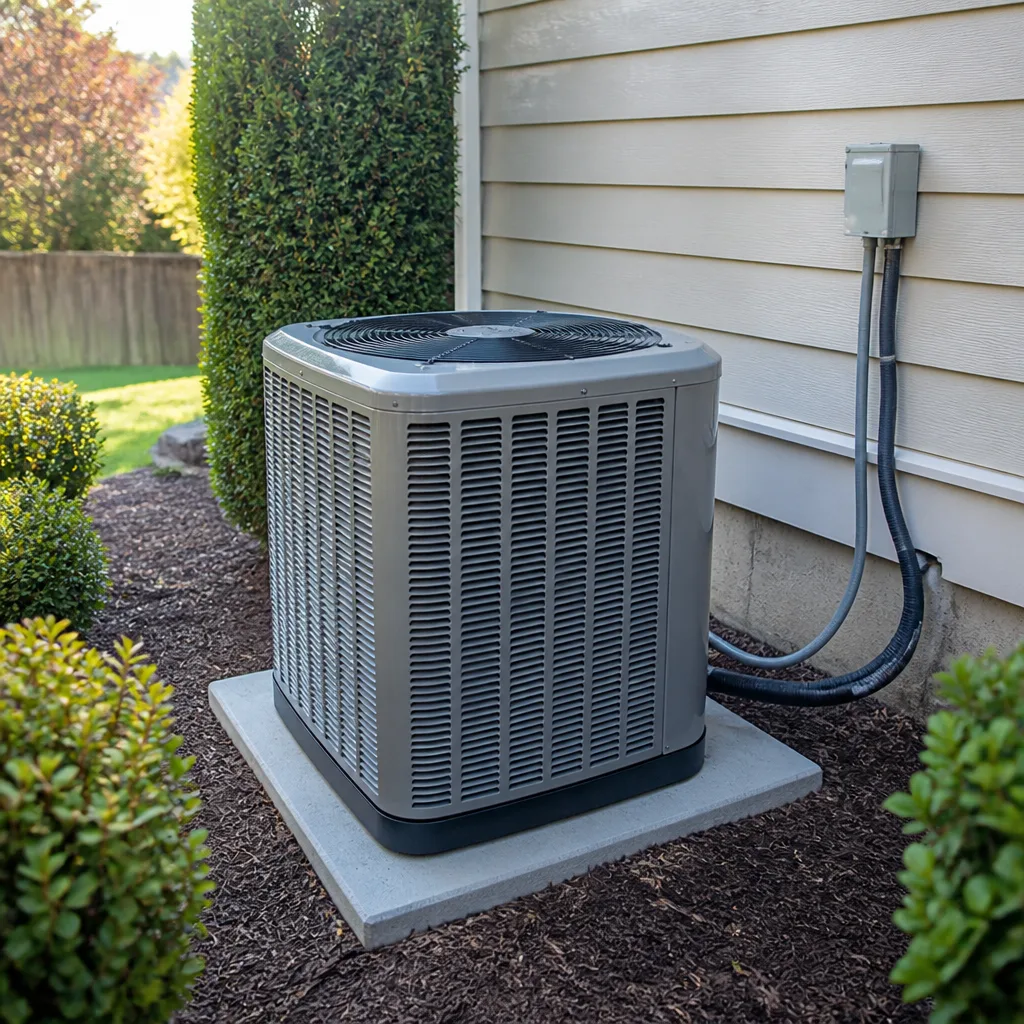
- Photograph your outdoor unit in place. Before any storm, take clear photos of the condenser unit, its connections, and the surrounding pad. If anything shifts or is damaged, you have a reference point for what “normal” looked like.
- Record your equipment details. Model number, serial number, and install date for both the indoor air handler and outdoor condenser. Save these in the cloud, not just on your phone.
- Confirm your surge protection. Whole-home surge protection at the panel and a dedicated surge device on the AC circuit are both worth discussing with a licensed electrician before storm season. Lightning-related power events are common in South Florida summers, and HVAC equipment is expensive to replace when a surge reaches it.
- Secure or remove loose items around the outdoor unit. Patio furniture, planters, pool equipment, and anything else that can become airborne near the condenser should be brought inside or secured. Impact damage to the coil or fan is one of the most common storm-related HVAC failures.
- Set your thermostat sensibly before evacuating. Leaving a house with no cooling for days in Boca Raton heat invites mold growth and warped materials. Setting the thermostat to around 80°F before you leave keeps humidity in check without running the system hard while you’re gone.
- Know your shutoff. Locate the electrical disconnect at the outdoor unit and the breaker at the panel. If floodwater or damage occurs, you’ll want to cut power to the equipment before anyone inspects it.
- Note any pre-existing issues. If your system was already running warm or short-cycling before the storm, record it. Post-storm diagnosis is much faster when the technician knows what was already going on.
None of these steps takes more than an hour. Together, they’re the difference between a fast post-storm diagnosis and a slow one. When we handle Boca Raton calls after a storm event, the homes with documented baselines get triaged far more efficiently than those starting from scratch.
Managing a Home During an AC Failure in Boca Raton Heat
When the AC fails in Boca Raton during the summer, this is a medical situation, not just an inconvenience. Heat index readings in the high 90s and low 100s are dangerous for elderly residents, infants, and anyone with cardiovascular or respiratory conditions. The protocol below is ordered by urgency:
- Check on vulnerable household members first. Elderly residents, infants, and anyone with a chronic health condition should be moved to a cooler location – a neighbor’s home, a family member’s place, or a public cooling space – before anything else is handled.
- Close blinds and curtains on sun-facing windows. Solar gain through west- and south-facing glass can raise interior temperatures rapidly. Blocking it early buys you hours.
- Use cross-ventilation if outdoor air is cooler than indoor air. Open windows on opposite sides of the house to create airflow. If outdoor air is hotter than indoor air, keep windows closed and rely on fans.
- Set up fans to move air, not to cool it. Box fans and ceiling fans don’t lower temperature, but they help the body shed heat through evaporation. Point fans toward people, not toward empty rooms.
- Stay hydrated and avoid cooking indoors. Stovetop and oven use adds heat and humidity to the home. Cold meals and plenty of water are the practical choice until the system is back.
- Consider a temporary cooling source. A portable room AC unit or window unit can make a single room livable. If you go this route, run it on a circuit that isn’t shared with major appliances.
- Watch for signs of heat illness. Confusion, rapid pulse, headache, and nausea are serious. If they appear, get the person to a cooler environment and seek medical help.
In our experience, the homes that fare best during a summer AC outage are the ones where the household already knows which room stays coolest, which windows cross-ventilate, and where the vulnerable family members will go. Plan that before the failure, not during it.
The Documentation Package Every Boca Raton Homeowner Should Keep
A photo of your equipment label on your phone is a start, but it’s not sufficient. Here’s why: when a technician is scheduling calls during a busy stretch, the homeowner who can provide complete equipment details by phone or email gets matched to the right technician and the right parts faster. A phone photo doesn’t help if the phone is lost, damaged, or the battery is dead after a storm.
What belongs in your documentation package:
- Model and serial numbers for the outdoor condenser and indoor air handler or furnace. These determine parts availability and warranty status.
- Installation date for the current system and, if applicable, any components replaced since.
- Warranty paperwork including registration confirmation. Many manufacturer warranties require registration within a set window; if you’ve never confirmed yours, do it now.
- Service history – dates of past repairs, what was done, and which parts were replaced. A technician who knows what’s already been addressed diagnoses faster.
- Photos of the equipment in place including the outdoor pad, line set routing, and electrical disconnect location.
- Contractor contacts – including the number for Tidewater AC Repair at (855) 552-3403.
Where to keep this: at minimum, a printed copy in a home file and a digital copy in cloud storage. The cloud copy is the one that survives a lost phone, a flooded drawer, or an evacuation. It takes maybe 20 minutes to assemble the first time. After that, updating it is a 2-minute job whenever service is performed.
This matters more than it might seem. We work on equipment from nine major brands – Carrier, Trane, Lennox, Goodman, Rheem, York, Daikin, Bryant, and American Standard – and having the exact model on hand means we can confirm parts availability and prepare for the right diagnostic path before we arrive.
After a Power Outage or Lightning Event: What to Check Before Restarting
Power restoration after a storm is not the same as a safe restart for your HVAC system. A surge, brownout, or lightning event can leave damage that isn’t obvious until the system is asked to run – and restarting into a fault can make things worse. Before you turn the system back on after a significant power event, work through this sequence:
- Inspect the outdoor unit visually. Look for debris in the fan, obvious physical damage, standing water around the pad, or a fan blade that doesn’t spin freely by hand (with the power off).
- Check the electrical disconnect at the outdoor unit. If it’s visibly damaged, cracked, or wet, do not energize the system. Call a technician.
- Check the breaker at the panel. If the HVAC breaker tripped during the outage, reset it once. If it trips again immediately, stop – that indicates a fault that needs diagnosis.
- Look for burned smells or scorch marks at the air handler, the disconnect, or the panel. Any sign of arcing or heat damage means no power-up until a professional inspects it.
- After restoring power, run the system in cooling mode and watch for short-cycling, unusual noise, or warm air. If any of these appear, shut it off and call.
One common post-storm misconception: a system that “comes back on” is a system that’s fine. Not necessarily. Low refrigerant, a partially failed capacitor, or a damaged contactor can let the system run while it’s causing further wear. If a power event was significant, a short diagnostic visit is cheap insurance against a much larger repair. For planned work on a system that’s clearly finished, our AC installation service handles replacement from load calculation through final commissioning – but only once we’ve confirmed the existing system can’t be economically repaired.
Emergency Triage: Which Failures Are Urgent and Which Can Wait
Not every HVAC problem is a same-day emergency, and treating every issue like one costs you money without improving the outcome. Here’s the triage we use when homeowners call:
Genuinely urgent – call today
- No cooling in extreme heat with vulnerable occupants in the home. This is a health matter, not a comfort one.
- Burning smells, scorch marks, or visible sparking at the equipment or panel. Turn the system off at the breaker and call.
- Water leaking from the air handler into the home. Water damage progresses fast and can compromise ceilings and walls.
- Complete system failure during a heat advisory with no workable short-term heat management available.
- Any post-lightning event with signs of electrical damage.
Can typically wait 48 hours
- Reduced cooling that still maintains a livable temperature. A system that’s running warm but still holding, say, mid-70s indoors, is usually a diagnosable issue – not a crisis.
- Unusual noise without loss of cooling. Note when it happens and mention it on the call.
- Intermittent short-cycling. Worth checking promptly, but rarely an emergency unless the system won’t hold temperature.
- Thermostat issues that may not be HVAC at all. Check batteries and settings first.
- Weak airflow in one room. Often duct or damper related, not a system failure.
Where homeowners get burned is treating a “can wait” issue as an emergency and paying for an urgent diagnostic when the standard response would have worked. Ask the dispatcher to help you triage. It’s a fair question, and any honest contractor will tell you when a call can wait until the next opening.
Why Hurricane Season Changes Everything About HVAC Scheduling
From June through November, HVAC demand in Boca Raton does something predictable: it spikes. Storm preparation, post-storm repairs, and the simple fact that everyone’s system is running at peak load all combine to stretch scheduling across the area. The practical consequence is that routine service booked in May is easier to get than the same service booked in September. Homeowners who plan around this seasonal pattern avoid the worst bottlenecks.
Three habits make the biggest difference:
- Schedule pre-season inspections before the storm threat. Late spring is when a marginal system can be identified and addressed without urgency-driven scheduling pressure.
- Address slow-burn symptoms early. Longer run times, rising energy bills, inconsistent temperatures between rooms – these are the signals that a system is headed for failure. Treat them as pre-emergencies.
- Plan replacements for the shoulder months. Full system replacements require load calculation, equipment selection, and scheduling – they can’t be compressed into an emergency window. If a system is nearing the end of its service life, plan the replacement before the next cooling season, not during it.
We work on equipment from American Standard, Carrier, Trane, and Lennox systems as well as value-tier brands – which means when you call about a slow-burn system, our recommendation is based on your home’s actual needs and your budget, not on what we’d prefer to sell. That’s the whole point of working across nine brands instead of one.
Building Your HVAC Preparedness Timeline
Preparedness works best when it’s organized across the calendar. Here’s a practical annual rhythm for a Boca Raton home:
- Early spring (March-April): Schedule a pre-season inspection. Replace filters. Confirm your documentation package is current. Test the system in cooling mode before the first hot week.
- May: If the system showed any slow-burn symptoms during the previous season, decide now whether to repair or plan replacement. Don’t defer this decision into storm season.
- June (storm season opens): Complete the storm-prep checklist above – photos, surge protection, outdoor unit securing, thermostat planning for evacuation.
- Peak summer: Watch for any deviation from normal performance. Note unusual sounds, longer run times, or room-by-room temperature swings. Call at the first sign of a real problem, not the third.
- Post-storm, if relevant: Follow the power-restart checklist before assuming the system is running correctly.
- Fall: This is when replacement work is easiest to schedule. If a system is clearly entering its final stretch, fall is the practical window for a planned replacement.
- Winter (such as it is): Boca Raton winters are mild, but this is when heat-side work – including any furnace repair – is easiest to schedule. If your system has a heating component that hasn’t been tested in months, test it now, not on the first cold night.
The rhythm isn’t complicated. The value is in the timing: work that’s optional in May becomes urgent in August, and work that’s routine in October becomes a scramble in June. Getting ahead of the calendar is the single most effective HVAC preparedness habit.
Common Mistakes to Avoid
- Relying on a photo on your phone as your only equipment record. Phones get lost, damaged, or run out of battery exactly when you need them. Keep a cloud copy.
- Waiting for a “real failure” before calling about slow-burn symptoms. Rising energy bills and longer run times are real signals, not noise. Waiting until total failure means scheduling during the worst time.
- Restarting a system after a lightning event without checking for damage. A user-visible “it turned on” isn’t the same as “it’s safe.” A short diagnostic prevents larger failures.
- Treating every problem as an emergency. Some failures genuinely can’t wait; others can. Ask the dispatcher to help you triage instead of assuming the worst.
- Setting the thermostat to 60°F when you leave for evacuation. That doesn’t cool the house faster – it just runs the system harder. Around 80°F keeps humidity in check without the wear.
- Ignoring the outdoor unit during storm prep. Loose patio items and planters become projectiles. Impact damage to the condenser coil and fan is one of the most common and avoidable storm-related failures.
- Forgetting to test the heating side. Boca Raton winters are mild, but a heating component that hasn’t run since last season can fail exactly when you need it most. Test it before the first cold evening.
See the difference
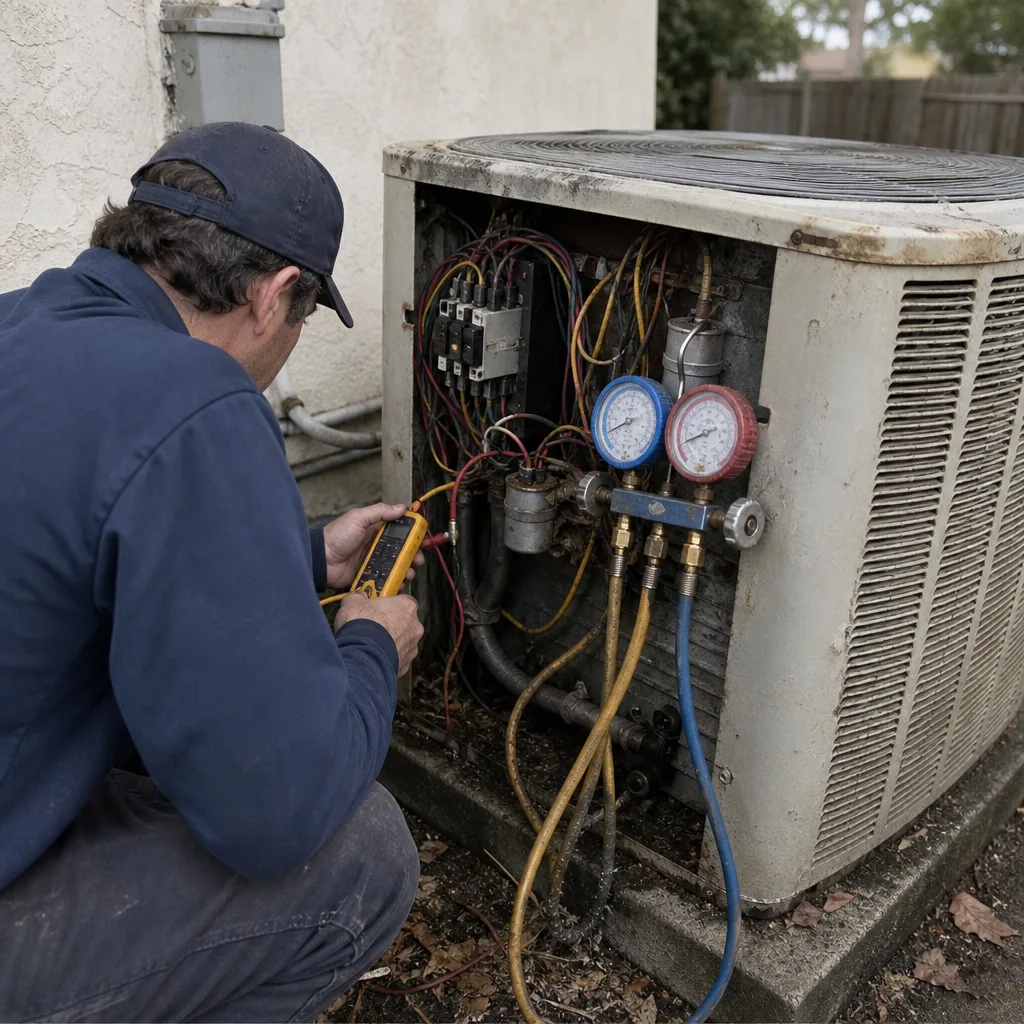 Before
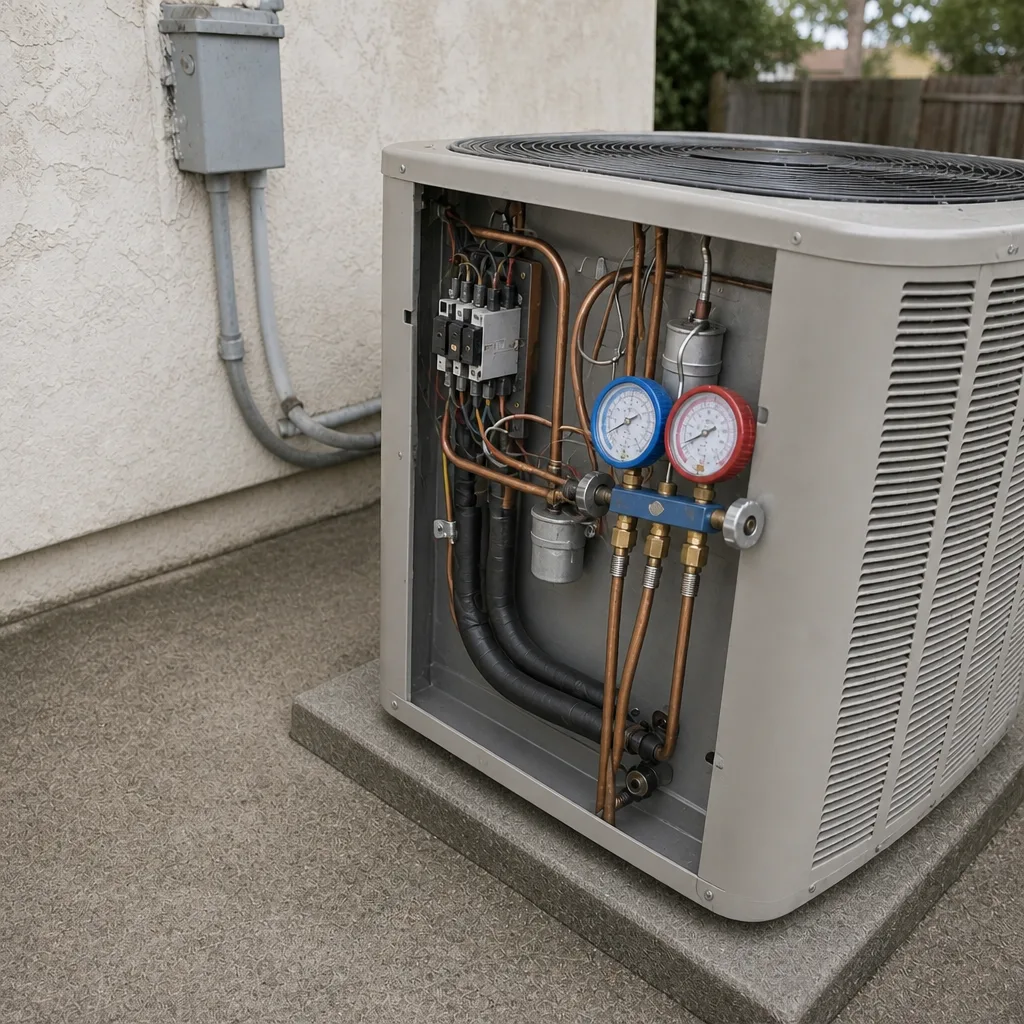 After
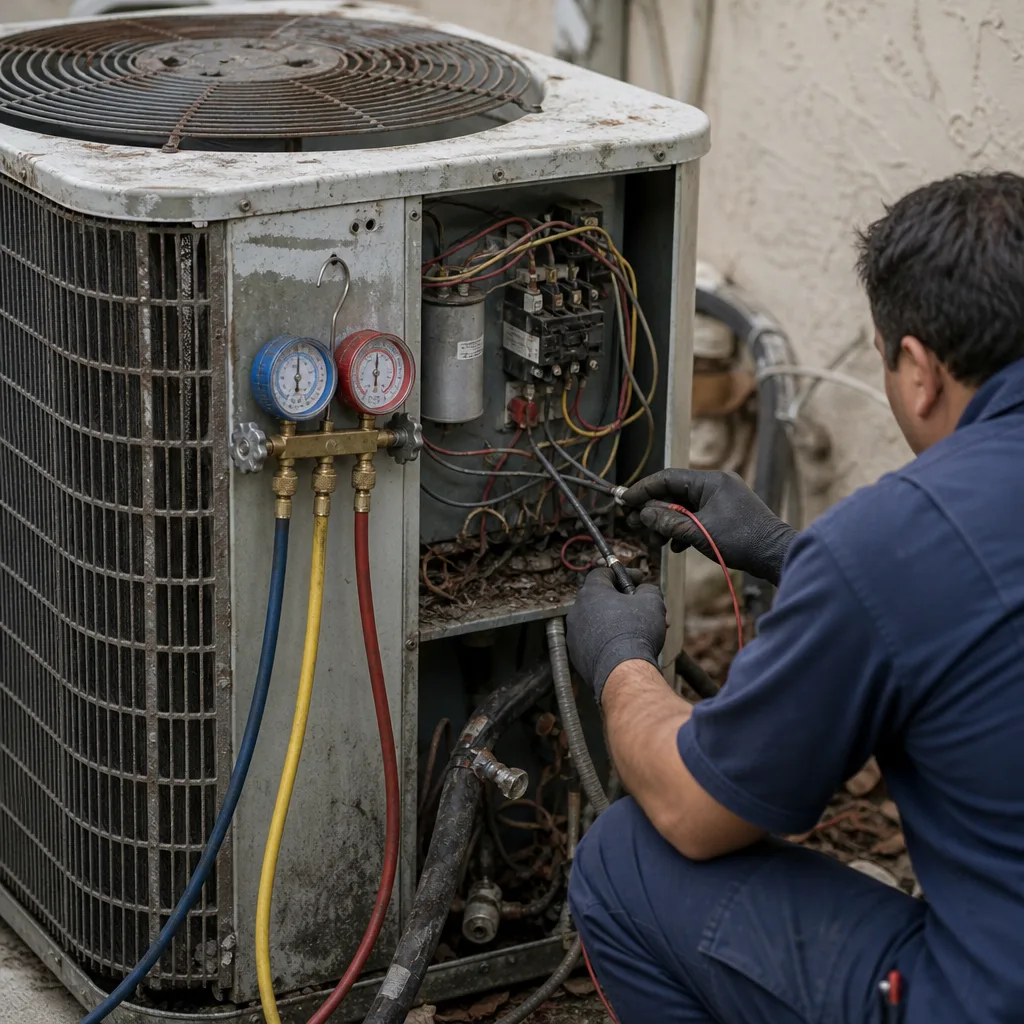 Before
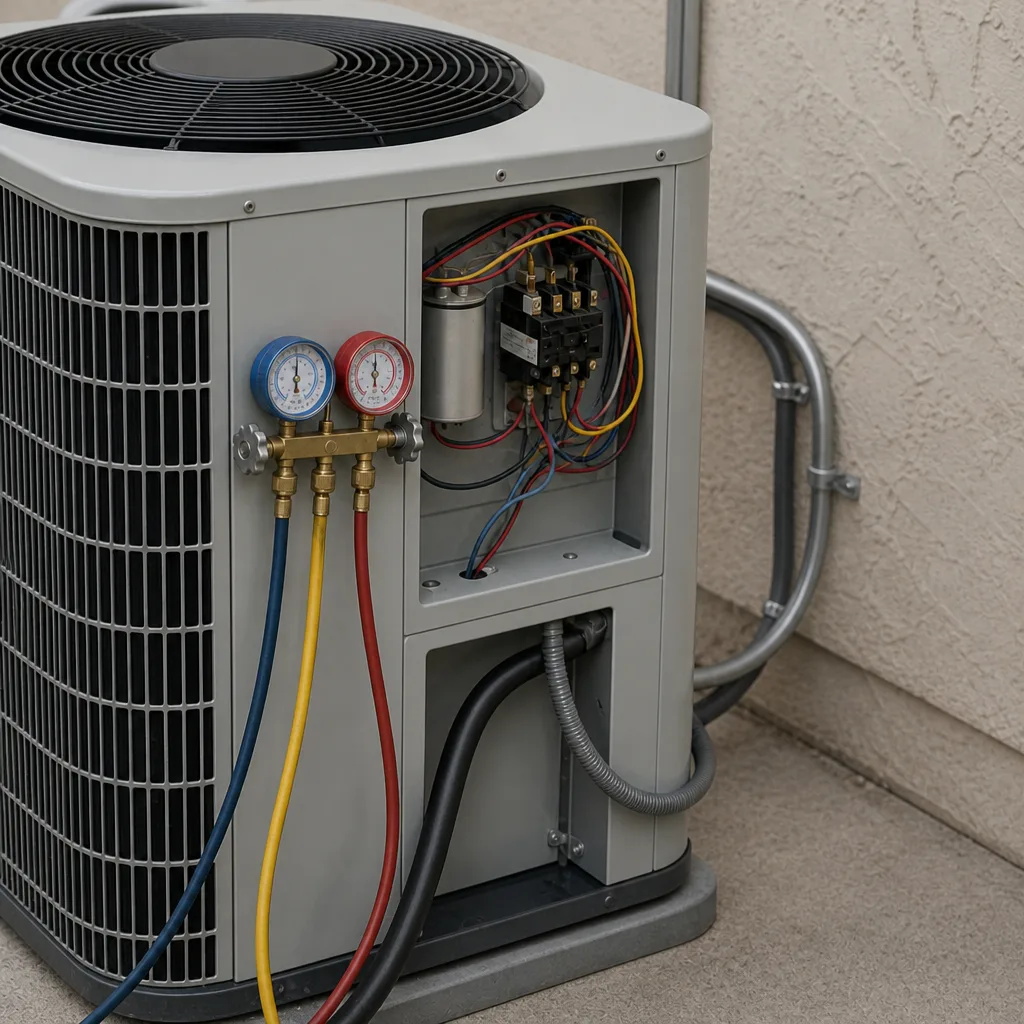 After
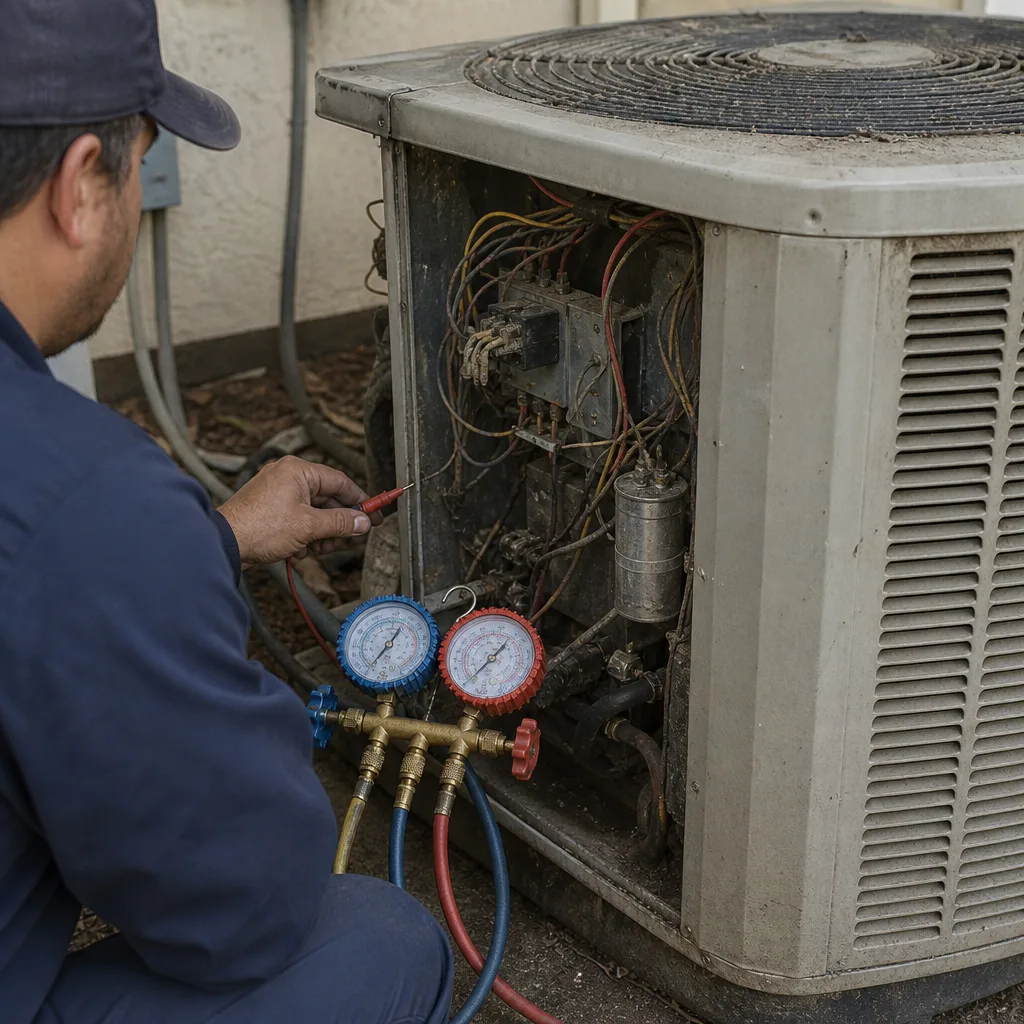 Before
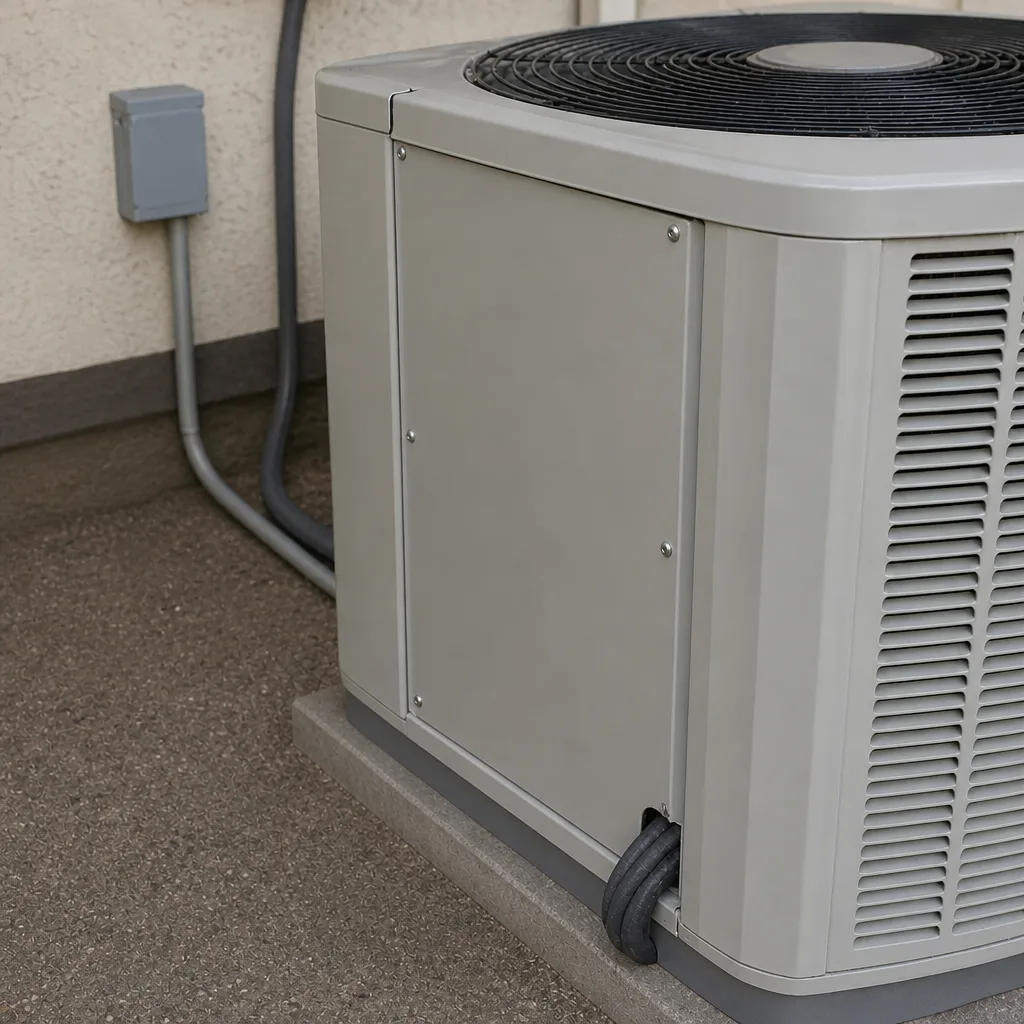 After
When to Call a Professional
Call today if the system isn’t cooling and there are vulnerable occupants in the home, if you smell burning or see scorch marks at the equipment or panel, if water is leaking from the air handler into living space, or if any electrical damage is visible after a storm. Call promptly – not urgently – if the system is running warm but holding a livable temperature, making unusual noise, short-cycling, or underperforming in a way that suggests a diagnosable issue. And call before the failure if the system has been limping through the season, because planned service is always easier to schedule than emergency service. Tidewater AC Repair offers free estimates in Boca Raton – call (855) 552-3403.
Frequently Asked Questions
Check on vulnerable household members first – elderly residents, infants, and anyone with a chronic health condition – and move them to a cooler environment if needed. Close blinds on sun-facing windows, use cross-ventilation only if outdoor air is cooler than indoor air, set up fans to move air, and call (855) 552-3403. We answer 24/7 with fast dispatch from 7am to 7pm, Sunday through Friday. If the failure happens outside dispatch hours, your call is booked into the next opening.
Photograph your outdoor unit in place, record model and serial numbers for both indoor and outdoor equipment, confirm your surge protection, secure loose items around the condenser, set the thermostat around 80°F before evacuating, and locate your electrical disconnect. Do these before storm season starts in June, not after a storm has formed. A documented baseline makes post-storm diagnosis much faster, and it costs about an hour of your time.
It’s an emergency if there’s no cooling in extreme heat with vulnerable occupants, burning smells or sparking at the equipment, water leaking into the home, or visible electrical damage after a storm. It can typically wait 48 hours if the system is still holding a livable indoor temperature, making unusual noise without losing cooling, short-cycling intermittently, or exhibiting a single-room airflow issue. When in doubt, ask the dispatcher to help you triage – honest contractors will tell you when a call can wait. Call (855) 552-3403. We answer 24/7 with fast dispatch from 7am to 7pm, Sunday through Friday.
Before restoring power, inspect the outdoor unit for debris, standing water, or a fan that doesn’t spin freely by hand (with power off). Check the electrical disconnect and breaker panel for visible damage or scorch marks. After restoring power, run the system in cooling mode and watch for short-cycling, unusual noise, or warm air – any of these means shut it off and call. A system that turns back on isn’t automatically a system that’s fine.
Because demand spikes across the entire region simultaneously – post-storm repairs, pre-storm preparations, and peak summer loads all compete for the same pool of technicians. The practical response is to schedule planned work before storm season, not during it, and to keep your documentation package current so you can be scheduled efficiently when you do call. Call (855) 552-3403 – estimates are free.
Likely yes. We service equipment from nine major manufacturers including Carrier, Trane, Lennox, Goodman, Rheem, York, Daikin, Bryant, and American Standard. Our technicians have up to experience, and we work on your system rather than the one brand we sell. Call (855) 552-3403 – we answer 24/7 and offer fast dispatch from 7am to 7pm, Sunday through Friday.
The Bottom Line
HVAC preparedness in Boca Raton comes down to recognizing that there are two kinds of emergencies and handling each differently. The acute failure demands speed – safety check, heat protocol, same-day call. The slow-burn emergency demands foresight – documentation, pre-season inspection, and planned replacement before storm season peaks. The homeowners who come through South Florida summers comfortably are the ones who treat a struggling system as a pre-emergency and keep their equipment details in a place more reliable than a phone camera roll. Do those two things and you’ll be at the front of the line when everyone else is waiting.
If your system needs attention – whether it’s a genuine emergency, a slow-burn symptom worth diagnosing, or a planned replacement before next season – call Tidewater AC Repair at (855) 552-3403 for a free estimate. We answer 24/7 and offer fast dispatch from 7am to 7pm, Sunday through Friday.
Written by the team at Tidewater AC Repair.